
 What a great time to be a horror fan the past year has been. After a several decade lull in the medium that felt like an eternity, a collection of scrappy filmmakers with minds and styles to match have turned to the horror genre with remarkable consistency over the past few months, constructing deliberate haunts and melancholy ghouls that deserve the lingering spirit of the classics of the genre. Even better, they do so without openly copying the specifics of horrors that have been before; rather, they divulge their understanding of the past but skyrocket the genre into the future with tools and tricks only fringe, obscure talents could dream up. Under the Skin, The Babadook, A Girl Walks Alone at Night, and now It Follows, have all shocked the world in the past year or so, and they’ve done it without mimicking each other either. Whether it’s the prismatic abstraction of Jonathan Glazer’s Under the Skin, the classical formalism of Jennifer Kent’s The Babadook, the omnivorous sensual high-style of Ana Lily Amirpour’s A Girl Walks Alone at Night, or , now, David Robert Mithcell’s high-flying, postmodern sepulcher to the slasher genre, all are great films. And they are four giants with their own individual voices.
Continue reading
Midnight Screening: It Follows
Leave a reply
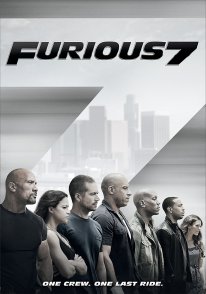 With Furious 7, sincerity is ubiquitous. It is ubiquitous in the discussion surrounding the film, and I’m afraid I will not be the one to butt heads with this claim, for sincerity is as ubiquitous in the film itself. Furious 7 is an idiot stew, sure, but for the entirety of its run time, there is never one second where it is less than fully committed to being itself, or less than entirely on board with its own idiocy. There’s a miniscule sliver of self-awareness thrown in for flavor, but by and large Furious 7 believes in itself. All of the nonsense about family crumbles in the abstract, but on camera it sizzles with zest. The film is nothing more than a soap opera where cars, guns, and and explosions sometimes (but not always) take the place of emotional breakdowns and cancer, but like any soap opera that works, it does so because it believes in itself and never tries to be anything it isn’t. Furious 7 is not a perfect movie, and in many respects it isn’t a very good one, but it is too busy having fun with itself to care.
  It must be said: excepting The Matrix, no single film has done more harm to the modern cinema industry than Pulp Fiction. The old “every filmmaker who saw it made their own movie” card is the great equalizer, uniting genuine talents and hacks alike. But in the case of Tarantino, the results were far from equal. A few genuine craftspeople followed in his wake, but they were diamonds in the rough compared to the far more significant cohort of filmmakers who whipped Tarantino into a frat boy’s wet dream and perverted his vision of cinema from the ground up. Largely, this has to do with Tarantino’s supposed “cool factor”, the superficial blanket hanging over all his films that has beckoned first-timers the world over to ape his penchant for slick, sick violence, whirlwind camera jerks, and self-consciously fantastical style. This style has always been a noose around Tarantino’s neck, and it has strangled the world of cinema for years to come.
  “Best” Oliver Stone film is a big fat question mark, and it is doomed to stay that way. How does one even judge an Oliver Stone film in 2015? Tightest narrative? Best characters? Highest quantity of subversive edits? Most provocative? That which, pardon my french, stirs the most shit? So much of Stone’s lineage is tied into his public opinion to the point where he may be the only living director (Lars Von Trier excepted) for whom “ability to mess things up” is a genuine metric with which to judge his films, regardless of whether they work when detached from their social impact. So much of Stone’s vision is fundamentally tied into kicking up some dust and maintaining his enfant terrible status that it may be the metric that most accurately captures who he is as a filmmaker. Conventional analysis may be a moot point; his films live and die on their own terms.
 Two openings, if you will:
 We aren’t supposed to have movies like Moon anymore. They went away a long time ago in the Great Sci-Fi Purge of the early 1980s. These thoughtful character studies and simple space allegories used to crowd the marketplace in the 1970s, as every would-be Kubrick worth his salt attempted to copy or further explicate on the prodigious themes of 2001: A Space Odyssey whilst carving out an entity all its own. A lot of them failed, and often rightfully so, but they had class, and they had their own grainy style to back up their game attempts to find a new cinematic language for confronting society. The 1980s had many casualties, and this sort of smart, reasonably artistic entertainment for adults was probably the biggest. Youth growing up today might take it for granted that science fiction has always been a middleweight genre for fluffy summer fun, but this has not always been so. Once upon a time, science fiction was a highly personal realm. Often great (Kubrick). Often awful (Ed Wood). Widely fluctuating and seldom simply “mediocre”. But, through thick and thin, it was always personal.
  Because I reviewed the sequel…
 300: Rise of an Empire
 The story goes that acclaimed filmmaker Sarah Polley grew up under firm belief that she was, if somewhat different looking than her loving siblings, as much a biological member of the family as any of them. Her family’s nagging jokes about her appearance did little to denounce their commitment to little Sarah as the child of Michael and Diane Polley. Little did they know that her real father was Harry Gulkin, a theater producer whom her mother had had an affair with before passing of cancer while Sarah was still young herself, forever sealing the secret of her birth. The story goes this way, but it also branches outward to tackle the heart of cinema, the construct of a documentary, the messy lies and half-truths of a family less sure of itself than we are, and even the nature of subjectivity as the only sure truth in the plural choruses that are the stories we tell.
 The Long Take