
 A pair of reviews from a series last year I never got around to publishing…
The Dirty Dozen, a war film perched on the cusp of the New Hollywood and preluding the obstreperous cynicism of the 1970s, feels like a new breed of war film more akin to the nasty, capricious revisionist Westerns waiting in the wings of the late ’60s. The film, directed by low-flying Hollywood stalwart Robert Aldrich, insulates itself from the stodgy, antiquated chamber-bound quality of most anti-war films by inducing a feral fit that, in the final third, explodes into an outright anxiety attack. Although military cruelty is on the mind, The Dirty Dozen is hardly a courtroom drama; befitting its brusque title, it’s a grubby grotto of unmanaged anger that sands itself down sometimes not to detach itself but to express the dehumanized, dispassionate nature of war altogether. Casting Lee Marvin in the role of a military commander tasked with training a motley crew of reprobates and military prisoners to dismantle and destroy a Nazi high command party on the eve of the D-Day invasion, Robert Aldrich’s film casts a ghostly pallor over the so-called last moral war by threatening it with its own essential amorality. Continue reading
 A pair of reviews from a series last year I never got around to publishing…
 With Ghostbusters ubiquitous in the news over the past week, a review of the original film is in order…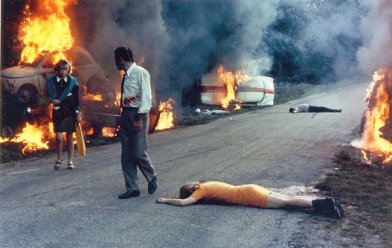
 Reviewing Goodbye to Language made me realize how criminal it was that I had never, in almost two years of blogging, reviewed a film from perhaps the most important director of the past sixty years. What was I doing with my life?
 Reviewing Goodbye to Language made me realize how criminal it was that I had never, in almost two years of blogging, reviewed a film from perhaps the most important director of the past sixty years. What was I doing with my life?
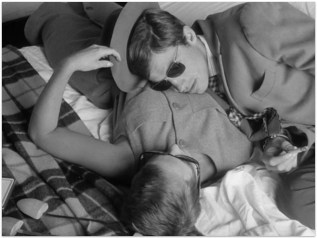 Reviewing Goodbye to Language made me realize how criminal it was that I had never, in almost two years of blogging, reviewed a film from perhaps the most important director of the past sixty years. What was I doing with my life?
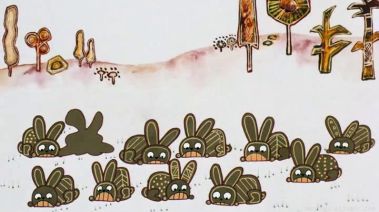 Watership Down begins with an iridescent slab of primal, irradiated cartoon psychosis, a deceptively primitive work of mythological animation as welcome in the Disney canon as it would be adorning Ancient Greek pottery. Regaling us with the oil-and-syrup concoction that is the mythological fable of rabbit-kind, we’re informed how the fecund species was blessed with fleet feet and cursed with a menagerie of predators. The simultaneously timid and trepidatious imagery of crayon-infused characters backed by an illuminated white hell evokes a cautionary tale most bold. Animation in 1978 was at something of a nadir as up-and-comers were rabidly chasing down the cadaverous corpse of Disney and looking to impose new styles all their own, and in this light the intro of Watership Down feels particularly prescient. Watching the introduction of Watership Down, it’s as if the film chose to begin with a despairing version of the classical American cartoon style – all curvaceous, simple lines and expressively elegant crayon-scrawl – to pay homage to the old before casting about with the new.
 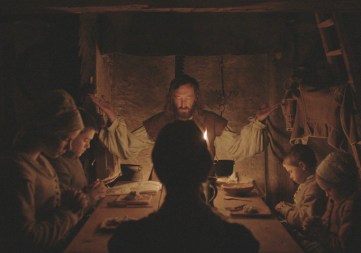 Although they dip into a different well of primal emotion and reflexive response, the best horror films are of a kind with the greatest masterpieces in any genre. At the risk of lacking caginess, all are defined by a duality: first, content is sublimated into the higher level of form and style, and secondly, expression and meaning is only tentatively tied to the nominal diegesis of the narrative. So the greatest horror film of the 1930s, The Bride of Frankenstein, relies on theatrical gesticulations of tone to express notions of disarmingly innocent outsider desire struggling to come to terms with a world suddenly impressing itself onto the mind (in doing so, moving far beyond the more obvious questions of homosexual impulse as one facet of desire and outsider status).
  Flesh for Frankenstein
 The Long Take