
 Released two years after the New Wave volcano of Easy Rider, Monte Hellman’s Two-Lane Blacktop visualizes the tattered remains of America encroaching on its own emptiness after the acid-freakout of ’69 disrupted the old ways and left the scattered ashes of the American populace reaching for new ones. Following two desecrated human carcasses played by James Taylor and Dennis Wilson as they coarse through the crucible of the American road, they search for the contours of a narrative or a life that doesn’t seem to exist anymore. We watch in vain as they grasp onto the only hope they have left: a desperate, disheveled odyssey to find compatriot-combatants to race cars with them into oblivion. Each character wanders around like a James Dean simulacrum searching – literally – for a semblance of the youthful confrontation and auto-shop phallus-comparing that they see as the embodiment of the renegade American Dream. Continue reading
Film Favorites: Two-Lane Blacktop
Leave a reply
 Spielberg and Dahl sounds like the right cocktail, but Dahl has been manhandled at the cinema before to differing results. Let’s take a look at the original, and by a wide margin still the most famous.
 The internet’s favorite bete noire, the new Ghostbusters, is out this week, and having reviewed the original and not much caring to revisit the sequel, I decided to review the most successful copycat of a formula that largely died out around the turn of the century.
 So Rod Serling, Charles Dickens, and Alfred Hitchcock walked into a bar…
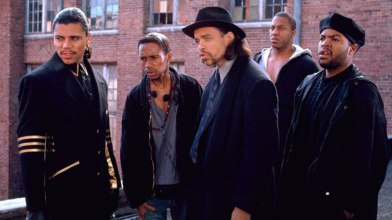 Trespass
 The Man From UNCLE
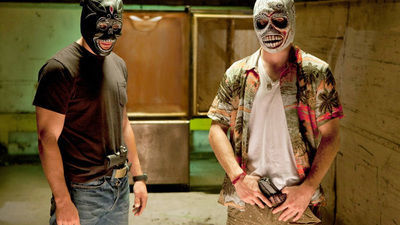 Oliver Stone’s twenty-years-late return to his barn-burning, muck-racking, mutinous youth as a hit-the-fan molester of respectable cinema, Savages is both undeniably admirable and definitely worn and torn by the years of middlebrow cinema Stone exerted onto himself over the years. After expending the ‘00s on pointless, anemically respectable productions like W and World Trade Center, two of-the-moment “take me seriously” political films with none of the director’ momentous, ribald energy, Savages is a return to form of sorts. But the lethargy of lost time has set in a little bit, and the film’s ricocheting-but-not-undulating formal hassle sometimes feels like Stone overcorrecting for the staid, empty crucibles of his turgid ‘00s work by inducing their polar opposite: an undomesticated, totally neurotic rollercoaster. Less Stone at his best than a phoenix raised from the ashes of Stone’s aimless 21st century films, Savages is an intermittently great filmmaking blast of alacrity and elan, but it feels more like Stone-knew-a-guy than Stone himself.
 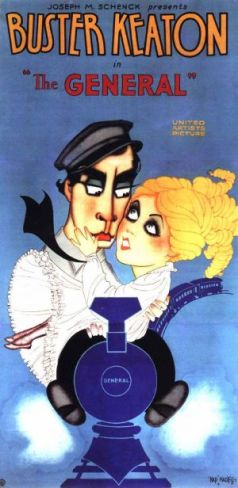 Edited
 In Frank Borzage’s 7th Heaven, much like F.W. Murnau’s Sunrise from the same year, and same production company, the mettle of duality and human romance is energized with cinematic luminescence, ultimately transforming togetherness into a prism for enlivening the world and lighting the way to an otherworld that, not heaven or hell, is more akin to the resplendence of worldly beauty itself. Producer William Fox was a sky-high romanticist with peaceful, radiant aspirations for humankind both exhibited within his films and enshrined in their making-of stories. Unlike many Hollywood producers quite this early on, he chose to jump the Hollywood ship of home-grown talent by acquiring some of the most rapturously received European auteurs for his productions with the quixotic belief that his production company’s cinema should be unrestrained and untrammeled on by national borders.
  Agitprop as festivity more than hoosegow, Sergei Eisenstein’s first film is also his most disarmingly pure and innocent in its desire to agitate not only society but cinema, a film thoroughly unmitigated by its own weight and purpose. The perpetual penitentiary many modern viewers discover when viewing Eisenstein’s unmistakably political films is replaced with a kindled carousel of motion and action, reaction and consequence, that feels not only undated but more progressive and alive with possibility than any film released in the 2010s. A freedom-fighting film that, in a fit of art imitating the dreams of a life that never came to exist, feels palpably liberated from the cinematic status quo. Rather than merely political critique, Strike is a filmmaking polemic, a hustle-and-bustle strike of inventive cinematic mechanisms enlivening the passé “historical cinema” genre that was often as inept and anonymous then as it is now.
