
 Park Chan-wook’s endlessly, even mercilessly fastidious and picky aesthetic sensibilities – ornate and obsessive in equal measure – have never served him better than in The Handmaiden. His formalist techniques, often constricting and repressive of the emotional juices of his films, are wonderful mimetics for a screenplay which very much attends to questions of constriction and choking alienation. Set almost entirely in a Japanese-controlled mansion occupied by Koreans, not to mention in a male-dominated culture tenated by women, The Handmaiden’s mise-en-scene and blocking compound the pristine ritualistic motions of the characters who cannot break-out of their socially-structured, performative identities without incessant observation and admonishment.
Each moment must be policed, and Chan-wook’s style submits accordingly. The note-perfect symmetry and rigidly-lined geometry of the frames constitute the strangulating mood of the characters and their stored-away emotions. The geometry of space Chan-wook so ably attunes to also serves as a material enforcer of various hegemonies – paternalistic, national – that seem to make everyone a servant to someone. The layout of the screen decodes the architecture of the mind. And, while The Handmaiden’s unyielding, inelastic set-design and severe, inhospitable aura owe something to Ozu and Bergman, respectively, its indecent disposition and lecherous eye for deviance and perversion are unmistakably born out of Chan-wook’s own inky heart. Continue reading
 The opening of James Mangold’s Logan bears the film’s fangs right from the get-go, brandishing the titular character’s unruly temperament in an early fight edited in schizophrenic shambles. The scene is treated not as a cleanly delineated pleasure-soaked fight-performance for our amusement but as a brutal, animalistic seizure of uncontrolled violence. Rather than a slow, mysterious secretion of innumerable details building to narrative proportions, Logan quite literally lets itself rip.
 I’m at a loss. I cannot quite decide what Kong: Skull Island’s central problem is. Sometimes, director Jordan Vogt Roberts’ film rudderlessly vacillates form obvious highs (the apocalyptically-shot pre-credits screen and a killer credits bit) to infernal lows (an impossibly idiotic, on-the-nose opening line from John Goodman – spoken almost directly to the camera – about American politics never being “this bad again”). Here, the film is an inconstant success story sabotaging its structural integrity with foolhardy bull-in-a-china-shop shifts in quality, a work of half-crazed energy and personal auteurist flourishes with no earthly idea how to stitch its numerous harebrained personal madnesses together into an unidentified film-like object. Other times, however, Skull Island has the reheated quality of a monotone hum that settles not for a tilt-a-whirl shuttling between greatness and failure and more like incessant competence, seldom better or worse than acceptable and essentially unwilling to risk its adequacy to achieve greatness at the risk of failure.
  This review written on the occasion of the release of All Eyez on Me and Juice’s twenty-fifth anniversary.
 The late ‘70s. Boston. Michael Smiley and Cillian Murphy play two IRA gunrunners looking to buy. Sharlto Copley dons the mustache of someone with an eye to sell, backed by his crew of course. And Brie Larson and Armie Hammer are just along as the middle-persons to smooth things over. Director Ben Wheatley has other plans.
 John Michael McDonagh’s films – quietly depraved though they may be – have until this point benefited from a superficially nonchalant demeanor with just enough negative space for the creeping anxiety lurking underfoot to seep in, revealing the worried minds underneath the carnage. The low-and-slow black comedy The Guard wore its Irish brogue smoothly and the superior existential drama Calvary was frighteningly calm under heavy pressure. By way of comparison, War on Everyone, his third directorial effort, really can’t be bothered to give us a glimpse of its own private madnesses at all. It’s too busy showing off. Any meaningful observation it has is intercepted by its own lacquer of cool, ambushed by the script’s incessant compulsion to entertain at any cost. This film is coked-up and addicted to its own cleverness, so eager to please that it doesn’t notice how high on its own material it actually is.
  Among the finest traditional superhero films ever made, or so I’m told, Wonder Woman nonetheless provoked, for me, not out-of-body effervescence, nor rapturous wonder, nor thoughtful introspection, but merely mild contentedness. This year’s other critical-darling superhero flick, Logan, stuck a tripartite claw into certain regulations of the superhero genre. Although it merely dressed other genre-norms up in a thick coating of sinew and muscle, the film had moral meat on its Charcuterie board, all of it rare and bloody. Wonder Woman is a resolutely traditional film by way of comparison, and its minute-to-minute successes and failures have entirely to do with which of two particular traditions it settles into at any given moment.
 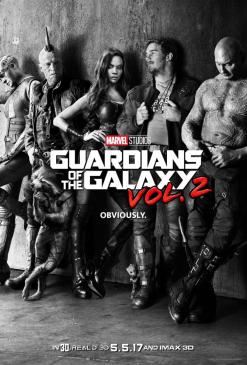 The second time around, James Gunn’s motley crew of aliens, trees, and raccoons cast much the same unsettled, antic, amusingly insecure shadow as they did in the first film. Gunn doubles down on the emotional hesitancies of the titular Guardians in the final act, but, for the most part, he stays the course of compositional whimsy and philharmonic ‘70s tunes, all egg-beating the action scenes into a whipped fervor of aesthetic inflammation. In this case, second helpings is fine, considering how ecstatically messy the course was the first time around, and how off-handedly flirtatious and cunning it continues to be three years later. That is, when the film isn’t trying too hard by settling for the idea of Guardians of the Galaxy more than the real item. But we’ll get there.
 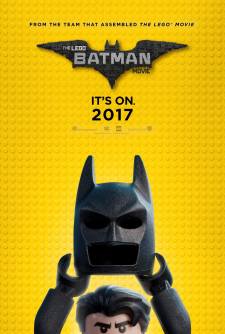 This post in honor of the late Adam West, who is obviously an object of worship for the latest in a long string of Batman films and the closest to reignite West’s matter-of-factly deranged insouciance. It isn’t a perfect film, but it is a perfect tribute. RIP.
 Really, the literary pretensions of the appended subtitle – a simple John Wick 2 will not do for director Chad Stahelski when the medium of Tolstoy and Dostoyevsky may be invoked – tell us everything we need to know about the regal aspirations of John Wick: Chapter 2. Although, in point of fact, it is not literature that is the guiding light of Chapter 2. The most overt antecedent is actually dance, especially if you solder the performance to the dexterous, lustrous lighting of an interactive art showpiece, leading to a film that is not unlike a work of immersive theater. Provided that it is immersing you into buckets of the red stuff of course. A good hundred or so people meet the nasty end of Keanu Reeves’ gun. And knives. And pencil. But it has the florid resplendence of Swan Lake. Somewhere, Wagner is probably smiling.
  The Long Take