 Y Tu Mama Tambien is inauspicious, but like many great films, it reaches for and touches the world and humanity in everyday actions and seemingly small gestures. Here, for instance, we have teen sexuality, laid out with all its romanticism and reality, filled with the kinds of empty-but-meaningful gestures that define humanity’s desires and their foibles. Director Alfonso Cuaron is a highly personal director, but he’s always most interested in defining his characters in relation to the world they inhabit. His two protagonists here are immature and petty yet deeply human, reflections of a society that won’t admit it has given birth to them and which they, initially, want no part in. He gives us a profoundly human story, built on the eternal humanness of sex as a marker of adulthood and childishness, and given life by Cuaron’s wonderfully and contrapuntally painterly version of sloppy, slovenly reality. Continue reading
Film Favorites: Y Tu Mama Tambien
Leave a reply
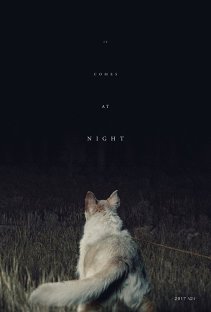 Vis-a-vis the more trimly-titled but flabbily-filmed It: now this is more like it. The second feature from Trey Edward Shults, It Comes at Night trades out the high-gloss carnival-esque of Muschietti’s film for the kind of slowly-curdling angst and stomach-rotting apprehension that not only startles the hairs on the end of your arms but rattles and disquiets the bones. It Comes at Night is not peak horror compared to some of the recent finds in the genre since 2010 – It Follows, to name another title to wield the willful ambiguity of one particular pronoun – and this new film manages the unfortunate (commendable?) feat of being both too literal and too equivocal for its own good. But compared to the lazy imprecision of It, Shults’ film is a real wilderness of human fear.
  In Andy Muschietti’s sturdy but superficial, journeyman remake of It, Bill Skarsgard’s portrayal of the title role is a too-easy thesis of the film’s successes and flaws. On one hand, when Tim Curry stepped into the fangs and red hair in 1990, he was a memorably polychromatic experience: sad, otherworldly, ethereal, campy, and bizarre. Skarsgaard only hits – or is only allowed to aim for – unadulterated fright. On the other hand, his more calculated performance less prone to tangents and instabilities capably invokes the gloomy glint of terror that animates this new film, one-note in its construction but perfectly capable of hitting the note. Curry was the standout in that earlier, now-epochal television film – it jump-started an insufferable trend of Stephen King TV mini-series that continues to this day – but the unwieldly, tone-deaf drudgery of that production was an unstable mess of arbitrarily-laid-out scenes lacking any semblance of cohesion or logic. (Nor was it, incidentally, meaningful with its mess). Intersecting feelings and emotions could be both fascinatingly tiring and pointlessly, scene-paddingly draining.
  The feverish French-language coming-of-age-horror-comedy Raw has many selves, not all of them exhibited at the same time. But the somewhat frequent and always volatile transformations of its core being are at worst spirited, and more often than not, they amount to a kind of thematic-jukebox. The film’s somewhat vague attitude to theme allows writer-director Julia Ducornau to (over?)populate a thread of a narrative – a young freshman named Justine (Garance Marillier) at a vet school – with tensions of various calibers that rhyme with the peculiarities and curiosities of adolescence without necessarily committing to one central argument. When Justine develops increasingly erratic behavior and eventually a taste for human flesh after a hazing ritual involving eating a rabbit kidney, Ducornau’s thematically-promiscuous film reacts the only way it knows how: deploying the nonliteral beauty of horror cinema. Rendering sympathetic abstractions of issues from institutional neglect to gender awareness, Ducornau metaphorically challenges easily normalized realities and then galvanizes them with the grossly peculiar, unknown curveball of horror cinema.
  One might think TCM2 is an obvious proposition: director Tobe Hooper attempting to escape the dark days of artistic poverty known as the ‘80s by returning to his most demonic days, forging a communion with the film devil and resurrecting the zombified corpse of his most famous film, The Texas Chainsaw Massacre. But TCM2’s is no sycophant wearing its father’s clothes; more like a renegade fugitive dressing up like a horror film to throw the authorities off its trail. It is its predecessor’s polar opposite, as overt a case of a cinematic progeny rebelling against its parent with youthful indiscretion as the medium has ever birthed. Anticipating the devil-may-care comic mania of The Evil Dead 2 with as much brio but much less skill, Tobe Hooper’s sequel to his most famous film at least deserves points for attempting – rather openly – to misdiagnose its predecessors’ successes and run around in its own bizarre head-trip version of the original. An overt comedy, the film’s combustible zaniness is spirited even if it isn’t really inspired, and it sometimes feels like a colossally misjudged entity that is worth seeing only for the courage with which it misjudges itself. The quasi avant-garde set design and the ludicrous, anarchic disinterest in conventional mood skeletons mark Texas Chainsaw 2 as a fugitive inferno of sustained weirdness.
 With the untimely passing of another horror icon, a quick look at a few of his films that aren’t *that one*.
  An astonishingly hopeless anti-myth odorized with the stench of failure and bloodstained with the tattered remains of hope, They Shoot Horses, Don’t They? twists the idiom of dance away from its usual home in restless fantasy, treating human gyrations as the small-scale reverberations of a slowly-tilting edifice ready to crumble to the ground. For Sydney Pollock’s film, dance movements are first particles of movement that exist not to fling us into a hopeful future but to topple us from below, subsuming us to the movement of our feet that seem no longer tied to our minds or our personal agencies. Our bodies are no longer uncertain adventurers carving out a bold future but frantic chasers of a dream deferred, hoping to catch up to the scraps of nothingness thrown our way. They Shoot Horses is a parable of America as a collection of lost souls wandering into dancehall marathons – brandishing hopes and dreams of Grace Kelly and Fred Astaire, or the Charleston – and succumbing to the barren, unforgiving economic destitution that undergird and consume the romantic aspirations that nominally lacquer the surface of these activities. As Pollock sees it, bone-dragging, fall-out-of-bed-and-stumble-upwards days are the only ones America had in the ‘30s, and maybe ever again.
  Sydney Pollock’s Jeremiah Johnson is, paradoxically, a resolutely, almost defiantly, old-school production, but it discovers a modernistic rejection of modernity in this very backward-looking milieu. As a Western, its interpretation of nature and mankind within it finds imaginative camaraderie with American art dating back to the Romantic painters of the mid-1800s who looked to nature – America’s bounty, they felt – to rebel against the earliest American painters, who mostly copied European high-art style, which codified as individualistic portraits lionizing heroic figures. These mid-1800s American painters, the first art rebels of the American vernacular, sought to uncouple themselves from European identity and establish a uniquely American sensibility. They found safe harbor in ruminating on, and enlarging the imaginative mythology of, the landscape, prophetically proposing – and thus clarifying into being – that America’s identity would be corporealized in the society-shunning, and paradoxically society-creating, individualism of a transient, undomesticated life on the road and through the forest.
 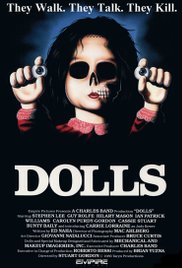 A new Annabelle sequel I haven’t seen is out; faced with the grim opportunity of reviewing its immediate predecessor, here is a much better killer doll film.
  Queens of the Stone Age
 The Long Take