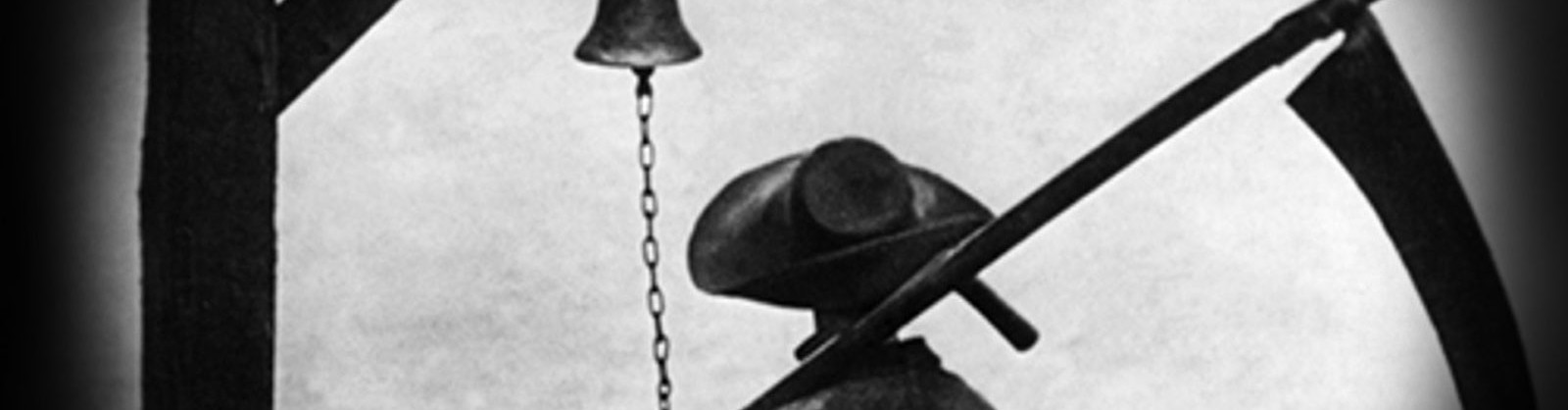
 Spectre begins as it closes: festering paranoia, sinister purposes, and just a touch of evil. A man in a skeletal mask devoid of humanity skulks across the screen, phallically piercing the frame from the background and doing bodily harm to the image. He is in search of a target, the specifics of which don’t matter. Presumably, he is our prime antagonist, an assassin who would do wrong by the world. In a sly moment of visual wit, we are proved right. He is an assassin, and his name is James Bond. In an unbroken long take in Mexico that lithely swirls and slithers around the backwoods of the frame, the camera preys with Bond, following him and preparing for the prowl. We understand Bond for who he is: a specter in the dark, a ghost in the light. A hunter, and a killer. Continue reading
Review: Spectre
Leave a reply
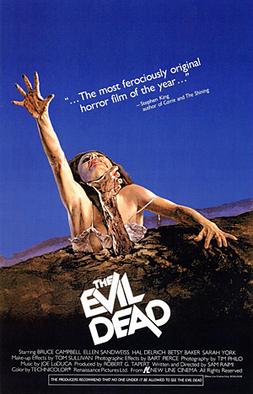 What with Ash vs. Evil Dead trouncing the television world, a review of the film that started it all is in order…
 And so it was that, upon absolving the world of its sins with his debut feature film Citizen Kane and then tempting the world again with sin for his second feature, The Magnificent Ambersons, Orson Welles decided to sin a little himself for his third and fourth feature films, The Stranger and The Lady from Shanghai. Admittedly, “decided” is not the whole story; Welles, if left to his own devices, likely would have continued evaporating cinema into its intangible elements and reconfiguring it as he saw fit, but the world had other plans. Hollywood had not taken to his second feature, and they were not about to let Welles go off the deep end of his own Frankensteinian ambition for a third time. He was, for the first time in his life, going to know the iron cage of restraint. He was going to play ball with the studios. To commit the sin of cinematic hackwork.
  John Ford did more to invent the modern Western – and arguably the American dream that streamed through it – than any other film director, and he probably did more to test and warp that dream than anyone else as well. If he has any competition, however, it must be Anthony Mann, a director who knew beauty and pregnant pauses of weathered visual memory as well as Ford. However, he was also a director of profoundly small ego, never one to indulge in the opulence and gilded glory of Ford at his most boundless and operatic. Mann used color cinematography with appreciation for how its incomplete translation to full-blooming color could enhance cinema as much as bubbling, bursting color might. In Man of the West, color is not passionate; it is exhausted.
  The obvious soul to siphon for Dont Look Back is Richard Lester’s A Hard Day’s Night, a comparison that is not circumstantial but, I suspect, intentional. After all, the mid-’60s films featuring and warping the Beatles public persona were revolutionary in their day, and they feel as ribald and restless today as they were then. These films not only utilized but mangled the burgeoning cinema vérité stylings of the French. They were markers of subversive anti-documentary documentary filmmaking that threshed out the interstitial regions between fact and fiction, narrative cinema and documentary cinema, and an untested wandering soul named D.A. Pennebaker couldn’t resist.
 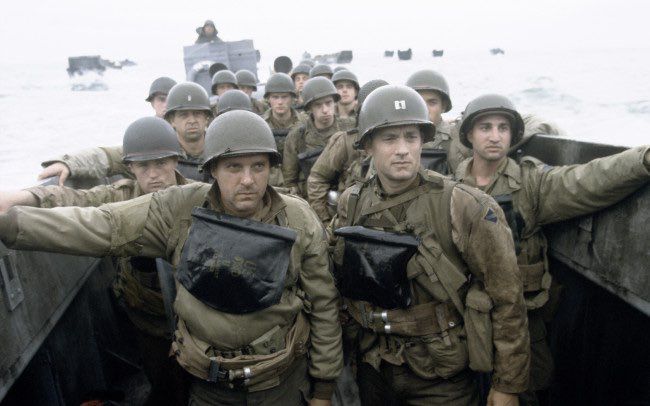 With Steven Spielberg at war again with Bridge of Spies, let us return to arguably his most famous war film.
  Since all New Wave films were, directly or indirectly, fascinated with filmmaking, it isn’t exactly a surprise that one small slice of celluloid would eventually literalize this subtext. And since most New Wave filmmakers both loved and doubted cinema all at once, it isn’t exactly a surprise that the resulting film would be Day for Night, Francois Truffaut’s semi-poisoned pen love letter to the joy of making cinema. It might be assumed that the joy of cinema follows, but that is not part and parcel with Truffaut’s vision. In Day for Night, cinema production is a circus, but the film that results is a wash. Day for Night is not an ode to the finished product, the destination, but to the production, the journey. In an oddly humanizing bit of self-love, Truffaut paints a director as an enthusiast more than a madman. He doesn’t care if the figure has talent or not. The fact that they want to be making movies is enough.
  After transcribing his childhood into one of the finest character studies in all of cinema, Francois Truffaut took a cue from his sometimes friend, often enemy for his second feature. He went Godard, in other words, and like his relationship with that most temperamental of filmmakers, Shoot the Piano Player is cinema with both hot flashes and cold skin. In 1960, before the French New Wave was nothing more than a passing whisper in the international film crowd, Shoot the Piano Player managed to prelude and predict all the proclivities, both passing and permanent, of the trend. Fittingly, and without surprise, it is as buoyantly vivaciousness and infected with cinematic self-love as even Godard’s Band of Outsiders and yet as chilly and formally provocative as Godard’s Breathless (in a rare feat of simultaneous humility and egomania from Godard, that film’s name tells all).
  The title being my fancy way of saying I wrote these reviews of Back to the Future II and III but didn’t upload them until now, a full six days after the proper day of 10/21/15. Oh well. You get to read them now, I suppose?
