
 Fritz Lang’s post-Metropolis rejoinder to his own maximalist desecration of modern German society is a fanciful, feisty kaleidoscope of Berlin bedlam and Weimar-era hedonism untethered from the astringent social critique of Lang’s Mabuse pictures. While Rudolf Klein-Rogge plays a monomaniacal mastermind of pandemonium here, as he did in Dr. Mabuse from six years before, this erratic, erotic, orgiastic display of Lang’s bravura skill shoeshines German Expressionism with pumped-up serial and rubs itself down in a torrid love affair with presentation itself. If the Mabuse films secretly smuggled in a critique of German society, Spies is, relatively speaking, more of a love letter to the temporal high of monomania, even if it is a note written with a poisoned pen. Certainly, Lang was well aware of the horrors of unfettered ’20s capitalism in Berlin and the imminent rise of the Nazi party – three years later, he would direct the ultimate cinematic statement on Nazism without even mentioning the word. But, just this once, and until its startling and corrosive finale, Lang let his monocle down in one of the ultimate cinematic odes to filmmaking as toybox more than toolbox. Continue reading
Midnight Screening: Spies (1928)
Leave a reply
 The incorporeal spirit of his dueling godfathers, Sergio Leone and Don Siegel, haunt Clint Eastwood’s second directorial effort, which also invites the tenebrous psychosis of Eastwood’s debut Play Misty for Me to the party. From Leone, Eastwood attunes to the primordial, baroque expanse of the Western as a dreamscape or an amoral vetting ground rather than a physical place. As a counterbalance, Eastwood matches the florid poetry of Leone to Siegel’s terse brutality to concoct a Western as comfortable with surreptitiously shooting you in the back as it is with orchestrating the social theater of the high noon showdown.
  Deliverance is driven by nihilistic impulses that subsume all sense of morality under the unremitting decay of primal, masculine gruesomeness. The story of four Atlanta businessmen trapped and hunted in rural Northern Georgia, John Boorman’s tone poem to nature as implacable object abstains from ever empathizing with the four men. Excepting Ronny Cox’s Drew, the only primary player who even considers the value of rural natives in an eerie yet oddly touching banjo duel, by far the most famous scene from the film to this day, none of the characters fare well as moral specimens. Arriving in a village hewn out of the earth and continually threatened by it, Ned Beatty’s Bobby bellows about the place, and when redressed for potentially annoying the people of the town, his retort, “People?”, suggests his ignorance about the location he now inhabits.
  It’s hard to deny that a palpable misogyny suffuses The Brood, and director David Cronenberg’s post-divorce fractured attitude toward main character Nola (Samantha Egger) does malignantly spread throughout the film. But as the nexus between Cronenberg’s bodily, corporeal grindhouse films from the ’70s and his more cerebral psychoanalytic studies, The Brood is a more troubled affair. For one, this tale of marital fallout is calibrated for a tenebrous blamelessness, with Cronenberg’s austere style vacillating between perspectives to reform our preconceptions of which parent is truly justified in this atomic deconstruction of the essentially self-sabotaging nature of the nuclear family.
 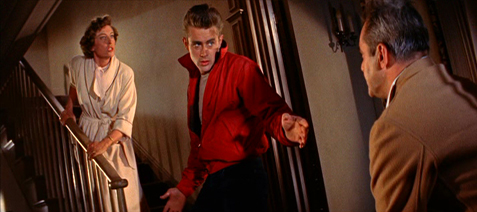 It’s a double-edged sword that Rebel Without a Cause is simultaneously the raison d’ etre for many a cinephile’s knowledge of director Nicholas Ray at all, and that it is, simultaneously, a black hole suffocating energy and consideration from Ray’s cinematic canon elsewhere. Not to mention, for most people, the name associated with Rebel is not Ray, the underdog of American film in the ’50s and perhaps the missing link between the classical Hollywood melodrama and the angry young hooligans like Godard and Cassavetes of the ’60s. Instead, the claim to fame of Rebel is the hot-headed bundle of nerves that was James Dean, arguably the pop culture icon of the ’50s as well as an embodiment of the very spirit Nicholas Ray epitomized as a filmmaker: pulpy but passionate, lean but expressively sensitive, expressionistic but timid, and above all trembling with the unspeakable, implacable throb of constantly spinning out of control.
  Proposed to producers as a hippie-dippie psychedelic fallout shelter for the grooving ’60s to escape to in case of mass assault by the impending cynicism of the ’70s, Donald Cammell and Nicolas Roeg’s vituperative Performance is, instead, a sulfurous and fluorescent molotov cocktail thrown straight into the decade-long party the ’60s had been having with itself. Announcing itself with the foreboding funk of a hearse-like car careening across the countryside, the cryptic seizure of the film’s editing then immediately interjects with an explicit sexual tryst that sours into a fiery throttling match between fleshy shapes that soon enough barely even resemble the human form. We’re a minute in and we already cower in fear for the sadomasochistic holocaust the co-directors are about to unfurl upon us.
  Oliver Stone’s cinema is always at its best when it is most explicitly akin to the art form it most closely mimics: propaganda. That’s not a put-down; all cinema is subjective, and while most films strive for the diaphanous lie of objectivity, a live-wire polemical of spitfire bias isn’t something to shun. Objectivity, anyway, is often a pacifying gesture for films without an authorial personality or a humbling vision of their own camera’s perspective – a clinical, balanced approach only squares off the edges of the audience-camera dialectic and hides the essence of all cinema as a perspective, a vision, an embodiment of an idea or a view. Objectivity is nothing more than a cemetery where films without a pulse, without an identity of their own, go to lay their heads down to rest.
 Watership Down begins with an iridescent slab of primal, irradiated cartoon psychosis, a deceptively primitive work of mythological animation as welcome in the Disney canon as it would be adorning Ancient Greek pottery. Regaling us with the oil-and-syrup concoction that is the mythological fable of rabbit-kind, we’re informed how the fecund species was blessed with fleet feet and cursed with a menagerie of predators. The simultaneously timid and trepidatious imagery of crayon-infused characters backed by an illuminated white hell evokes a cautionary tale most bold. Animation in 1978 was at something of a nadir as up-and-comers were rabidly chasing down the cadaverous corpse of Disney and looking to impose new styles all their own, and in this light the intro of Watership Down feels particularly prescient. Watching the introduction of Watership Down, it’s as if the film chose to begin with a despairing version of the classical American cartoon style – all curvaceous, simple lines and expressively elegant crayon-scrawl – to pay homage to the old before casting about with the new.
  Flesh for Frankenstein
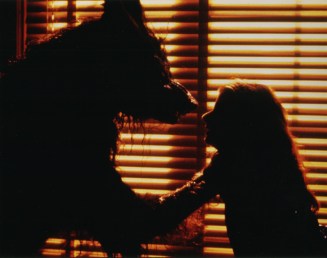 Writer-director Joe Dante is pop culture dead weight today, but in the mid ’80s he was the zeitgeist. A progenitor to the highfalutin sub-horror irony of Scream and a cornucopia of too-scared-to-admit-they-are-horror films in the intensely glib world of ’00s horror, Dante’s brand of irony was much less prone to the fraudulence of incessant hedging. His earliest films, Piranha and The Howling, upend horror tradition without fecklessly resorting to ingratiating pleadings of blasé, sycophantic self-superiority. They rib and tickle, but they’re also honest-to-god horror films, as marinated in tenebrous cinematography and bone-rattling sound as any films of their time. They tease us, but they do not trick us: they mean what they say, and they bite.
  The Long Take