
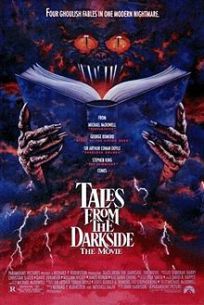
 With anthology horror prowling all through the house throughout the ‘80s and into the early ‘90s (a byproduct of the decade’s conservative turn and ensuing ‘50s/early ‘60s fetish), 1990 was the watershed moment for when the monster mash got nasty. The A-list-courting Amazing Stories show from nostalgia-babies Steven Spielberg and friends meant to tingle your spine while it was patting your head to sleep. But when HBO latched its greasy, sleazy claws around the trend, it soured into the venomous, loud-and-proud midnight haunting hour likes of Tales from the Crypt by the decade’s end. (Robert Zemeckis, one of Spielberg’s cronies, was involved in the transition and directed three of the best, although not always the bloodiest, Tales when he decided to let his hair down and unscrew his A-list credentials for something grubbier and more robustly exploitative). Continue reading
Midnight Screaming: Tales from the Darkside: The Movie
Leave a reply
 With House by the River, Fritz Lang’s forked acid-tongue was curled up into his iron-bolted mouth by Hollywood execs none too interested in some of his more provocative stylistic or thematic ideas (of really doubling-down on baroque imagery-of-the-mind or exposing oppressive gendered, racialized, and classed power dynamics in America). But, even though he was forced to neuter his mission and his mind with films like House by the River, Lang’s eyes were as sharp as ever, possibly even hungrier due to his sometimes-livid attitude toward Hollywood and the poverty-row quality of this production in particular. The once gilded director of four hour German epics, monolithic slabs of pure cinema in their day, was now a mercenary for hire. But, hey, Val Lewton and Jacques Tourneur produced the two best horror films of the 1940s with next to no budget, so why couldn’t Lang knock out a corker of a film noir?
  Skulking down from its natural habitat of the backwoods of the frigid North down to our prudish American confines, David Cronenberg’s early Neanderthal of a body horror film delivers a scatterbrained, deviously crude twinge right to the spinal fluid and sends the mammalian brain running wild. A premonition of icky in-your-pants terror to come, this unruly, mutilated motion picture about a sex slug that invades the inhabitants of an apartment complex somewhere in Canada doesn’t hit the deliriously otherworldly heights of Cronenberg’s latter-day triumphs. But the director already displays an almost Machiavellian skill for bodily manipulation even on a shoe-string budget (a budget he marshals for a film that is more than the sum of its parts). And his peculiar aura of marrying undisciplined/unmitigated with judicious/precise flavors ultimately colors in his hypothetically barren production with formal rigor and subtextual meat a mild wide, creating a horror that runs both fiery hot and cold like a reptile.
 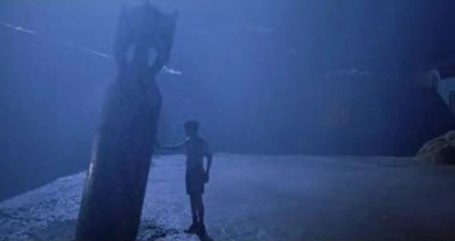 In his canonical masterpiece Pan’s Labyrinth, the faint pulse of brilliance throbs in Guillermo del Toro’s luxuriant, sumptuous, affectively-charged imagery. But rather than carving out room for the kind of insouciant, mordant humor and interpersonal drama permeating through his Hellboy II, Pan’s Labyrinth is mostly content to calcify itself in a morass of symbolically-charged cues devoid of any precious room for del Toro to feel out the moment rather than smack us over the head. There’s room for such overt emotion in any filmmaker’s canon. Hell, the romantics del Toro loves (Almodovar, Douglas Sirk) practically made a career out of spinning melodramatic straw into gold that punctures the mask of subtlety and rationalism. But the sense of robust emotion as an escape from reason is too often trampelled by del Toro’s emphasis on characters as stand-ins for ideas or metaphors. The relationship between the symbols and the emotions isn’t mutualistic. Rather, the symbols parasitically enervate the characters of defiant streaks or the ability to even consider peering elsewhere beyond what the narrative has preordained for them.
 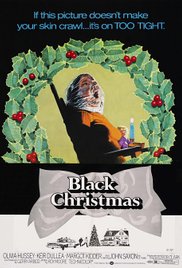 Bob Clark’s maniacal 1974 classic is perhaps less remembered today for its own caliber as cinema than for the hell it wrought on the American film industry. Here, I refer not to the necessary, provocative, disobedient, slash-and-burn kind of hell the film wrecks with its wonderfully imprompriotous filmmaking, but the vile, corporate, franchise-baiting kind which turned horror filmmaking in the ’80s into the most cringe-inducing attempt to market the genre to the lowest common denominator. But that’s less a slight to the film’s quality than a marker of the sheer deluge of sequel-itis this proto-slasher unleashed (Tobe Hooper’s masterfully malevolent The Texas Chainsaw Massacre was the other obvious culprit on that front). It’s a tough reputation to live up to. No film short of John Carpenter’s ur-slasher Halloween could stand up and stare at the massacre of common decency the slasher represented in the ‘80s and remain un-mortified at the devastation its inferior slasher-children had caused to the intelligence of the horror landscape. Still, nu-metal will never halt me from claiming that Faith No More is the most defiantly demented rock band of the past 25 years And Nickelback only occasionally makes me feel guilty for liking Soundgarden and Nirvana. I’m not about to slander a film for the sins of its descendants. Besides, those antic, anxious perspective shots strangling Black Christmas like garrote wire sure made John Carpenter happy when he weaponized them for Halloween four years later. And if we have Black Christmas to thank for John Carpenter, then who really cares how good this film is? It has already done its due diligence to the cinematic landscape.
  Not really progenitors to any new film specifically so much as to the spirit of every Christmas movie. Again, I recognize I’m a couple weeks late here. Enjoy nonetheless.
 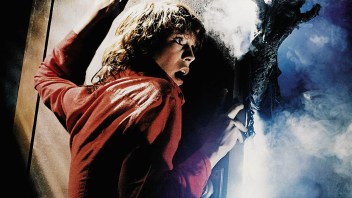 In late ’70s and early ’80s, an era of rapid-onset gigantism from both young blockbuster wannabes (see Lucas, Spielberg) and the then-old New Hollywood dogs who hadn’t learned new tricks but sure dug learning how to spend more money on the old ones (see Coppola, Cimino, both of whom I adore), John Carpenter was a breath of shedding, frigid air. His run from Assault on Precinct 13 through Halloween, Escape from New York, and The Thing is simultaneously a breathless rush and malarial lurch (that contrast being Carpenter’s hometown) through old-school B-picture primitivism updated with hungry young carnivorousness. Smack dab in the middle was the ugly duckling of the bunch, his somewhat forgotten ghost story The Fog, another obvious ode to Carpenter’s youth in the form of a relatively classical, compositionally sound ghost story. Although its reputation hardly precedes it, The Fog is an always humble director at his most humble, maybe his most straight-faced, and, well, not his best per-se, but nearly his moodiest.
  I know the post is a little late, but at least I managed to watch these films on Halloween.
  I know the post is a little late, but at least I managed to watch these films on Halloween.
  A barn-burning blockbuster mixed with a post-psychedelic phase-out, The Fury was released (or unleashed) at a point in time when freakishness was something to contain and compartmentalize rather than flamboyantly unhinge. Yet director Brian De Palma, his corporate cred already in good hand after kick-starting the wave of Stephen King adaptations with Carrie, lets the crazy all hang out. An evolution and perversion of Carrie, The Fury won’t be to everyone’s tastes, although it certainly was to critic Pauline Kael’s. In one of her most infamous typeset orgasms, the famous moralist critic let loose, felt the film’s pulse, and ran with it.
 The Long Take