
 Yankee Doodle Dandy really doesn’t make it easy for itself. Consider the strikes against it. It is a Grand Old Biopic madly in love with its own subject matter. It is filmed by a director, who, for all his multitudinous strengths, was never all that invested in subverting or transforming his screenplays, a filmmaker who drew his vigor and interest precisely from the subject matter and the screenplay he was tackling. It is also a quintessential work of matching a great actor to an important historical figure, just about the biggest talent-suck set-up any film could possibly dread. With a performance and a subject to fill the box office and wow the middlebrows, a director has carte blanche to indulge in all the soporific tendencies of a screenplay, to blindly and blandly fill the screen with blasé Important Moments rather than to actually prop up the storytelling with invigorating artistic gestures. It is, in other words, a work that was dead in the water – artistically speaking at least – even before its release. Continue reading
Michael Curtiz: Yankee Doodle Dandy
Leave a reply
 And now for something completely different, although not that different when you really think about it.
 At some level, we must concede that Michael Curtiz was more of a filmmaker of efficient craftmaking than superlative artistic ambition; this sense of getting-the-job-done pervades even his masterpiece, Casablanca, but gosh darn it, well-oiled-machine filmmaking has never been more delectable than Michael Curtiz filmmaking. The perpetually underrated master of the craft was no auteur, nor did he want to be, but his films sparkle with single-minded clarity and blunt craft like nothing else from the Hollywood machine in its early days. Again, he was a studio guy for Warner Bros and he always operated with a sort of humility to his stories that saw him not so much take control of them and do with them as he would; rather, he focused on a propulsive forward movement to his tales, a sort of inescapable quality that made the stories feel like they were telling themselves first and foremost. Yet Curtiz was always there, making functional filmmaking the food of the gods and cutting through the fat to produce films that, if not entirely perfect or challenging in the most overt of ways, were at east the most perfect versions of themselves.
 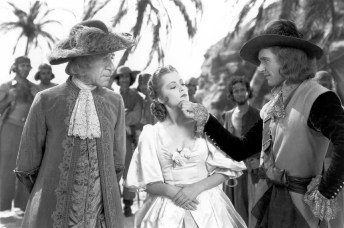 Analyzing the work of an Old Hollywood stalwart is no easy task. All the prime candidates have been written about to death; who, in all my majesty and knowledge, can I actually tackle without self-repetition? So much I wanted to take on Nicholas Ray, one of the reigning “brash young men” skirting around Hollywood royalty in the 1950s, but having reviewed In a Lonely Place and Johnny Guitar (and thinking his most famous film, Rebel Without a Cause, is the least fun film of his to write about) crossed him off the list (Bigger Than Life desperately needs a review though). Jacques Tourneur certainly popped up, but I’ve already covered his two most famous films, Cat People and I Walked With a Zombie, and Out of the Past and Night of the Demon can hop their way on over to Midnight Screenings anyway.
 I don’t know, man. Death Proof isn’t really a movie. It’s an idea, and as an idea, it can’t be separated from the way it was released. Its release was very much the whole point of its existence, even separate from the actual film that was produced to facilitate that release. On its own, there isn’t a whole lot going on in Death Proof, although small pleasures, including an awe-inspiring final reel, abound. So…
 Rare is a film of such purity as Kill Bill, and rarer still is a film of such purity that is never less than fully confused and unsure of itself. From beginning to end, Kill Bill is entirely the artwork of an unabashed enthusiast and filmmaker, but it is a deeply perplexed film, perhaps intentionally so, and perhaps to its unmitigated benefit. Purring like a kitten on the surface but deceptively self-critical underneath, Tarantino’s most violent film also has more to say about violence than any of his films. It is a work that is simultaneously enraptured in love with itself and tearing itself apart in disharmonious hate, and thus certainly his most fascinating, conflicted piece yet. This doesn’t make it necessarily better or worse, but it may make it his most worthwhile film, especially because it never once allows us the confidence of our views in it. We can’t even really be sure if Tarantino “gets” it, and auteur theory isn’t going to help us one lick, unless of course it’s there in the background reminding us that Tarantino just can’t make an uninteresting film– even when doesn’t have a clue himself. Kill Bill can’t make an argument that Tarantino understands his own particular brand of proudly filmic anti-film commentary on the nature of cinema and violence. It may be him missing the forest of his own genius for the crimson-red trees of flailing arms and heads. But what a forest. And what trees.
 Quentin Tarantino “does” blaxploitation conjures a certain post-modernist genre-kitsch image in the mind. Clearly, it conjures the same image for Tarantino too, as his latest film, Django Unchained, exists wholly in a postmodern blaxploitation-by-way-of-Western stew. Yet Jackie Brown, despite its would-be blaxploitation credentials, couldn’t be further from the playful violence and comic grit we might expect from both the genre and Tarantino. Maybe it’s just the not inconsiderable fact that this is the director’s only film to date that bears another source, in this case Elmore Leonard’s novel Rum Punch. The fact is, Tarantino very much proves primarily invested in honoring his source material without transforming it in any notable way. It is Tarantino’s most humble film, and anyone who knows him would never dream of that descriptor anywhere near him. Either way, it just doesn’t feel like any other Quentin Tarantino movie, and for a guy who is easily stereotyped and put in a corner, it’s a pleasure to see him exploring, especially in 1997, perhaps the height of his critical darling days when he could seemingly do no wrong.
  It must be said: excepting The Matrix, no single film has done more harm to the modern cinema industry than Pulp Fiction. The old “every filmmaker who saw it made their own movie” card is the great equalizer, uniting genuine talents and hacks alike. But in the case of Tarantino, the results were far from equal. A few genuine craftspeople followed in his wake, but they were diamonds in the rough compared to the far more significant cohort of filmmakers who whipped Tarantino into a frat boy’s wet dream and perverted his vision of cinema from the ground up. Largely, this has to do with Tarantino’s supposed “cool factor”, the superficial blanket hanging over all his films that has beckoned first-timers the world over to ape his penchant for slick, sick violence, whirlwind camera jerks, and self-consciously fantastical style. This style has always been a noose around Tarantino’s neck, and it has strangled the world of cinema for years to come.
  If one is to “talk shop” about film in the past quarter decade, you really cannot avoid writer-director Quentin Tarantino. No filmmaker has staked out his own public identity in quite the same way, and for better or worse, no filmmaker has been copied and misinterpreted nearly as much. The things that constitute a “Quentin Tarantino” film are vocal and known to many people, even those who don’t much care for cinema at large. He is one of the few directors who is both overrated, in that he really ought not be the first or even the twentieth director anyone mentions when talking about cinematic masters, and underrated, in that both those who like him and those who don’t generally misinterpret his films and seldom realize their true, fundamental genius. Considering how ubiquitous Tarantino has been for the past quarter decade, it’s somewhat shocking how misread he often is (then again films of great subtext and depth open themselves up to being misread, and Tarantino in all fairness courts more than he challenges misreadings). Few people really understand his essential identity as a director, and even though Reservoir Dogs is very much a testing ground for better things to come, it is essential cinema, and furthermore, it is essentially Tarantino in a nutshell.
 In order to properly understand Starship Troopers, one needs to understand its casting. At some level, casting is the de facto entry point for any of Verhoeven’s American films over the decade from Robocop to Starship Troopers. Total Recall, although somewhat muted by its need to be an Arnie vehicle, definitely gestured toward using the big lovable lug as a critique of the idea of an Arnie film. More successful was Basic Instinct, where Verhoeven cast a seemingly unaware and genuine Michael Douglas more for his weathered, aged wrinkles and flagellating variant of all-American thuggery. And one doesn’t need to explain Showgirls these days, a work where Verhoeven cast (cruelly so, at that) the young whippersnapper Elizabeth Berkeley and forced her through all manner of gross, grotesque abuses on screen in a meta-commentary on the way in which her character, and young Hollywood starlets altogether, are forced to go through the wringer to find success, leaving others in their wake and losing their dignity and respect for themselves as they forced to do the unthinkable.
 The Long Take