
 Edited
1948’s The Treasure of the Sierra Madre saw the return of a pairing that had birthed two of the cinematic world’s greatest talents – John Huston and Humphrey Bogart. Seven years earlier they had made film history with the (hard)-boiled-down-to-the-core film noir The Maltese Falcon, Huston’s first film and Bogart’s first star-making role. It seems like the seven years apart was enough to make them hungry enough to throw Hollywood for a loop. That they did, famously so when Warner Bros execs initially hated The Treasure of the Sierra Madre. In creating the film, they had succeeded brilliantly with a narrative and mood never even really tried before: a noir Western, infused with the mythologizing and location-work of a Western but the stylish ironization and seedy, grimy exploration of human decay front and center in noir. Quite literally, it was a combination of the genre of American dreams and the genre of American nightmares. What they created not only gifted Huston two Oscars, for directing and writing, and re-cemented Bogart’s name (along with their other 1948 pairing in the also great Key Largo), but exceeded the then far grasp of both genres and served as a striking examination of human decay far more sinister than just about any film before or since. Continue reading
 Edited and Updated 2016
 Edited June 2016
 Edited
 Arguably the finest example of the Italian neo-realist cinema movement during the mid-1940s, Bicycle Thieves is a fascinating and moving examination of faith, desperation, love, and society, all under the guise of a film about a man searching for his bicycle. It also re-wrote the textbook on the notion of story, emphasizing narrative feeling over plot event and exploring character and emotion in the mundane rendered dramatic through filmmaking prowess. It’s a remarkably simplistic, primal, elemental basic premise; essentially, the movie unfolds as a man and his son look for a bike that was stolen from them. It sounds like relatively light viewing initially, but Bicycle Thieves is among the most powerful explorations of the human experience essayed on film. Its seemingly simplistic nature exposes a powerful statement about post-war Italy and the heartbreaking portrayal of what desperation and fear can do to a person; it is both uniquely and earthily of its own time and location and a broadly human experience applicable to any situation. It emerges as a film of great desperation and fear, but also one of the cinema’s most profoundly humanist and even uplifting statements, all captured under Vittorio De Sica’s plaintive, mournfully poetic camera.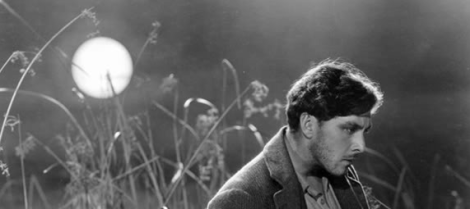
 Edited May 2016
 Preface: Now that I’ve finally decided to go “old” with the blog, I’m doing it in style with not just a regular “old” film, but two, and two that have ripened with age. For this week’s Midnight Screenings, the ’90s, ’80s, ’70s, ’60s, ’50s, and ’40s wouldn’t do. I’m taking it back to two of the granddaddy’s of filmmaking from the early ’30s, two of the earliest “talkies” and two supreme influences on Midnight Cinema from a time where films could be more openly playful and subversive as filmmakers were still trying to prod and poke at the medium to expose its limits and possibilities.
 Nuri Bilge Ceylan’s 2011 Turkish drama Once Upon a Time in Anatolia seems like it was made for me. A glacially slow, wistfully poetic film about finding visual beauty in mundanity (or is it the other way around?) that primarily focuses on the formal elements of film, such as camerawork and editing, at the expense of a conventional narrative, it aims to fill big shoes set out by directors long-gone, but whose mark on the film world is undeniable: Tarkovsky and Antonioni to name the two most obvious. High praise, but if you’re expecting a “but” … you’d be wrong. Amazingly, Ceylan overcomes any burden placed on him through comparison to past master-directors here, not by creating something truly unique but by learning from the best (his Sight and Sound Magazine Top 10 films list plays like a who’s who of languid art-house auteurs) and essaying their strengths for a time period sorely lacking in such provocative, deeply felt filmmaking.
  Watching Prometheus provokes more of a shrug than anything, but it’s not an entirely hopeless shrug. It misses the mark, but it’s reasonably entertaining in doing so, has at least one terrifying scene, and ponders big questions about the nature of the world and the relationship between science and religion. Thankfully, it doesn’t give easy answers either, but that comes off more as a result of not addressing the questions as much as it could have.
 The Long Take