
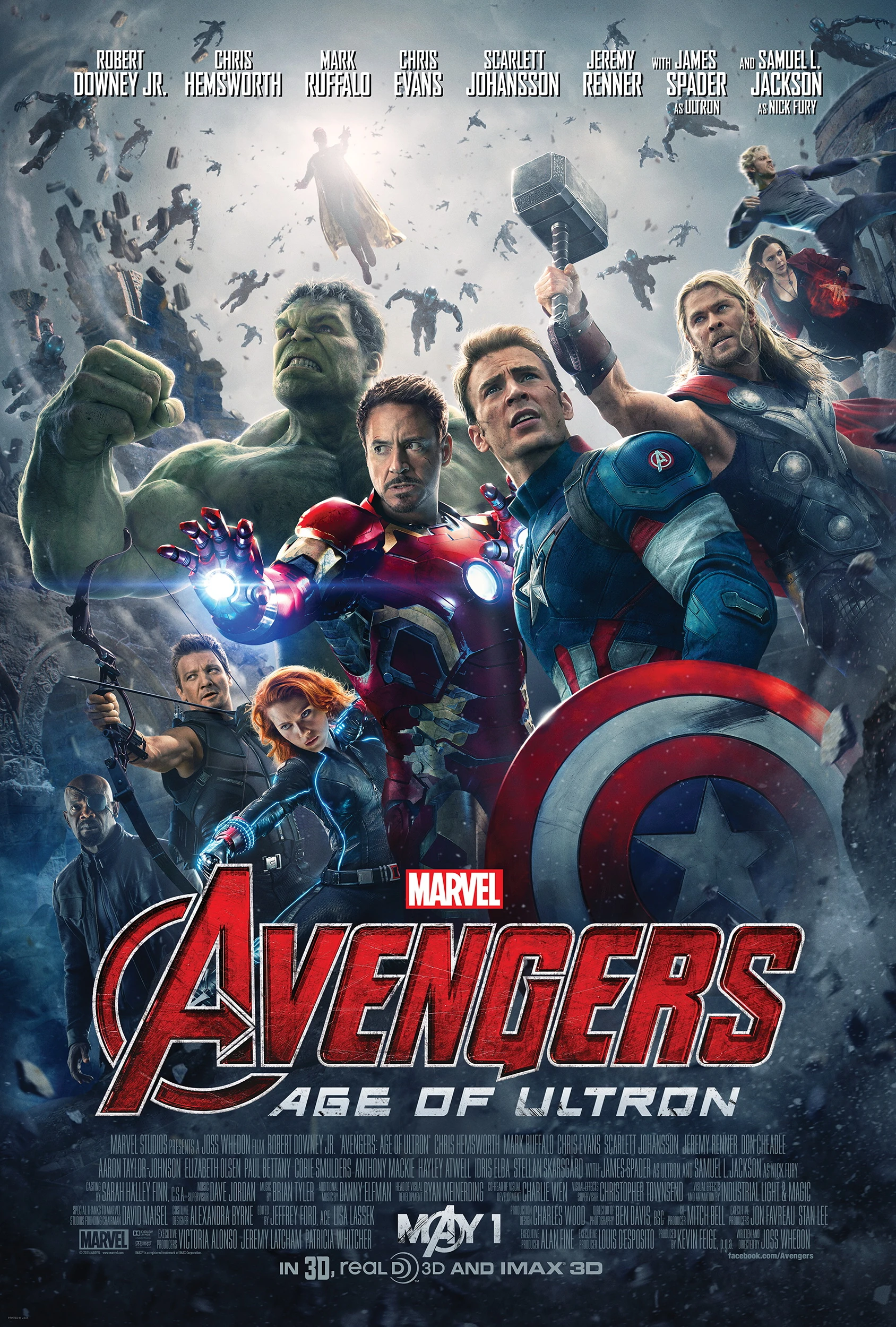
 The most enticing moment in Avengers: Age of Ultron is successful because it is so elusive, and it may very well be the worst moment as well. When it begins, we are informed that the titular superhero smack-down squadron and consummate bickerers are off to Africa. We know we are going to Africa because the characters essentially say “we are going to Africa”. Smash-cut to a helicopter shot of a derelict shipyard. We know this is a shipyard because there are ships. It is also, one would assume, on a coast line, for that is where ships tend to reside. At this point, everyone’s favorite quasi-military font appears in lower screen with text that informs us, in as many words, “Shipyard, Off the Coast of Africa”, in case we were wondering if the ships were, in fact, airplanes, or whether they were docked in Nebraska.
So hand-holding and inelegant this text is, and utilizing the form of on-screen text which is already the laziest and least elegant storytelling mechanism in all of cinema, that it almost must be an intentional self-parody. All of these big time beat-down films rely on techniques like these to show us a story happening, and then to doubt us, and then to tell us what is happening all over again in case our eyes had deceived us, as though we audience members in our infinite wisdom could not figure out in fact that the image of unmoving ships placed right after we are told “Africa” is in fact, an image of ships docked off the coast of Africa. It is a comic, delicious moment nearly avant-garde in its laziness. It’s the sort of moment that asks the mind to wander: “why is this text here? It is providing no new information anyway, but movies like this are supposed to have military text every time they change location, so if that is what you want, here you go…” Continue reading
 First things first: Don Jon never quite comes alive as a work of fiction. Joseph Gordon-Levitt’s first directorial effort promises style but uses it sloppily. Plus, it’s as often messily sloppy as it is fascinatingly sloppy. The themes it unveils are multitudinous and often at-odds with one another, and many are not fully reconciled. Put simply, I’m confident JGL had a damn good idea of his film in his head, and he set about using visual storytelling and honest-to-god mise-en-scene, but he forgot to check himself and make sure all his ingredients were setting in the oven. The film swerves back and forth with hectic zeal and energy between a stinging, bitter, and harshly clinical dissection of obsessive compulsion disorder and something much frothier indeed, not quite romantic comedy and not quite snarky attack on the whole of New Jersey as a state. It’s so busy with all these themes it never really has time to come up for air. The end result is something that is stylistically compelling if not for any specific purpose, fascinating in individual moments but much much less than the sum of its parts.
  Update late 2019: Looking back on some old Joaquin Phoenix films with Joker raising such a ruckus, and I’m torn on Her after a six-year gap in viewing. The film certainly feels less monumental than it did six years ago, but that’s also a show of strength: quietly but demonstrably, critically but not-cynically, the film exhibits curiosity about relationships, identity, and the world, and its lack of capital-case textures and showboating maneuvers suggest the subtlety of its craft more than Importance ever could. That said, I’m less certain that Her’s curlicued production design affectations, while kept in check from garish Burtonesque grotesqueness or Wes Anderson-esque excess by Hoyte von Hoytema’s phenomenally diffuse, naturalistic cinematography, are actually the auto-critical gestures the film so clearly thinks them to be. The film’s look is still pointed, and still effective, but at times, it encroaches on the very mannered twee-ness that the style otherwise so thoughtfully diagnoses about modernity, so much so that the film seems cloistered and soul-bearing at once. Is it thoughtfully contradictory for the film to lean so clearly into its very object of critique, as though swirling around in its own critical gaze, or is it simply too-cute by half?
 Edited Dec 2014 after I watched a second time and noticed how jaw-dropping the sound design is; sometimes the beauty of images, and the fact that film is a primarily visual medium, distract from the wondrous world of noise.
  The Long Take