
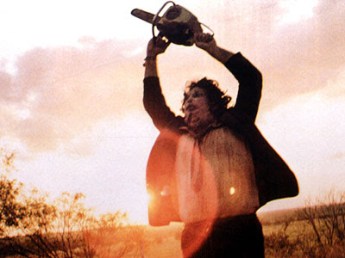
 Updated mid-2017 after another rewatch – such an amazing, amazing film, not particularly violent in a diegetic sense, but one which feels as though violence has been done to it.
This post being in honor of the film’s fortieth anniversary this upcoming Wednesday, October 1. Here’s to forty more years of soul-deadening terror.
The story of five nobodies wandering through rural Texas and running afoul of America’s hidden secrets, The Texas Chainsaw Massacre is infamously violent, which is curious because it’s hardly violent at all. The body-count is shockingly low and deaths happen mostly off-screen, relegated to the abyssal margins of an already poetically empty screen space, one which seemingly voids participation in a wider social milieu. But if the movie feels violent more than it is violent, that’s because it feels positively disgusting. This is grimy, disturbing filmmaking in every possible way, almost toxically fugitive in its disobedience to propriety. It may be one of the grossest-looking famous movies ever released, somehow both punishingly direct and monstrously, mystifyingly oblique, like it’s showing us everything head-on while veiling more submerged truths about American discontent. The film grain, even for the time, is knowingly poor – it feels like a documentary more than a film, lending it an unsettling and grimy immediacy, but also an evasive sense of ambiguity. The film-grain scratches which are testament to the authenticity of its expression of reality also suggest the film’s curiosity about a reality that is ultimately inexpressible, a sense of horror which is both extremely forthright – sometimes breaking through the film screen itself to confront us head-on – and obliquely suggestive of terrors we aren’t, and perhaps can’t be, privy to.
Continue reading
 Updated mid-2015
 Note: this review is something of a repurposed college-age article, so be kind to the writing…
 The Long Take