
 When Lucrecia Martel’s Zama begins, its protagonist, Don Diego de Zama (Daniel Gimenez Cacho), is performing his own sovereignty on a beach. Decked out in colonial garb and jutting one leg outward toward the sea, he seems to be posturing to no one in particular, as if beckoning to some unseen God to witness his sculpting himself into a predefined role as an icon of mid-level colonial bureaucracy. Radiating a vision of masculine competence to himself and only himself, de Zama’s supreme selfhood ultimately discloses his supreme loneliness and pitifulness. He then enacts a self-authored fiction of ownership of and mastery over the island by spying on a group of native women bathing naked, assuming that he has the right (and ability) to look. With the mischievous, wicked temperament of a colonial slapstick, writer-director Martel’s film then immediately punctures his vision of self: they spot him and shoo him, nearly beating him up in the process.
Here, de Zama begins the film as an almost literal monument to the colonial enterprise, an erect beacon of the civilizational impulse. Throughout the next two hours, though, his “plight” will pervert again and again, from a devilishly quotidian workaday farce to a travesty of selfhood to a sublime portrait of cosmic absurdity, all before concluding with a final surrealistic, ostensible-escape to another world that in reality only manages to lay bare the circular inescapability of de Zama’s life all the more cruelly. Martel’s preferred cinematic subjects are the gendered and racialized politics of modern South American (particularly Argentinian) life. Adapted from Antonio de Benedetto’s 1956 book, Zama is a maddened dispatch from the birth pains of modernity that in many ways exposes the origins of these concerns, the genealogy of colonial life. An extremely noble impulse, but Zama’s genius is how ignoble it is. Martel ultimately tackles the “tortured geography” of colonialism not in the often monotone voice of historical cinema but as a dissociative fugue, the camera impishly roaming around in forgotten time with a figure trying to author his own story even though he seems to have totally missed the script. Continue reading
 Impish and pious in equal measure, James Wan’s Aquaman is almost violently at a crossroads with itself. It both worships at the altar of the comic book and recklessly exposes the form’s essentially frivolous nature, giddily treating the comic book as holy writ while implicitly dismissing any desires to lard the form up with self-conscious airs. Somewhat astoundingly, it resurrects the mid-century pulp spirit of B-cinema and the comic book form, almost more Heavy Metal than DC, a spirit that both cherished and, at least sometimes, derived genuine pleasure out of that paradoxical overlap of silly and serious. The best of these comic books are somehow both eternally reverent to the value of unquestioned, thoroughly and inhumanly “good” mythological super-persons and essentially amused by this worshipful fascination. They seem almost curious about how loopily self-indulgent it is to get lost in such nonsense. Aquaman is quite conspicuously nonsense, and its melding of the ridiculous and the sublime never treats that nonsense as anything less than completely sincere.
  Loosely in honor of the MCU’s recent announcement of a new Blade picture, and in honor of a film that I think is better than any of the 22 films in the MCU.
 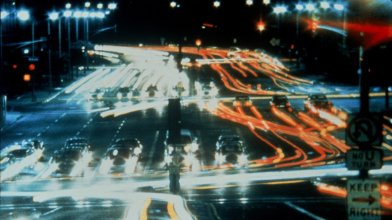 Koyaanisqatsi offers what can only be described as a radical defamiliarization of humankind, treating civilization as a known-unknown and humanity as an alien artifact. Famously soundtracked by Phillip Glass’ gloriously minimalistic score, Godfrey Reggio’s first of three environmentalist impastos offers a symphonic image of the human experience, contradictions and curiosities existing in tenuous, frictive harmony. Transparently environment and even polemical, Reggio’s film is less a plea for salvaging the environment than a call for a new kind of perspective on existence: the camera turning, warping, acknowledging its mediation of nature’s might and igniting the potential of the natural world that is often taken as backdrop, a mere resource to be plundered rather than imaginative energy to be mined.
 Bruce Lee is rather unceremoniously written-off in Quentin Tarantino’s new film, which I finally saw and thought was otherwise terrific, but it seemed a little counter-argument was necessary for Midnight Screenings this week.
 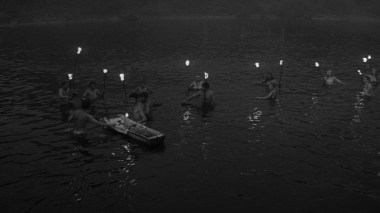 While Andrei Rublev was officially released in 1966, it was not unleased upon the world until one fateful night (at 4 AM, courtesy of Soviet censors) in May of 1969 at the Cannes film festival, and as that screening was one of the most important cinematic events of 1969, it seems entirely legitimate for the film to have a place in this short retrospective.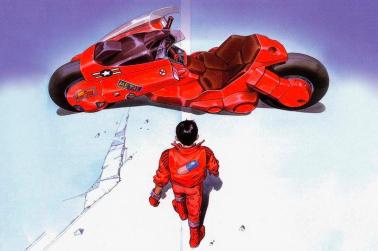
 It’s been a while since I’ve done these Friday B and/or cult movie reviews, and I’ve decided to return with two dystopian films set in the year of our Lord 2019, offering visions of THE FUTURE that may or may not have come to pass.
  In honor of the half-century anniversary of the epochal years of 1968 and 1969, I meant to propose a little series of reviews commemorating the films of those years last summer, particularly with all the academic conferences and articles trying to rekindle the lost spirit of ’68 or otherwise to dissect it. I didn’t get around to it at the time, but with the era lulled to sleep last month by Quentin Tarantino’s phenomenal Once Upon a time in Hollywood, now seems as good a time as any to start! I apologize that I’m a year late to officially celebrate the 50th of some of these films, but a great film doesn’t need a deadline to be remembered.
  In honor of the half-century anniversary of the epochal years of 1968 and 1969, I meant to propose a little series of reviews commemorating the films of those years last summer, particularly with all the academic conferences and articles trying to rekindle the lost spirit of ’68 or otherwise to dissect it. I didn’t get around to it at the time, but with the era lulled to sleep last month by Quentin Tarantino’s phenomenal Once Upon a time in Hollywood, now seems as good a time as any to start! I apologize that I’m a year late to officially celebrate the 50th of some of these films, but a great film doesn’t need a deadline to be remembered.
  The Long Take