
 Federico Fellini, the grand master of Italian cinema, began his life behind a camera as a young lad among the neo-realists, a protege of sorts to De Sica and Rossellini and their own habits of redefining cinema forever. Fellini, like those masters of the form, sought to reject Hollywood convention and lay down a thick layer of everyday humanity with non-actors and grungier camera techniques less galvanized in Hollywood glamour and melodrama. This shift itself was a towering upheaval to the cinematic tradition, a tangible stimulant to directors everywhere to shake the foundations of film land and brace for impact.
But Fellini was not done shaking. The neo-realist movement, for him, was a jumping off point, a stepping stone for his own more whimsical, more blunted, and dare I say more challenging vision of what cinema ought to be. Beginning with the seminally shattering La Strada in 1954, Fellini married a form of realism to a carnivalesque wonder and an omnivorous desire to break with reality when it could help the emotional truth of his story at the expense of conventional logic. Continue reading
 It is hard to imagine a better version of Jacques Cousteau’s The Silent World, and that is a troubling fact. Lit with a fluorescent technicolor expressiveness, this non-narrative documentary of undersea images is like a peek through the looking glass of another world, exactly the magical, alien world of whimsy and majesty that Cousteau dedicated his life to and dared to see in his dreams. With the soon-to-be seminal Louis Malle (who would direct through the French New Wave and then hop on over to Hollywood) by his side, The Silent World is a visuals-first extravaganza of lush, hysterical colors and evocative silences. All these years later, it is also, perhaps unintentionally, a showpiece for the arrogance of mankind, and the terror of humanity at its egotistical worst.
 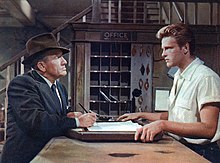 John Sturges, mostly famous for his two later rugged process-driven films, The Great Escape and The Magnificent Seven, drew out a mostly forgotten niche of manly not-quite-action films. They weren’t really violent, but they had the soul of action entertainment in their braggadocio and mechanics-first brand of raspy storytelling. His two most famous films are given at least the repute of minor-classics, but he is not particularly associated with them. He was a man who worked with groups of talented actors, and they often dwarfed him in the final analysis, not because he was appreciably under-skilled, but because he always subsumed his skill to the mechanics of the narrative, and we as a society tend to focus on actors and narrative at the expense of directors. He didn’t have a truly unique style, so to speak, but he was an ultra-competent director, and arguably the ultra-competent director. And his competence never tipped over into out-right genius quite like it did in Bad Day at Black Rock.
  You can not find a more breathlessly adventurous and rewarding a period of Japanese cinema than the golden years of 1950-1955. The number of era-defining international monsters of world cinema produced by Japan in this period is arguably unmatched in any national cinema over any five year period: Kurosawa’s The Seven Samurai, Ikiru, and Rashomon, Yaujir
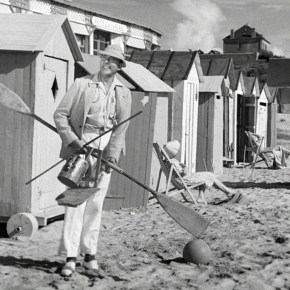 Has the cinema ever known the pleasures of a greater humanist than Jacques Tati? Charlie Chaplin, who Tati is generally compared to, comes to mind, but Chaplin at his best could draw fangs. His post-silent productions are nasty-minded masterpieces, works of barely-hidden discontent more than whimsical discovery. Tati could poke fun with the best of them, but never ruefully, and anger may not have been a word he knew. Certainly, it wasn’t a word he wanted to room with, or even walk in the same neighborhood as. Chaplin could love his audience or laugh at them, and he sold both as well as any filmmaker ever did. Tati was never not laughing, but always with us, never at us, and his laughs were laughs of love.
 Othello should not exist. Not William Shakespeare’s venerable play, one of the great tone poems to dueling egos and wanton desire filtered not through hero and villain but split personalities tearing each other apart until neither can have what they want. But Orson Welles’ Othello, a work of ramshackle, stitched-together genius if ever humankind has produced one. It isn’t Welles’ greatest film, but it is likely the surest explanation of his unmatched gall, of his unending sweat, and of the limits, or lack thereof, of his genius.
 You couldn’t find a more idiosyncratic director in classic Hollywood than Robert Wise. Sweaty potboilers, abstracted populist science fiction, howling horror, atomic age message pictures, and gilded, gloriously melodramatic maxi-packed musicals. All bubbled under his domain. Plus, he contributed the insurmountably essential, firecracker editing for no less a picture than Citizen Kane back when he was still in his pre-directing days. He was something of the ultimate Hollywood jack of all trades, and it is true that he wasn’t the greatest master of any single genre. But he was more than a shadow passing through genres as a director-for-hire. He put his personal stamp on every film he ever touched, and he never gave a picture less than 100% of his charisma.
  The two principles of David Lean’s Brief Encounter never consummate their love, or even acknowledge it, but of all the movie characters to have fallen in love over the past century, no two may mean more than Laura Jesson (Celia Johnson) and Dr. Alec Harvey (Trevor Howard). When they meet at a railway station cafe, they fall for one another, but they are denied their romance by social convention; they are both married, and, although the film doesn’t state it, the then-knowledgeable sense that divorce was frowned on in their world becomes palpable almost from the first instant. Which is the essence of Brief Encounter: not ashamed of itself and totally sincere, but minimalist and hauntedly hinting when other movies would openly declare. More than realism, Brief Encounter is the ultimate study in unfulfilled love and the quiet doom of knowing the end is near, only to have it forced upon you against your own terms.
  In 1945, Billy Wilder was still becoming himself, but he wasn’t a Hollywood newbie. The Lost Weekend, would win him two Academy Awards for writing and for directing (he would win again for writing in 1950 for Sunset Boulevard and become the first person to win separate Oscars for writing, directing, and producing in the same year with 1960’s The Apartment). It would firmly plant him in the big leagues of Hollywood, but the picture was made on the back of his supremely successful hard-boiled exercise in nihilism, Double Indemnity, from the year before. In this light, had it not been for Double Indemnity, it would be easy to claim that The Lost Weekend just wasn’t quite there yet, or that it was still the product of a director and a writer identifying their place in Hollywood. But then, Double Indemnity burns with Wilder’s patented fiery brand of ice, and The Lost Weekend is merely a sharp noir in full-on potboiler mode. Good Wilder, surely, but not Wilder at his best.
  The Long Take