
 Cross-pollinating drift-less images of New York City – disabused of cause and effect linkages – and vocalized letters written from director Chantal Akerman – in New York – to her mother in Belgium, the urban miasma in News from Home is at once bereft of life and brimming with space to impregnate with meaning. Partially, the film is a compendium of an adventure by a still-jejune filmmaker, Akerman, who was nonetheless extraordinarily knowing and prematurely wise beyond her years. But rather than a carefully synchronized, highly stylized metropolis with scores of people and interlocking pistons of motion bordering on entropy, Akerman sketches New York as an inoperative world that could easily be Venus, or a Tarkovsky film. This is New York as disembodied specter. Continue reading
Films for Class: News from Home
Leave a reply
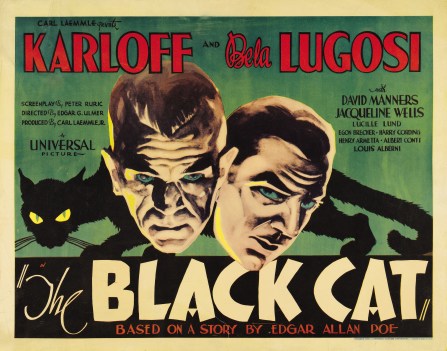 With The Mummy generally serving no one’s interests and possibly nailing down the coffin on Universal’s Dark Universe project, let us look back at one of the best – and most underrated, non-canonical – Universal Horror films, and the first to feature their two biggest stars.
  Referring to Guy Ritchie’s rather trivial take on the Matter of Britain, here are the three most interesting filmed versions of the tale.
 Referring to Guy Ritchie’s rather trivial take on the Matter of Britain, here are the three most interesting filmed versions of the tale.
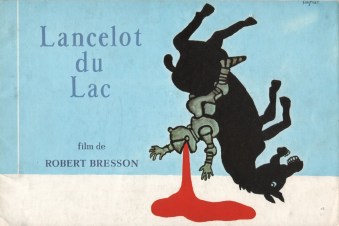 Referring to Guy Ritchie’s rather trivial take on the Matter of Britain, here are the three most interesting filmed versions of the tale.
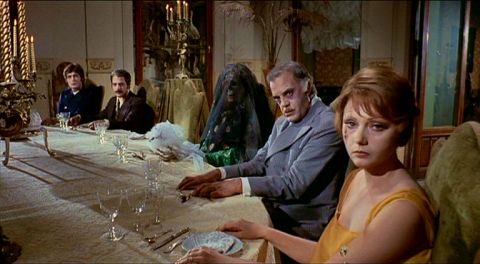 Dreamlike – and as lush as Mario Bava’s visual resplendence ever got – Lisa and the Devil is the half-crazed tipping point between the director’s earlier, Hitchcock-indebted slashers and the artistically emancipated deranged pop-art flourishes of his ward Dario Argento. Released in 1973 – and heavily recut two years later for American audiences to cash in on the Exorcist craze – Lisa is evidence not to paint Bava with the wide brush of obligatory pastiche, as though he was always performing his own idea of what a Bava film was supposed to be. Never stagnant, his films all reveal their personal eccentricities and oddities, the markers of a restless consciousness at work. A tragically comic fun-house reflection of existential panic, Lisa and the Devil recollects Alain Resnais’ Last Year at Marienbad to bridge the high and low art divide as Lisa (Elke Sommers) finds herself lost not only amidst Spanish corridors but time and space themselves.
  The title of this quintessentially ‘60s-product-of-hot-headed-Italy suggests a sex kitten romp, but the name is a much more literal in this deliciously macabre take on the spirit of Daphne de Maurier. As is seemingly the first commandment of all Giallos – to be obeyed with holy penitence – the narrative is paradoxically simple yet horrifyingly obtuse, but it boils down to the ghostly menace of young Melissa Graps terrorizing a European village around the turn of the 20th century, a village newly visited by a doctor (Giacomo Rossi Stuart) there to autopsy one of the bodies. Kill Baby, Kill also further develops Mario Bava’s formal fixation with the architectural impossibility of the mind. With one foot in the psycho-sexual and the other in the undulating tension between the supernatural and modern medicine, Kill Baby, Kill frolics with many of the thematic devils twisting the throat of mid-century life.
  After a long way away, I’ll start posting pretty furiously for a while again. First up is a trio of Mario Bava films to celebrate the return of Midnight Screenings!
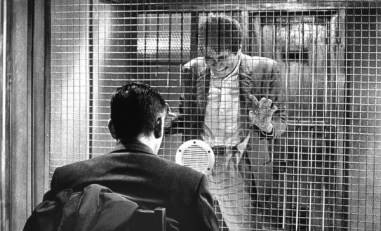 Sometimes bemoaned for relegating himself to that most Japanese of genres – the samurai flick – and retreating into flavors of Americanization, director Akira Kurosawa performs something of an inside-out operation with High and Low. A fiendish film noir with fangs drawn at a vein spurting society’s maladies, High and Low casts the suspense picture out of its Americana corral by inducing a specifically Japanese flavor. Right from the get-go, Kurosawa’s film is hot on the trail of a molten morality play, teasing suggestions of violence that greasily spread like venom through the bones of Japanese society. Rather than mining his nation’s mythopoetic samurai memory and massaging it into an international sizzler primed for American audiences, this hyper-modern company-man thriller cuts a filmic diamond out of the suffocating coal of Japanese classism, squalor, and privilege. With its humid pangs of ethical disarray and pungent propositions of emotional upheaval, High and Low channels an ever-mutable dialogue between social codes and personal feelings, exploring an uncharted territory where each is informed by and negotiates the other.
 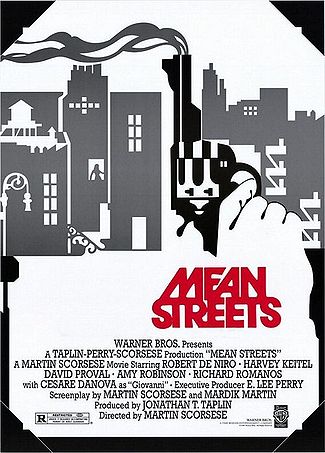 A dive-bar livid with unvarnished restlessness, Martin Scorsese’s first “big picture” breakthrough is no mere chopping block for his later, more famous regurgitations of his pet themes: Catholic guilt, boys being boys, male angst, un-placeable inner-city maladies. Instead, Mean Streets is all the more probing for its out-of-focus, improvisational gusto. It lacks the “perfect” formalist backbone of The Brow’s later Taxi Driver, Scorsese’s perverted poison-pen letter to classical Hollywood noirs as well as a codified conduit for writer Paul Schrader’s meditations of transcendence and Robert Bresson. But while more noncommittal and less precise on the surface, Mean Streets’ libertine energy and scruffy, scrappy, unfocused workaday energy actually bests its more confident younger sibling for sheer restlessness.
