
 The late ‘40s were a high noon for the horror genre, easily the most desecrated ghost town era for a genre that has reinvented itself time and time again. From the irrepressible expressionist deviants of the ‘20s to the chiaroscuro nightmares of the early Universal films in the ‘30s to the sly, insidious Val Lewton carnival of the early ‘40s, horror was on a hot streak for decades until it hit the ice wall of WWII. Not that the real world horrors of the war inherently superseded the desire to thaw out the terror of the cinematic variety, but the will to nightmare was to be discovered somewhere else until the dawn of the atomic age ‘50s films, before horror would draw its fangs and get downright pernicious with the turn of the ‘60s and the prestige variant of the genre in the New Hollywood of the ‘70s. In the century of cinema thus far, only the late ‘90s can go blow for blow with the late ‘40s for sheer abandonment as horror packed up and went out to the country to cool its heels. Continue reading
Midnight Screaming: Late ’40s Horror: Abbott and Costello Meet Frankenstein
Leave a reply
 Although Universal was nearly dead in the water by 1946, RKO’s Val Lewton-Jacques Tourneur B-movie cavalcade was just a few years past its prime, and Warner Bros. The Beast With Five Fingers, released in that year, isn’t a patch on the dueling acmes of that cluster: the impossibly well crafted Cat People and the impressionistic, lyrical I Walked with a Zombie. So obviously, and honestly, we’re grading on a curve with The Beast With Five Fingers when we champion it – after all, this was a year in which the near-dead quasi-corpse of the genre was struggling to let its vaguely beating tell-tale heart be heard. But, with Warner Bros. playing Universal Horror for the only time in the whole decade, The Beast With Five Fingers is about as studious and sturdy an update of the even-then hoary Old Dark House format as you might imagine a struggling studio to release when they were stepping their toes in the sand of a genre that wasn’t really their own.
  Years of experience with Lucio Fulci and Dario Argento, the reigning post-Bava Italian giallo masters, will give you Stagefright. For Michele Soavi, actor and assistant director to the masters turned first-time director here, this meant conjuring up this 1987 pseudo-slasher as his big come-up. The original title, Deliria, being vastly more apposite, this is less a slasher dressed up in giallo airs than a giallo putting on slasher clothing to sneak into the mainstream so it can uncloak its true self when the moment beckons. Like any good disreputable giallo, Stagefright is a bodacious concoction of performance-art murders choreographed like installation pieces, on one hand, and pure, unbridled instinct and impulse on the other. So while the kills may be judiciously filmed and planned, Soavi never lets anything as trivial as common sense or good taste trounce on his funhouse; his film is orchestrated but never programmatic.
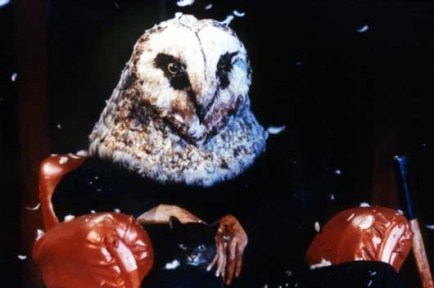
  Aesthetically-minded avant-garde director Nicolas Roeg, daringly immature puppetcraft impresario Jim Henson, and nasty-whimsy peace-negotiator Roald Dahl is one of those divine, demonic accidents of circumstance you didn’t really know you needed. Easily Roeg’s most commercial film, but not a cash-grab judging from his delectably devious direction and satisfyingly cryptic editing, The Witches was still a commercial misfire. Which isn’t a surprise; even by the standards of the late-‘80s run of vaguely dark and dreary children’s horror pictures either adapted directly from Dahl or owing kinship to his spirit, The Witches is an insidious little devil of a picture, vastly more warped and spidery than even the Grand Guignol likes of Return to Oz earlier in the decade. It settles more for naughty than nasty, but the effects are heinously satisfying nonetheless.
  The ‘Burbs
 Death Becomes Her
 Shadow of a Doubt
 Carnival of Souls should have befallen a watery grave decades ago, and yet, like its inveterate crash zooms, or the nagging figments of a nightmare or a half-imagined shard of memory, it lodges itself somewhere in the dankest, most indecipherable thickets of the mind. Who knows where it is stored precisely. Probably in the muddy, constantly-slipping-away but always-haunting-you halls next to Eraserhead and you parent’s wedding videos, a duality that very much encompasses the film’s bemusing, off-off-Broadway existence.
  The historical prestige genre, entombed in its ever-lasting leisure, ain’t got nothing on Ken Russell’s The Devils. A power-mad concoction of scorching lecherousness and sacrilegious, anti-social visual brio, it’s a torrid affair, but love is nonetheless the only applicable word for anyone smitten with Russell’s peculiar brand of rattled-with-fever historical spasms. Few directors have ever barreled so gleefully into the dankest regions of their own inner mental faculties with such a cavorting brand of heretical dissidence, a defiance to not only social propriety but filmmaking rule of thumb. Fitting for a work about witches, Russell’s inimitable work feels like cackling witchcraft conjured out of nowhere but his own devilishness.
  Ray lived by night, Godard left us breathless, Penn ignited the New Wave, Altman turned the camera back on thieves like us, and Malick informed us that lands, despite being the crux of majesty in the world, were indeed bad, all prismatically glimpsed from the confines of the same essential story of lovers on the run from the law. Before all of them, though, a German expat, death and national turmoil lingering in his mind and social opprobrium hot on his tongue, took the same story and welcomed it as an opportunity to remind us that innocence, once drained, has no life left to give. A rejoinder to the torrential downpour of Nazism absconding with the ostensible innocence of his old home and a riposte to the dislocation of Depression-era life in his new home (two paths that would cross circa 1939), You Only Live Once sparkles with director Fritz Lang’s inveterate directorial gloaming. It isn’t the destruction-maestro at his most malevolently implacable (M could never be topped). But this mostly unknown film today not only tackled present-day social schism with fractured, sharded filmmaking but also, arguably, served as Lang’s most explicit premonition of the genre he would become most famous for: the noir.
  The Long Take