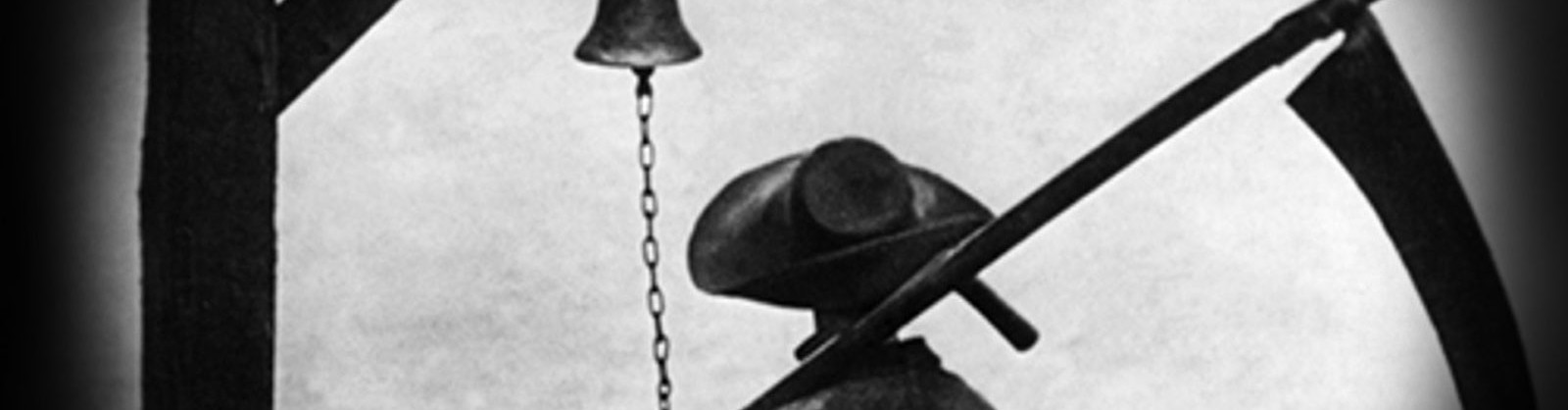
 In honor of their seventy-fifth anniversary in 2015, I present a pair of reviews for my two favorite Disney animated releases, both released in the same year, 1940, and both far more challenging and transformative than any feature film the company has yet released since. The two introductory paragraphs of the reviews are identical or nearly identical, but the meat of the reviews are film-specific.
Fresh off of reinventing cinema with the 1937 release of Snow White and the Seven Dwarves, Walt Disney and his band of merry auteurs certainly made enough money to rest on their laurels and produce what would have assuredly been a hugely successful similar film. Another princess, another band of silly sidekicks, another all-time expressionist cinematic villain, you get the deal. Things would have gone down smoothly, and Disney and friends would have been laughing all the way to the bank. Except for one thing: for all his grubby corporatism and power-hungry megalomania, Walt Disney genuinely loved film, and he genuinely loved testing the waters for what film was capable of, and no one, not even the corporate masters he answered to, was going to tell him otherwise. He was a man of boundless vision, a child in a cinematic toybox, a person driven by ego and pulsing personal joys and for whom his company was a means to immortalize his dreams and nightmares on celluloid for everyone in the world to see. He made films because he wanted to watch them, and after Snow White, he didn’t want to watch another princess story. He was hungry, and having changed things forever, he wanted to do it yet again.
Continue reading
 David Lynch knows his way around a controversy, and if he is often contrarian for contrarian’s sake, knocking him for this does a huge disservice to the simple beauty of the act of being contrarian. It denies the cantankerous danger and dreamy nightmare-like quality of something that is so elementally arbitrary, so devoid of meaning, so ruthlessly anti-sensical. It does a disservice to the idea that something can simply exist for itself and the joy of being itself. It is in this region, despite all his other narrative pretensions and the very real sense of specific, pointed, subversive purpose to each and every shot in each of his films, where David Lynch skulks about. His films do not really exist purely for their own sake – there is a clear through-line and object of critique in each of his films, but they come closer to pure lunacy, to pure invention for invention’s sake, than almost any director since the era of silent film. In the world of today, if we limit ourselves to American directors, he has more to say about how film is made, and how images and sounds move beyond theme and story and into pure effect, than any other director. He’s having a hell of a lot more fun than anyone else while he’s at it too.
 It’s not a new point to discuss David Gordon Green’s sellout hackwork middle career stage, but his recent “return to his roots” phase is fresher still and only recently of this Earth; thus, it provides a far more welcome object of inquiry. The hackwork phase has been written about on end, and while I happen to think Pineapple Express is a fairly nuanced redirecting of Green’s trademark hush for the purposes of a stoner comedy, there’s nothing more to be said about his duo of 2011 misfires. Far more interesting are his recent efforts, epitomized by his 2013 release Joe. Many have taken to considering it a return to form, and while the film is strong and textured in many exciting ways, I cannot join the train. Owing more to post-Green works like Winter’s Bone, his recent films retain the social realism of his earlier works but run dangerously close to recreating the trees at the expense of the forest. The honest characters and hard-hitting drama mostly follow through, but the poetic post-Malick haze and thoughtful melancholy of Green’s abstracted reflection of everyday human activity has been lost to time.
  With Michael Mann’s Blackhat underwhelming critics all around the land, I’ve decided to take a look back at the neon nightscape urban painter’s greatest film, a shockingly underrated work of crime fiction with an impressionist tint. From 1981, Michael Mann’s Thief.
  One of the Coen Brothers’ most popular works, and with good reason,
  It would appear that selling one’s soul to the devil of commercial filmmaking can in fact serve a purpose, assuming of course you do so with a ruthless pragmatist’s eye. For that is exactly what one of Mexico’s most adored modern auteurs, Alfonso Cuaron, did with his introduction to English-language cinema in his one mercenary venture, Harry Potter and the Prisoner of Azkaban (no slouch as a film on its own, incidentally). For the success he had with big-budget tentpole cinema not only made a boatload of money (and made a franchise legitimize itself in the process, after two unflaggingly hum-drum entries beforehand), but it paved the way for one of the finest films of its decade, 2006’s Children of Men. If the entirety of the Harry Potter franchise only existed to validate the existence of this one film, well, it would be a job well done, for Children of Men is exactly the variation of cold-brewed, home-spun, plaintive sci-fi we don’t much see anymore, and exactly what the world of cinema circa 2006 needed.
  Doom-and-gloom maestro David Fincher has taken the 2000s and 2010s as his time to find respect, and as we all know, that is one of the worst things for a filmmaker to do. Mainstream success is one of the surest trains to cinematic acquiescence, and there ain’t nothing like acquiescence to numb the lifeblood of cinematic passion. Sure, 2008’s The Curious Case of Benjamin Button was his only overtly Oscarbaity film, and he did follow it up with his second best work, 2010’s The Social Network. But recent years have seen him look back to his lurid earlier days with nostalgia and a drive to recreate his darker and more nihilistic earlier efforts, and his efforts have proven one thing: slick has replaced sick, and Fincher’s desire to find commercial success has smothered any breathing room for his pitch-black cinematic treats to truly submerse themselves in operatic melancholy and deranged lunacies.
 Update late 2018:
 The idea that a film could “kill” the career of one of America’s most loved stars seems a tad bit antithetical in today’s increasingly safe world, but then we don’t have many daring, singular stars like the ever fearless provocateur in a clown’s body that was Charlie Chaplin. Although the much-loved star carved out a lovable niche as a tragicomic by donning the rumpled clothing of a tramp and the heart of humanity at its simplest and most direct, he was always ready for a fight. His quasi-silent masterpiece Modern Times is one of the least hidden anti-capitalist films ever to be spooled up before an audience, damningly positing the internalization of mechanical soullessness into the human capacity for movement and survival. As if that wasn’t enough, he went on to fancy himself a Hitler-pastiche in The Great Dictator, playing with fire by targeting the holiest of subjects before it was even quiet enough for mourning.
 Ratatouille was in love with whimsy and fable and Wall-E with romance, minutiae, and slapstick humanism, but Up is at its proudest when it is having the most fun in the world being itself. It all begins with a boy, Russell (Jordan Nagai) asking curmudgeonly old drag of a man, Carl Fredricksen (Ed Asner), to help him earn a merit badge, but it most certainly doesn’t stay there for long. Pixar’s trip through surrealism, Warner Bros’ Bunuel-inspired Wackyland, Road to movies, ’30s adventure serials, and filmic flights of fancy more generally, Up sees the then-world’s most recognized film production company end their residency with practically owning filmic invention in the 2000s by paying tribute to all that allowed them to be what they had been so well and so singularly for fifteen years.
 The Long Take