
 Referring to Guy Ritchie’s rather trivial take on the Matter of Britain, here are the three most interesting filmed versions of the tale.
Director John Boorman was always up to no good in the film world, both to the medium’s benefit (Point Blank) and its detriment (Exorcist II), although I have to admit that Zardoz belongs in the annals of essential cinema simply as an artifact of the medium at its most casually disregarding common-sense. Take Excalibur, which occupies Boorman’s customary mode of multi-aesthetic pile-up, where the foliage of legend abounds, the effect of which is a loopy, nonsensical gamble, excessive and adjacent to hallucination. An early battle is staged as a conundrum, not quite as wonderfully unstable as the abstract battle in Orson Welles’ Chimes at Midnight but in the same cul-de-sac, especially when judged by blockbuster standards. Silhouettes poised with sinister intent, devoid of human specificity, are an early indication of Boorman’s mythic inclinations and his treatment of the material as spiritual divination. Despite Boorman never having directed in this genre before, I could show you a highlight reel and give you the rough release date and you, the hypothetical connoisseur of gonzo cinema, might well be able to narrow it down to Boorman in a heartbeat. There’s also enough vaginal imagery to perk any mid-century psychoanalyst’s ears up; It’s that kind of motion picture. It’s as though Boorman received the film fully formed through divine intervention. Continue reading
 Referring to Guy Ritchie’s rather trivial take on the Matter of Britain, here are the three most interesting filmed versions of the tale.
 Referring to Guy Ritchie’s rather trivial take on the Matter of Britain, here are the three most interesting filmed versions of the tale.
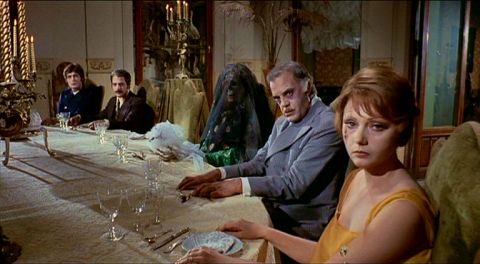 Dreamlike – and as lush as Mario Bava’s visual resplendence ever got – Lisa and the Devil is the half-crazed tipping point between the director’s earlier, Hitchcock-indebted slashers and the artistically emancipated deranged pop-art flourishes of his ward Dario Argento. Released in 1973 – and heavily recut two years later for American audiences to cash in on the Exorcist craze – Lisa is evidence not to paint Bava with the wide brush of obligatory pastiche, as though he was always performing his own idea of what a Bava film was supposed to be. Never stagnant, his films all reveal their personal eccentricities and oddities, the markers of a restless consciousness at work. A tragically comic fun-house reflection of existential panic, Lisa and the Devil recollects Alain Resnais’ Last Year at Marienbad to bridge the high and low art divide as Lisa (Elke Sommers) finds herself lost not only amidst Spanish corridors but time and space themselves.
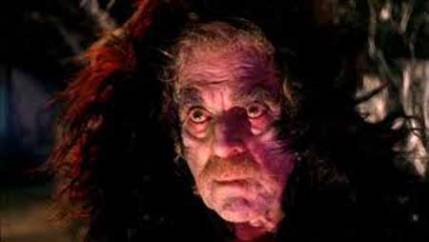
  The title of this quintessentially ‘60s-product-of-hot-headed-Italy suggests a sex kitten romp, but the name is a much more literal in this deliciously macabre take on the spirit of Daphne de Maurier. As is seemingly the first commandment of all Giallos – to be obeyed with holy penitence – the narrative is paradoxically simple yet horrifyingly obtuse, but it boils down to the ghostly menace of young Melissa Graps terrorizing a European village around the turn of the 20th century, a village newly visited by a doctor (Giacomo Rossi Stuart) there to autopsy one of the bodies. Kill Baby, Kill also further develops Mario Bava’s formal fixation with the architectural impossibility of the mind. With one foot in the psycho-sexual and the other in the undulating tension between the supernatural and modern medicine, Kill Baby, Kill frolics with many of the thematic devils twisting the throat of mid-century life.
  After a long way away, I’ll start posting pretty furiously for a while again. First up is a trio of Mario Bava films to celebrate the return of Midnight Screenings!
 The Long Take