
 Update 2018:
With Italian cinema, one tends to think of Antonioni as the extension of neo-realism’s elusive, analytical, slippery, and intangible qualities, its modernism and post-modernism, and Pontecorvo as expanding the style’s more incendiary, ground-level spontaneity, its immediate “realism”. But although The Battle of Algiers is a punchy, vicious shiv of a movie, it isn’t merely surface-bound. Or rather, it sometimes uses its surfaces as cryptically and mysteriously as Antonioni, not simply exposing a conflict to us with an incendiary call for action but teasing out the various intangibles and uncertainties in its ability to call for this action, to participate in this conflict, to even see it without mediation. As swift and instant as the film confronts us, it also confounds any so direct a reading by intimating the limits of its ability to “experience” the reality that its verite aesthetic purports to glimpse first-hand.
Which is to say, Pontecorvo’s work reveals mysteries of its own as well, and it exhibits a vision of existence as brutally existential as L’Avventura and as protective of its secrets as Blow-up. And although it’s certainly a white-hot cinematic firebrand, open-hearted and unafraid of its convictions, it also exposes more subterranean depths the more I see it. For instance, the distinctly modernist (even post-modern) composition of the infamous scene where the veiled women expose the bombs hidden within their outfits. The three veiled women are viewed through a mediating, veiling mirror in the film’s most famous shot, the mirror projecting a cinematic self-consciousness about the mediating cinematic process. It suggests that what we experience in cinema is a mirror of ourselves, not a reflection but a warped and thus incomplete refraction, or a reflection which hovers between a direct reality and a displaced representation of that reality. Or, as Homi Bhabha says in the intro to Frantz Fanon’s famous Black Skin, White Masks on images more generally: the “image—as point of identification—marks the site of an ambivalence. Its representation is always spatially split—it makes present something that is absent—and temporally deferred—it is the representation of a time that is always elsewhere, a repetition. The image is only ever an appurtenance to authority and identity; it must never be read mimetically as the “appearance” of a “reality.” (XXX). The women veil themselves, cinema veils them, and post-modern cinema thrives on its skillful manipulation of its own self-awareness about the way it veils reality.
Pontecorvo’s film plays with this gap, this veil between past and present, this sense in which we can witness a mediated past through film, where film is a ghost which touches the past but is not the past. Particularly set against the historical containment of black and African bodies within film scenes, their objectification and imprisonment within frames which tend to view them head-on as curated objects lacking any curiosity or internality or resistance to being viewed, the veiling gestures in Algiers – the characters registering an opacity of their own, not fully acquiescing to our desire to “understand” them – are provocative. In other words, the film comments on its own veiled language, questioning its and our ability to truly know them via its and our gaze, to look at them head-on as the Westerner in Fanon’s frame might want. As gritty and “realistic” as the film appears on the surface, it also veils and unveils itself in various ways, debating truth and fiction in its faux-verite aesthetic rather than merely reminding us of a reality we didn’t know beforehand.
Original Review:
A stark, harrowing portrayal of the Algerian war, The Battle of Algiers is a message movie, but it doesn’t feel like one. It’s brutal, unflinchingly human, and confrontational to the core. It depicts people engaging in horrible acts and forces us to try to make sense of it as best we can, for it knows it cannot. This film never lets up, using a gritty, clear eye-on-the-wall camera to depict the harsh day-to-day realities of colonial and revolutionary violence to force us to confront that which we’re afraid to. Rather than emphasizing philosophy or discussion, it focuses on action and reaction, conveying how this environment, in its perpetual dehumanization, allowed no room for anything else. Colonialism, as depicted here, was a violent regime that dehumanized its victims and gave them no recourse for action excepting the very violence perpetuated onto them. And the film doesn’t suggest it – it burrows it into our soul. It emphasizes gritty, hard-earned hyper-realism and puts us in the trenches of an urban jungle marred by guerrilla warfare. It allows us no comfort. Unlike many Italian masterworks of the 1960s, it is not rooted in impressionist professionalism, carefully modulated for impact and respectability; instead it unleashes itself upon the audience as a primal, implacable fact that doesn’t end when the frames cut it off. It cries out, refusing to be left unheard.
Continue reading
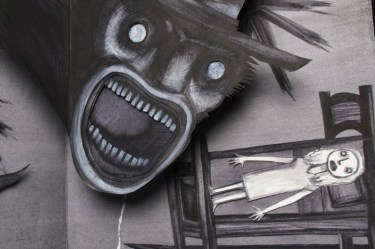 I apologize for the temporary absence of the weekly Midnight Screening from this blog for the better part of the month of November. I was too busy elsewhere and found myself too distracted with other reviews. I justified it to myself by reminding myself I had published three full length reviews instead of the usual one for the final week of October, but, seeing as I didn’t tell you all playing at home about this, that’s not an excuse. I’ll try to be better about staying consistent and giving a heads-up when things are to change. On the positive side, I can’t think of a better film to re-start the series with than this week’s entry. Consider it an apology. Enjoy.
 The Road
 Nightcrawler isn’t perfect. For one, it is an unabashedly visual film, and when it tries to be a screenplay it sort of falls apart. Director Dan Gilroy himself is a screenwriter making his directorial debut, but watching I had him pegged for a cinematographer trying out the boss man’s chair. Whenever he tries to really give it to the news media as a whole (which thankfully isn’t often) the film goes overboard. One of the film’s lynchpin scenes has a television executive trying to enliven a broadcast of some grisly imagery by amping up the dread and fear of the material to unnatural levels (and making implicit racism fairly explicit in the process). It doesn’t work – the material is insistent, overly confident, and has the subtlety of the more farcical aspects of Network. Except everything here is played with such solemnity it doesn’t work like satire; rather, Gilroy wants us to feel crushed and haunted. But the material is so lead-footed when spoken out to us it almost hurts.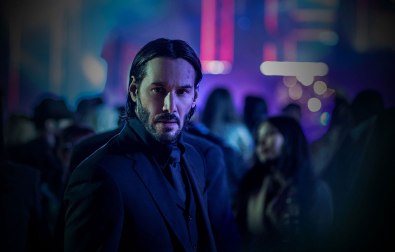
 Oz the Great and Powerful
 Perhaps fitting for this film’s ominous, imposing, pointedly direct title, Maleficent’s best element is put right up in your face unadorned, and it’s Maleficent herself. Specifically, it’s Angelina Jolie. The scripting provides a nice groundwork of mythic broadness and nuanced character, and the figure’s visuality lends her an imposing and dominant yet frail and brittle figure, with costuming that approximates what small amount of expressionist grandeur a gargantuan summer blockbuster in 2014 with the Disney name could possibly hold on to. But this is a movie star piece through an through, and this film’s Maleficent is Jolie. It’s rare indeed that I play ball for an actor as the most important feature of a film, but then few actors have the raw, lascivious, deliciously commanding screen presence of Angelina Jolie. In addition, the film privileges her in shots, clearly reflecting director Robert Stromberg’s understanding that she is the center of the film, and his desire to show her off. So, that fact noted, it seems not only acceptable, but necessary to center Jolie in any consideration of Maleficent’s failure or success.
  Carrie
 The Wolverine
 The Long Take