
 Spike Lee’s crowd-funded erotic vampire blaxploitation film remake (and how glad am I to be able to type those words) is a sanguine, sultry, swaggering, sensuous smorgasbord of film history, chilled-over-icy Euro cinema cool, and simmering, low-key empathy. It is also slightly confused, off-handedly comic, and unusually bizarre in the mode of mid-’90s Spike Lee. For his part, Lee has always been a confused director, a director whose aspirations have almost always exceeded his grasp, and his ode to African American cinema is no different.
But Da Sweet Blood of Jesus (a name almost as wonderful to type as the film’s genre) is the right kind of mess, a kind of filmmaking in free fall. It’s like a Spike Lee joint right after a bar-room brawl, and that’s a ticket anyone should want in on. It opens on a recollection of the seminal opening to Do the Right Thing, where Rosie Perez flailed with fire and lust over the confrontational, brimstone-flinging “Fight the Power” by Public Enemy and Lee’s chalked-up street pop-art. In Da Sweet Blood, however, the tone and tempo are the polar opposite of Do the Right Thing. Charles “Lil Buck” Riley dances, surely, but he doesn’t flagellate. He shimmers and quavers. He pursues dance as interpretive surrealism, marking the film as something less pop-art sermon and more art-house eulogy. Continue reading
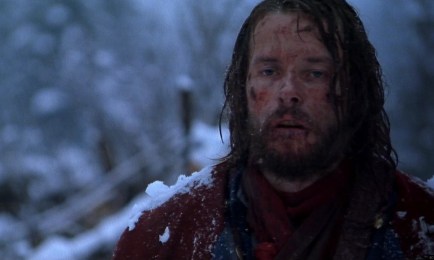 1999 was a year of new beginnings for a great many directors of the cinema, filmmakers who used their 1999 offerings to launch their careers to greater artistic, as well as commercial, heights. Although we often forget, it was also the year of Antonia Bird’s Ravenous, a film that ought to have launched her to new heights but somehow left her scrambling for an audience. In a year of openly defiant, exploratory films from many talented artists, Ravenous remains one of the most defiant and exploratory. Yet it never found an audience for itself or its director, likely because its defiance, experimentation, and exploration are all hidden. Even more-so, they are secret, and the film goes to great lengths to pretend it is nothing more than an everyday comedy-horror exploitation-film of the distinctly late ’90s post-Scream variety. It is a film where the experimentation is wholly submersed into subfuscous genre mechanics, a great devious trick of a film, and I can think of no more perfect nature for such a deliciously sinister exercise in cutthroat filmmaking.
 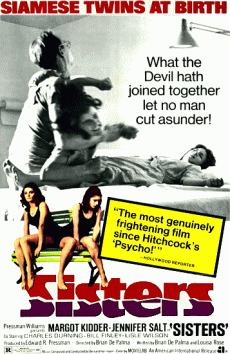 A Brian De Palma double-feature this week on Midnight Screenings.
  At its best, horror cinema works like a trance. From more esoteric, cryptic works like Dreyer’s Vampyr to pressingly, pulsingly modern joints such as It Follows and Under the Skin, the genre cuts through the fat and almost approaches us on an unconscious level. At its best, which isn’t nearly often enough, the new Poltergeist almost gets there. Director Gil Kenan is, at a conceptual level, the perfect shepherd for the material – his animated Monster House is almost an animated Poltergeist anyway. Unfortunately, it ends up being a much better Poltergeist remake than the one he would go on to direct a decade later. The one, you know, called Poltergeist.
  Let it be said: Sinister boasts a naughty, dejected, little deviant of a title screen, and as an unmitigated proponent of title and credit sequences, this is a great boon to my mental state.
 Not any sort of official series, but especially during the summer months, remakes and sequels are, if nothing else, great excuses to review the films that came before. As I am above no excuse to review a film, I must answer the call.
 To recap: the Universal Horror individual monster franchises varied wildly and inconstantly, and often in directions and to magnitudes any sane person would never imagine. Sometimes, however, Universal Horror just created something that can not compare to anything on this earth, in their canon or otherwise. Sometimes they made Murders in the Rue Morgue, just about the perfect encapsulation of messy early sound cinema trying to cope with the increased narrative bent of sound and having no idea what to do with narrative at all. The end result is Universal Horror at their most indebted to quilt-work, patching together the expressionist dread and crawling, impulsive weirdness of silent cinema – itself having very little to do with narrative or realism – and trying desperately to mold all of this prismatic and arcane visual strangeness into something that can approximate “narrative”. It fails as a narrative proper, but what hypnotic failure it is.
  When Ana Lily Amirpour recently released her lushly sensualist horror film A Girl Walks Home Alone at Night, her cinematic passion was matched in its cathartic potency only by its free-wheeling desire to devour all influences. Obviously, Jim Jarmusch was the cipher through which her film’s identity was largely cracked, but in her sun-deprived cinematic wasteland, another female filmmaker was a key stepping stone: Kathryn Bigelow, a women who has since made a pit-stop in can’t-be-this-good action cinema before taking a well-deserved break to produce two of the finest naturalist war thrillers ever made. She went on to make more composed films, in other words, and probably better ones too, but her underdog outlaw passion in the world of film never burned as brightly as it did in her first big break: the 1987 film Near Dark, nothing less than a full-on vampire-western-romance-horror (a mouthful, but it should sound familiar to fans of Amirpour’s debut). It takes a lot for a film to invent a genre. That it comes within an inch of perfecting it on its first try is not only testament to Bigelow’s fully-formed craft, but of her restless, travelling spirit.
  That Universal Soldier: Day of Reckoning exists indicates something is wrong with the world. That it is, against its better judgment, a near masterpiece, at least in terms of filmmaking principles and matching those principles to its narrative concerns, implies something is far worse with the world than anyone could have imagined. But yes, the fourth or eighth or ninety-sixth film in the bro-fest science fiction routine slaughterhouse that is the Universal Soldier series, tangled up in its Roland Emmerich-directed roots and choking on them for decades now, is good. In fact, in its own way, it’s fairly great. And how shocking that this way approximates ’70s art-house horror/crime/thriller/ sci-fi that only passingly gestures toward any idea of “action” and even then does wonders to detach “action” from anything resembling Roland Emmerich. What a strange, strange film. Plus, if it means anything to you, it is probably, by several orders of magnitude, superior to anything Dolph Lundgren or Jean-Claude Van Damme have starred in (although the post-structuralist JCVD, a sly little nightstalker of a film, comes pretty close for the latter star). Pleasures abound in this weird, weird world of ours, folks.
  “Gimmick” is a word that critics and viewers throw out with wanton abandon for films like Unfriended, and this film invites the usage. It is a lazy, amorphous critique thrown out whenever a film tries something new. It was a gimmick when Stanley Kubrick brought in cinematographer John Alcott to film Barry Lyndon as if it was an 18th century painting so that he could dissect the falsity and artifice in the lifestyles of the film’s characters, explore the ways in which film is always fictional, discover the limits of cinematic attempts at “realism”, and champion cinema all the same for the ways it can use fiction to explore the cosmic regions that lie in the murky waters beyond realism. What matters is not that it was a gimmick, but whether it was an effective gimmick, and, in that particular case, it was a masterful one, perfectly suited to its film and alive as passionate cinema.
 The Long Take