
 The Shallows
The initially anonymous, deflated aesthetic in the early goings of The Shallows, a misfire at first, only make the film more unmooring when the deliberately trivial beginnings awaken a feral frenzy of bestial, perpetual motion around the mid-point. Parts of the opening are a tease, but primarily they are a false pill, a sleeping dose on the film’s part that eventually channels into a vigorous, if not rigorous, filmmaking exercise when the style shifts from passive herbivore to ferocious carnivore. Graced with the brutal clarity of plot – Nancy (Blake Lively) is trapped on a rock in the ocean, there are monsters afoot – the pared-down situation arouses a harried, frazzled, dazzling momentum on director Jaume Collet-Serra’s part. The mercilessly athletic camera swan-diving around Nancy invokes oceanic force until it warps into a vocabulary for the perilous pas de deux between Nancy and an attacking shark. Continue reading
 The name “acid western” doesn’t quite do justice to Monte Hellman’s duo of sadly fatalistic fugues released in 1966, soon to become cult icons when their casts went on to fame and infamy, in some order. These two films have the bracing mystique of unidentified film-like objects without precedent or successor; even the most famous film in the acid sub-genre, Alejandro Jodorowsky’s four-years-later release El Topo, suggests the toxicity of these 1966 progenitors but not their distressed, cloudy desolation. If El Topo was a disobedient, hallucinatory nonsense-poem that eroded society’s expectations for the Western, The Shooting and Ride in the Whirlwind are already themselves eroded.
 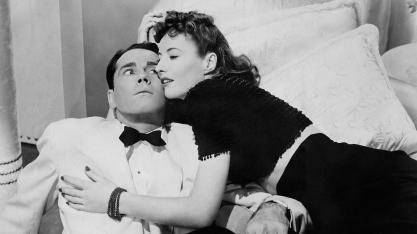 The early 1940s were the last gasp of the first wave of the classical Hollywood romantic screwball comedy, but why the genre sputtered out remains a conundrum. Perhaps the world was modifying itself too quickly for a genre where chaos was a principle to feel like casual entertainment rather than skewered reflection of the status quo. Or perhaps moods were more ambivalent about fancy free fun with the onset of global geopolitical turmoil. But then again, the arrival of the screwball in the ‘30s was massaged partially out of the national turmoil of the Depression to begin with, so the obvious answers only retype the question mark in boldface.
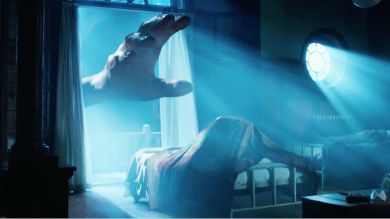 Steven Spielberg’s The BFG is a production remarkably lacking in ego or bombast, functioning primarily as a genuinely heartfelt palate cleanser for one of Hollywood’s specialists at masquerading grandness with a simulacrum of heart. Chronicling a burgeoning friendship between the titular Big Friendly Giant, played by Mark Rylance, and a young child Sophie (Ruby Barnhill), an orphan (because of course she is), Melissa Mathison’s screenplay dispels the necessity of grandeur and instead tucks us in with an intimate dream of pleasantly aimless friendship and camaraderie to keep the nightmares at bay. This is a reverie of a film, so lost in its own daydreams that it casually avoids demarcating a narrative for us, and although the title may suggest otherwise, the central appeal of Spielberg’s brew is that it is morsel-sized, in every respect.
 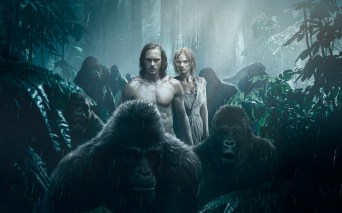 David Yates’ listless The Legend of Tarzan has the look, but not the spunk of a great pulp novel the likes of which Edgar Rice Burroughs, creator of the character one hundred years ago, might have written. Biting off well more than it can possibly chew, the faux-artisanal nature of the design suggests a more thoughtful, or fun, production than this ultimately pretentious slog can handle. Thickly breaded in a historical revisionism that the film absolutely cannot withstand or rein in at all, the screenplay by Adam Cozard and Craig Brewer (Brewer’s previous films have embraced a pulpy flavor totally lacking in this film) is a misfire of egotistical proportions.
  They still make movies like this? I mean, jeez, even Edward Zwick – whose two-decade iron-fist rule over antiseptic, middlebrow prestige drama is currently on sabbatical – doesn’t seem to want to dish out this kind of blasé appease-everyone history-conscious cinema anymore. Never fear! Into the fray steps Gary Ross, another so-competent-it-hurts filmmaker with an impersonal aesthetic defined by a nonsense brand of faux-realism (wouldn’t want someone daring to imbue any sense of form or rhythm, especially the formal rhythm of genuine down-and-dirty messiness, into their precious history). After all, someone has to stand by as a vanguard for indifferent, domesticated middlebrow types looking for intelligent cinema but too afraid to actually challenge themselves. Their worries can be allayed; Free State of Jones is here to save the day.
 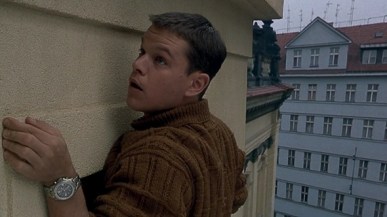 The Bourne Identity
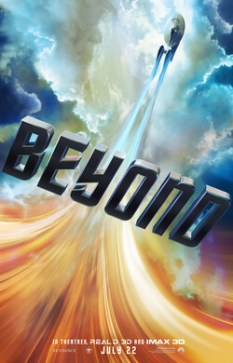 Beneath the ostentatious, rat-a-tat action and state of the art technology underwire, Justin Lin’s newest Star Trek feature is a séance for an antiquarian spirit that dishes on not only the usefulness of seemingly past-its-prime technology but reminisces for and embodies a long-lost ethos in big-budget blockbuster cinema. In this case, it is the progenitor race of the Star Trek universe that is resurrected, with the aww-shucks nature of Gene Roddenberry’s original television show surprisingly at home in the casual riffing and interpersonal dynamics that girder Lin’s more casual, insular take on the material. The result is an exultant ode to camaraderie and ingenuity much closer to the spirit of democratic interpersonal imagination as an avenue for overcoming conflict and feeling out one’s own humanity that was the backbone of Star Trek in its original incarnation.
  The pictorial inclinations of King Hu’s rhapsodic camerawork in his monumental wuxia epic A Touch of Zen are his film’s most gilded gestures, but they are no mere poetic filigrees. Rather, Hu’s investment in the physical space of his film and the way that a camera and a mind can intake and reform space informs a conscious refusal on the director’s part to explore character drama in a vacuum. Without the crucible of bounding characters by the natural environments that often remain overlooked in the world of cinema, Hu suggests that person vs. person conflict may be tenuous and unresolvable; an understanding of the earth itself it necessary first. The illusory beauty in the frame often suggests a new perceptual realm beyond the typical threshold of human consciousness, as though we are peering into an ethereal plane of color and space that eludes humanity’s typical tasks and goals. Space is otherworldly here, but also tactile, exerting a magnetic pull on the characters who weather through frames as if attracted by the deception of an unknown specter in the air. Or as though they characters were being exhumed from their internal, civilized spaces – and metaphorically the confines of their internal minds – to confront the outside world, to explore new perspectives in a desperate quest for self-actualization.
  A pair of surrealistic modern animations this week on Midnight Screenings.
 The Long Take