

First things first: a film that begins with a thank you to the mayor of Atlanta and the governor of Georgia, immediately propositioning the audience with a fantasy of verisimilitude and access, and then immediately cuts to a totally opaque, ethereal non-space while an elderly John Huston, fresh off of voicing Gandalf in the animated Rankin & Bass The Hobbit, appears as an unknown prophet on an alien planet that looks like Mos Eisley, isn’t ever going to lose me completely. We seem not to be in Kansas anymore, and this high up in the sublime tornado of chaotic-evil cinema, we’re probably doomed to fall.
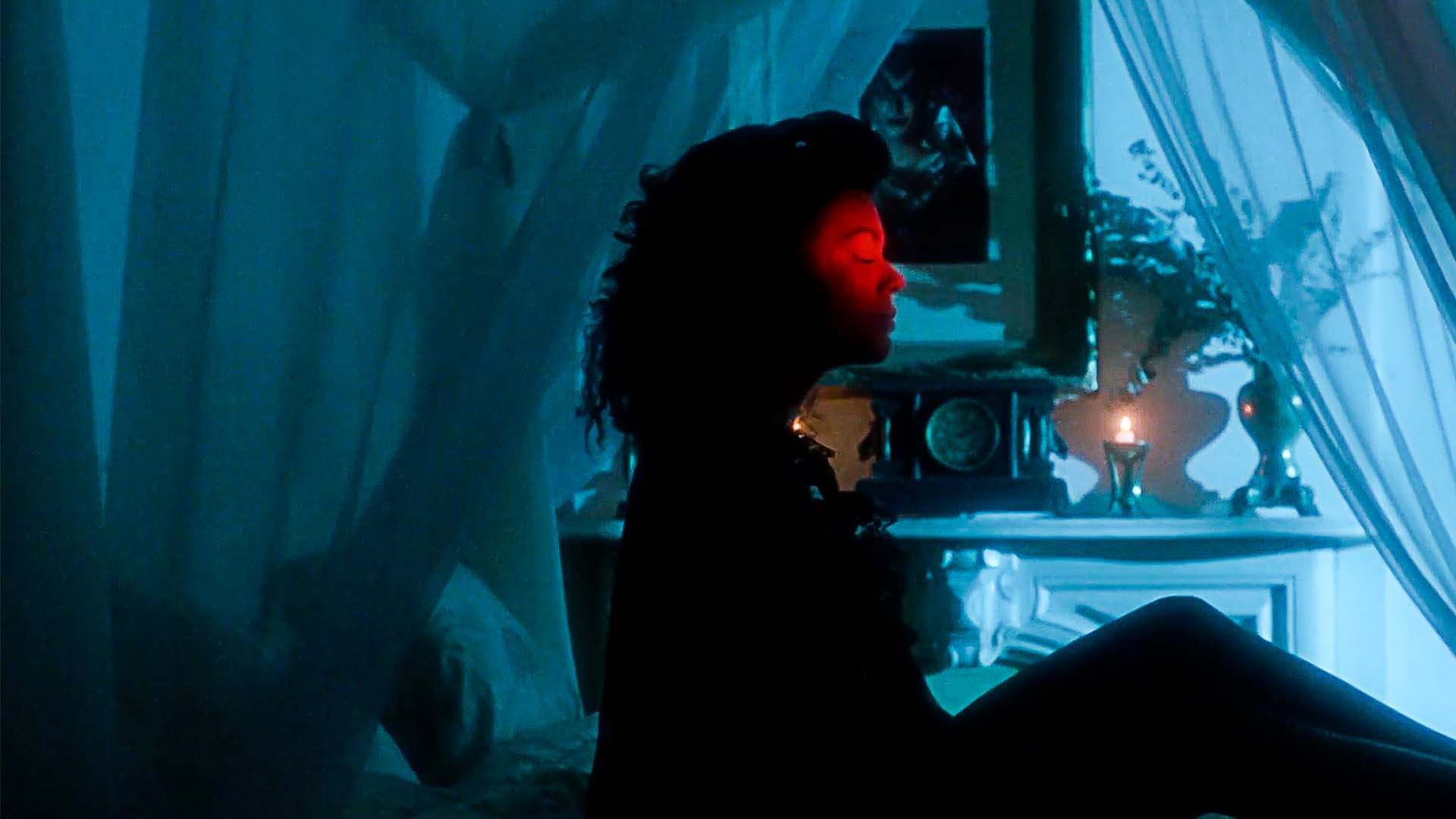
Yet, amazingly, The Visitor holds up its end of the bargain. It is only when we cut to a basketball game that the real mystery of the film reveals itself: how is it that essentially unknown director Giulio Paradisi never made another horror film, and his subsequent two films were apparently easy-going Italian comedies, before he unceremoniously never directed again? The Visitor’s opening basketball game is a beautifully opaque textual object, a killer opening to a film that is a bricolage of genres and textures and uncanny thematic and technical juxtapositions revealing a director of real mettle and a vision of extraordinary curiosity. This is a stupendously unsettling game of hoops, a cut-up event in which the camera floats around with haunting observational acuity, like a deconstruction of a sporting event from a ghost’s alienated perspective.
Perhaps even more interesting: a latter combination gymnastics event/bullet-removal surgery sequence (you know, one of those type-deals) clarifies that much of The Visitor is an experiment in mobilizing giallo-style filmmaking for primarily non-kill sequences. While some of the set-pieces do technically result in dead bodies, as in a phenomenal bird-in-a-car dive bomb, even they are far-removed from the giallo’s usual stalking ground. Instead, we explore everything from public sporting events to overcrowded hospitals to an abandoned apartment building to the innards of machinery scaffolding, each of which the film turns into a genuinely ethereal cinematic experiment in sheer observation.
Continue reading




 The Long Take