Category Archives: Progenitors

Progenitors: Willy Wonka and the Chocolate Factory

gal-wonka-cast-jpgSpielberg and Dahl sounds like the right cocktail, but Dahl has been manhandled at the cinema before to differing results. Let’s take a look at the original, and by a wide margin still the most famous.

Avoiding equivocation, Willy Wonka and the Chocolate Factory is the child of a world that had not yet discovered how to adapt Roald Dahl to a visual medium. At minimum, the negligently forgotten The Witches by Nicolas Roeg (I mean, he’s only the finest British visualist of the last fifty years, so a natural fit for Dahl’s quintessentially British stories) and a cavalcade of other ‘90s films both understand Dahl and, more importantly, understand cinema, more naturally and with more charisma. In comparison, Mel Stuart’s deeply mitigated and mollified film is not ineffective, but Willy Wonka is about as cut-and-dry a case-study in mistaking a wonderful performance for a wonderful film as you’ll find in the annals of Western cinema. But more on that performance later. Unlike many of the film’s trumpeters, we have an actual movie to consider first. Continue reading

Progenitors: Men in Black

men-in-black-1997-3The internet’s favorite bete noire, the new Ghostbusters, is out this week, and having reviewed the original and not much caring to revisit the sequel, I decided to review the most successful copycat of a formula that largely died out around the turn of the century.
Lowell Cunningham’s The Men in Black, the graphic novel, was an autopsy; Barry Sonnenfeld’s Men in Black, the film, is a ghoulish cemetery rave-up. Released amidst the hyper-violent deluge of the post-Moore left-wing anarchist, post-Miller right-wing manarchist comic world that society has never really recovered from, the crypto-cynicism of Cunningham’s comic was as much a satire of its fellow traveler comics as a pastiche of them. Cunningham’s work was more or less a brutal censure of government xenophobia with aliens explicitly serving as recast social “others” and foreign nationals. The oblong features and ostensibly grotesque forms of the aliens in the comic serve as a way to recollect the alienation social others feel in white company and the misplaced terror that largely white organizations see when glimpsing social outcasts, who they can barely recognize as conforming to a human shape in the first place. Continue reading

Progenitors: The In-Laws

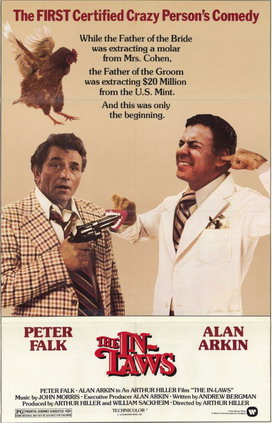
the-in-laws-movie-poster-1979Central Intelligence is, I am told, a movie about two buddies, one domesticated and the other an epidemic, where one is just maybe an insane rogue agent. Let us look at a much better such film that is mostly forgotten today (and, I must admit, one that is cartoonishly better at evoking the off-kilter is-he-or-isn’t-he-crazy tension that the 2016 half-heartedly, impersonally wishes to suggest).

Laurel and Hardy, Abbott and Costello, Martin and Lewis, even Lemmon and whatever straight-man dared tempt Lemmon’s immortal hurricane of manic charisma, all are enshrined in the pantheon of the comic pas de deux. Watching Arthur Hiller’s The In-Laws, Falk and Arkin temporarily feel like the greatest missed opportunity in the two-fisted lexicon of angel-and-devil comedy. They were a one-and-done deal in an over-and-out film that doesn’t so much recapture as reorient classic screwball efforts with a more unhinged ’70s Manhattan edge. Which is, in essence, another match made in heaven: the loose, free-wheeling inertia of the New Hollywood and the dexterity of the Old Hollywood, punching into each other with a recklessness that is becoming of both. Continue reading

Progenitors: Casino Royale

9475944-_sy540_House cleaning with a review from many months ago I never got around to publishing. It’s the films ten-year anniversary as the best blockbuster from 2006, and what with the blockbusters this year falling down left and right with no idea what on earth they’re doing, the time seems right. 

2015’s Spectre introduced its reptilian British assassin with that film’s best scene, Bond slithering through the streets of Mexico City in death’s garb like the brutal, unerring slasher he truly is. The decade prior reenvision of the character, Casino Royale, essentially charts the trajectory of the human parts that were refigured into that primeval, thuggish bloodhound ready for the kill. In Royale’s  final image, the man accepts the destruction of his humanity and embraces his icon status by restating his franchise-player name, his signature phrase, as he had for decades. Only this time, he does it with a cold-blooded emptiness broken only by the light of a devilish smirk, the fallout of which is essentially the audience’s awareness that his fractured psyche has reduced him to a mercenary whose only joy in life could be to mercilessly raise hell and find some iota of purpose in it. Casino Royale’s climax, its very final image, is less heartbreaking than a question mark about whether there was ever a heart to break, a state of the union address for action cinema that lays bare the terrifying reality that the world, the audience, and the franchise, would rather just have Bond on a leash to do its bidding than be a human. Continue reading

Progenitors: The Sugarland Express

sugarland-express-posterIn the popular consciousness, The Sugarland Express doesn’t really exist as anything more than a wisp of a pre-Jaws memory, a forgotten distant rumor of an appetizer before the shark movie that kickstarted the blockbuster craze rips into your stomach and takes the memories of Sugarland on with it. And, honestly, the film doesn’t exhibit any particular sort of argument for why you shouldn’t un-forget it, solid and effective though it may be. While the director’s debut film – the television release Duel – makes an argument on its own terms, irrelevant to the future of its director – Sugarland is on more tentative footing, functioning most compellingly as a prelude and a curious platonic ideal for anyone who wants to mount the “Spielberg was both a New Hollywood filmmaker and a post-New Hollywood blockbuster populist” argument. Since, you know, it is literally a more palatable version of the de rigueur New Hollywood narrative. Continue reading

Progenitors: Duel

duel-movie-posterWith Steve Spielberg speaking to children, and inner-children, everywhere in theaters this weekend, let us look back at his earliest days, doing something just a wee bit different.
Cinematically speaking, the halcyon days of the 1970s are in many ways unrecognizable from the current decade. But disposition of the films and quality aside, one of the more tactile, tactical ways that the nuts and bolts of filmmaking was different – something almost never mentioned in the popular sphere – is that the discreet world of television cinema was, if not quite up with the big boy leagues of silver screen darlings, a rather respected, and in some cases stylistically radical, little cottage industry for aspiring craftspersons and savants alike. The progeny of the omnivorous TV-movie-of-the-week stylings of ‘60s cultural icons like Playhouse 90, this television movie industry was, well, more or less a playhouse for workaday journeymen talents to direct sharp if straightforward, crafty but not really cunning films for hire. I mean, hell, Robert Altman did it, and if he didn’t use it as a stepping stone to emerge as the greatest American director of the whole 1970s, then I don’t know what else could make the early days of TV cinema more respectable. Continue reading

Progenitors: The Patriot and Godzilla

zmzgv6Roland Emmerich is going back to the chop-shop of his past this week with an Independence Day sequel. Let us chop up his part as well with his two worst films. 
The Patriot

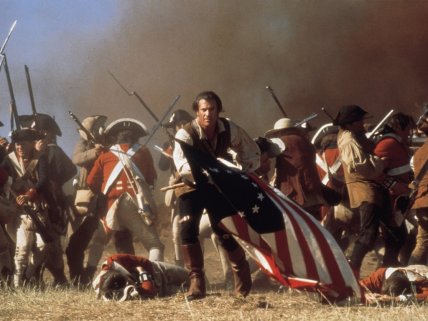
Emboldened to turn to drama after the relative commercial misfire of Godzilla and ready to show the world he was more than the hack who inspired a sea of clones like Armageddon, The Patriot is director Roland Emmerich’s stone-age storytelling misfire that just keeps going and going, without even the decency to be a pointlessly trivial disaster picture as a saving grace. No, no, Emmerich thinks he is an auteur here, and he is going to learn us a lesson before we’re through with The Patriot, a stunningly inept, sepsis-inducing trampling-upon of US history that, rather comically, both pisses all over the past and could only possibly, feasibly, be deemed smart in the first place by people who simply write get-out-of-jail cards, rather than tickets, to films just because they are about history to begin with. To quote Roger Ebert, speaking on another film, The Patriot is “the kind of movie beloved by people … (who) think historical accuracy is a virtue instead of an attribute”, and even then The Patriot just stirs the history into an unrecognizable ketchup for summer-time hot dogs at its 4th of July party. Each and every successive minute bears the walking threat of having to expend more energy in the film’s company. Continue reading

Progenitors: Finding Nemo

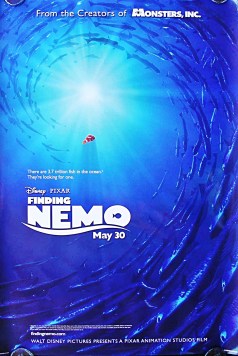
finding-nemo-poster-walt-disney-characters-19282601-1129-1691Let’s just say I think the reasoning for this one speaks for itself. 

With candor, Finding Nemo really is a case of the old nuts and bolts more than a phantasmagoria of unprecedented, delectable delights, which is just fine when the nuts and bolts are this well nutted and bolted on.  Pop Daddy Production Company Pixar’s reputation has gotten a little ahead of itself over time, with the disappointment of their recent slate of films erected mostly against the assumption that their run of early films are unimpeachable masterpieces, which is itself a presumptive claim. Personally, WALL-E is likely the only film in their canon that legitimately earns that superlative in the way that, say, a Wellesian motion picture might, and frankly, there’s no pretension in that statement. Not every film needs to b a masterpiece – the spit-fire implications of such a term only weigh down on films that aren’t really trying to be, anyway. Ratatouille is divine Chaplin, Up is a startling Douglas Fairbanks adventure mixed with Warner Bros. anarchy, the Toy Story films are all impeccable each in their own way, and Finding Nemo is a technical powerhouse emboldened with the flirtatious, often rapturous beauty of ani-magic. Why does it need anything more? Continue reading

Progenitors: Freddy vs. Jason and AVP: Alien vs. Predator

freddy_vs-_jason_movie

I meant to get to these a few months ago, but they’ve lingered around. With Batman vs. Superman continuing Warner’s desperate investment in doing the Marvel/Disney thing, here’s a look at some franchise-fighters to have come before. A note: We’re keeping this literal this time, much as I wanted to get cheeky and include something like Kramer vs. Kramer. 

Freddy vs. Jason

So much for humble beginnings. Freddy vs. Jason introduces itself on about as inopportune a note as a film can: a callback – sorry, a montage even – of the most striking mise-en-scene from earlier Nightmare films, intimating in a florid blast of death-marked imagery that those nightmares were, at least, you know, nightmarish in their giallo-inflected surrealist imagery and disturbed editing, not unlike a tone poem to rococo human flesh warping. While director Ronny Yu deserves a bucket of credit for accepting the “Go Freddy Kreuger” slant of Damian Shannon and Mark Swift’s screenplay and imbibing in a montage of scenes from the inarguably superior franchise, we’re drawn to that age-old adage about not reminding audiences of better movies in your film. Continue reading

Progenitors: Punisher: War Zone

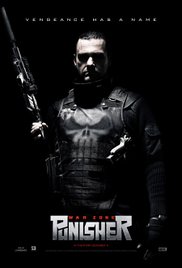
mv5bmtm4otqyodk0nf5bml5banbnxkftztcwmzqwndqwmg-_v1_ux182_cr00182268_al_Meant to get to this a couple months ago, but better late than never. With that Daredevil “Punisher arc” raving up a storm, I thought a review of a real dust-kicker was in order. 

With its headstrong rush of momentary action and aestheticized body dismemberment and its essential disinterest in anything else, Punisher: War Zone is pornographic in a figurative sense, narratively disfigured but never once disarmed. Dedicated primarily – singularly in fact – to its basest impulses, War Zone rudimentarily hurtles its way to and from its violent phrases with narrative and character serving as mere conjunctions rather than proper clauses (as they do in even most action films which are unable to untether themselves from the itch to throw a woebegone story into a none-the-wiser film that doesn’t need it). It’s garish, grotesque, and, in its own way, disarmingly unmanicured and liberating in its refusal to dress up its essentially atrocious self in highfalutin airs. Like a pompadour, War Zone is a delightfully unworried, confrontational slice of deliberate style as willfully oblivious to social propriety as it is delectably well-taken-care-of by its wielders. Continue reading