Category Archives: Progenitors

Progenitors: Fantastic Planet and The Nightmare Before Christmas

film_820_fantasticplanet_originalWith The Little Prince on Netflix these days and Kubo and the Two Strings out soon enough, stop motion is making a comeback. You know what that means.
Fantastic Planet

Despite the proliferation of 3D stop motion animated features in the past two decades, the scorchingly alien Fantastic Planet is even more otherworldly today than it was in 1973. Perhaps the vocal reticence in society to accept the artistic value of 2D animation (seen as primitive) only advances the skepticism for stop motion into today’s computer animation world, but the idea of a cut-out style 2D paper-craft animated feature these days feels like heresy. Like an outgrowth of another planet of animation history, Fantastic Planet feels almost sentient in its discrepancy from the status quo, defiant in its proudly primitive nature, and spellbinding in its sincere swelling of emotion out of the most observational of aesthetics. Continue reading

Progenitors: Watchmen

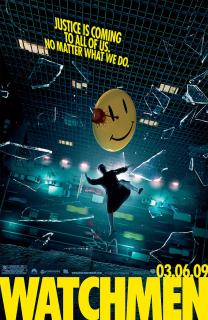
watchmen-newposter1Bad guys equal bad time in a DC comics team-up. This Progenitors practically writes itself.

Technically accomplished but dramatically inert, Zack Snyder’s Watchmen is  a superficially beautiful, primarily pretentious, and sometimes cinematically divine waxwork, an odd mish-mash of screwy, mercurial allure and loopy slog that doesn’t know when to say when. Either too long by double or too short by half, Watchmen is intent on disrobing the superhero mythos and mostly unclothes itself. An adaptation of a famously unfilmable book by Alan Moore, Snyder’s film – as was true of his mirror reflection of Frank Miller’s 300 – largely copy-pastes its other-medium predecessor, exhibiting indifferent cinematic flare except in intermittent, egg-beaten shards of compositional whimsy. By and large, it’s so indebted to its source material’s bylaws – and yet so incapable of achieving its source material’s essence – that it feels doomed to death-by-a-thousand-fanboys, all committed to ensuring all of their favorite scenes make it in the film without any consideration as to why or where they belong. Continue reading

Progenitors: I Am Legend

iamlegend_3213129b-large_transpjliwavx4cowfcaekesb3kvxit-lggwcwqwla_rxju8Remember when Will Smith’s name in the center/top/left/whatever of your poster was enough to guarantee a hit? 2007 sure does.
Director Francis Lawrence has a way with the frayed melancholia of an apocalypse, and his star in I Am Legend has a kind of soul to embody it, and to rage against it. The film they’ve produced never actually ignites, but it attains a solid simmer for a good hour or so as lone-human-in-New-York Robert Neville desperately fends off encroaching demons both external and internal in this adaptation of Richard Matheson’s oft-filmed novel of the same name. Not a carbon-copy of prior adaptations of the book (it’s more like an embellished replica), the tone of I Am Legend is, for a while, corrupted pulp in the best way, with the emphasis on low-slung filmmaking kinetics and a refreshingly intimate performance radiating char-broiled humanity.

Things do go awry in a final sequence that overheats the tensile strength of the ominous early goings and transform the film into a inflated (and thus deflated) blockbuster-like-object, an unknowing host for special effects doomed to be absorbed by them. Main man Will Smith and his handler Lawrence (one presumes this project afforded him the clout to become the quasi-auteur behind the later Hunger Games films) do what they can do assuage the film’s failures though. And although blockbuster size is always skulking undertow, for a while I Am Legend is sufficient to doodle in the margins of the blockbuster format with compositional whimsy and unmoored fear taking center-stage over conventional thrills. Continue reading

Progenitors: The Bourne Trilogy

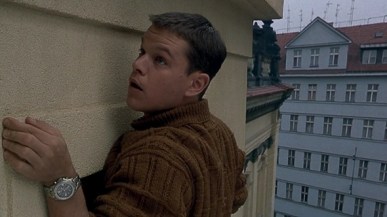
the-bourne-identity-_1The Bourne Identity

Doug Liman’s scarred take on the James Bond myth isn’t a work that deserves superlatives, but then again, it isn’t really beckoning for them either. This is a trim, merciless thriller devoid of the blockbuster hypertrophy that was rapidly kicking the James Bond pictures into an early grave circa 2002, and it is relatively content to be just plain fine and nothing more. With a muted, sometimes monochromatic palette of bleak, unforgiving grays and frigid whites, Identity is straight-laced and admirably buttoned-up; even its sometimes awkward tonal swivels suggest a post-traumatic mind flickering with memories of its past and awkwardly swerving between new identities in a mad dash to figure out what it wants to be in the present.   Continue reading

Progenitors: Batman

d635349371109592021_batman11The newest in a long trickle of good-to-great DC Animated Universe films, Batman: The Killing Joke, is to be released this week, and in theaters no less (the realms of kiddie animation really have grown up). Since the film is based on the most famous Batman vs. Joker comic, one that partially inspired the gothic milieu of one of the most important blockbusters of all time, and because the DCAU itself was so heavily influenced by that blockbuster’s noir-baroque vision, it seems appropriate to take a trip back to the past with a review of the progenitor of this whole 25 year Batman love-affair-cum-epidemic that nerd culture has been afflicted with. 

Watching Tim Burton’s 1989 Batman and its disfigured, plastered-on darkness today is largely a quaint experience. What was once a disquietingly serious blockbuster in its day now struggles to escape from underneath its giddy elan. But in 2016, an era of mangled, over-indulged, force-fed blockbusters with a realist, solemn streak a mile wide, it is Batman’s very cartoon zeal that becomes the well from which it draws life. Famously gruesome and gloomy in its day, Burton’s vision of gothic decay is decidedly less rapt with the reality principle than most blockbusters. Without heeding the realm of logic, Burton’s film is able to indulge its less timid, less mediated personal fetishes and massage something decidedly more expressive and visually crazed out of the fibers of the Batman comic than most blockbusters in the ‘10s, so concerned with narrative pretensions, would even know what to do with. Tim Burton’s brand of serious is silly, to say the least, but the mixture has an alchemic chemical allure in 2016 with most blockbusters so stone-faced in their sobriety and most Tim Burton films so manic and spasmodic they lose any sense of their center. Maybe it wasn’t in 1989, but in 2016, Batman feels like the sweet spot.  Continue reading

Progenitors: Fargo

mv5bmtgxnzy3mzuxov5bml5banbnxkftztcwmda0njmyna-_v1_uy1200_cr8506301200_al_I meant to review this a while ago, but the year of its twentieth anniversary seems as good a time as any. Noah Hawley’s television show is every bit the film’s equal, but there’s nothing wrong with the primordial ooze of the original. 
Defying expectations amidst the deluge of knowingly hip independent thrillers dotting the late ‘90s landscape like murder victims on the path of the criminal spree of ironic, self-referential cool, Fargo is at heart a tone poem, a restful calm rather than a flurry of moments convinced of their knuckle-dusting cool and charisma. Twisting and turning would be a death knell for a wonderful mood piece like this, and more often than not, a tacit admittance of an under-confident film that filmmakers’ gild and plaster over with knee-jerk side-winds to appease audiences. Fargo, which is devious and cage-rattling because it is a recess from this sort of narrative glut, is a film of blinding deception but never one that throttles its characters through the thrombosis of a belabored story.

Often accused of flattening their characters from above with their caustic cynicism, the Coen Brothers – in the film that “made” them – are too obsessed with feeling out their characters to ever truly hate them, or even exhibit a singular, untroubled, complete feeling toward them at all. Instead, Fargo’s emotions deal in dialectics of all varieties, from the contradictions of the human condition to the tensions in the writer-director team’s own situation as expat-Minnesotans relative to the thickly-brewing Mid-Northern culture they depict in this film. Rather than impressing itself above its characters with singular determination, Fargo is uniquely sincere in its desire to engage with the chemical allure of the mystifying and multilayered dialectics that construct both the individual human soul and the milieu of a place. Continue reading

Progenitors: Star Trek IV: The Voyage Home and Star Trek VI: The Undiscovered Country

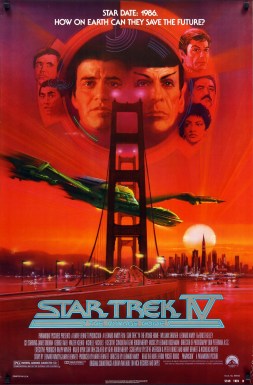
startrek41Two of the even ones. You know what that means. 

Star Trek IV: The Voyage Home

Among the most fondly remembered Star Trek films and probably the most distinctive after The Motion Picture, Star Trek IV: The Voyage Home finds Leonard Nimoy’s TV-bound direction in a vastly more snug, comforting mood than it was in the tragic The Search for Spock. With an original star directing, the film itself accompanies him down memory lane in a comedy that positively salivates with the unmuffled semi-goofiness of the original show.  By and large, the Star Trek films tackled the ‘80s with more-is-more elephantiasis, falling in line with the dictates of the time to varying results. The name The Voyage Home – so called because the heroes return to 1986 San Francisco, the location of the future Starfleet – also signals a certain journey home to the promised land of the original show, to the happy-go-lucky mid-‘60s. As in Gene Roddenberry’s original vision, The Voyage Home is a world where peace and problem-solving are intermingled and jubilant adventure is a well of possibility rather than a decree to blow things to smithereens. This is a comic plea of a film that almost feels defiant in light of the bigger-is-better norms of the ‘80s. Continue reading

Progenitors: Star Trek: The Motion Picture

star-trek-the-motion-picture-12527You know Star Trek. This isn’t it. 

Audiences craving rip-roaring rakishness upon Star Trek: The Motion Picture’s 1979 release date were about as nonplussed as the film’s producers were. All of them, including many members of the film’s cast and crew, were united in a communal act of salivating for a new Star Wars as their Pavlovian ear perks were invited by the flotilla of space sequences in this film and then soundly, roundly trounced by a screenplay and a director who were vastly more invested in fashioning a new 2001: A Space Odyssey. Indeed, deeply intercepted and compromised through The Motion Picture may be, the film’s willingness to desecrate its audiences’ expectations, to shuck and jive toward something more poetically-minded and disreputable in a time of frenzied all-out-action fantasias, is refreshing, even if it isn’t necessarily successful. The Motion Picture, the not-so-valiant but very-much-inspired, is a broken accident of a film, but it remains essential cinema nonetheless. Continue reading

Progenitors: Jaws

c
jawsI meant to get to this a couple weeks ago when The BFG was failing to tear up the box office, but with the Spielberg-loving Stranger Things tearing up Netflix, now is as good a time as any. 

Past the mid-way point in Jaws, we arrive at a scene where three men of different class backgrounds on a shark hunt break down barriers by sharing their virility not through sexual conquest but through trading battle scars in a perverse, comic interlude of a dick-waving machismo contest. In the throes of crisis, the scene is a marvel of male confusion and interpersonal dynamics with male bonding across class lines codified in giddily but pointedly masculine ways; the only outlet these men believe they have to get along is through exploring past crisis, as though their worth as men is enshrined in the physical markers of previous battles they’ve won.

Little gestures of discrepancy, like the eagerness of the three men respectively to show off their damaged wares or how they each place their limbs in the frame differently, reflects a dialectic between grotesque male harmony and the punchy, almost subliminal class differences that separate their mentalities even amidst crisis. In the battle over the screenplay by Peter Benchley (writer of the hoary book upon which the story is based) and Carl Gottlieb (TV comedy writer), both win out in a film that is as willing to thrust us into shark hunting terror as it is to stop and linger on little moments like these, scenes of human frailty that personify the daily dance of comedic human interaction that the terror interrupts in the first place. Continue reading

Progenitors: Manhattan

bridgeshot-manhattanWoody Allen is back at bat with Cafe Society, another story of a writer and the spaces that inspire and threaten him. Obviously, we’re not at a loss for opportunities in Woody Allen’s back catalogue to examine the director in exactly this mode; the very sense of a fictive past that has tormented his characters for decades has come home to roost, with Allen’s films doomed to repeat themselves much like the work of his characters. That doesn’t mean they can’t repeat in style, but it is unlikely that they will be more stylish than the exemplary peak of Allen’s evolution as a serious artist throughout the ’70s. 

In stark, almost combative contrast to the prickly ennui of Scorsese’s Catholic-guilt stricken version of the city or Spike Lee’s hot-box from hell, Woody Allen’s New York has typically taken the form of a watchful angel that tests and teases but ultimately loves all of its inhabitants. In Allen’s films, people rely implicitly on physical spaces and ideological places like New York to redraw and redefine themselves. In Manhattan, and maybe only in Manhattan, this self-definition feels threatened by a city that is itself threatened by its own constant makeover, a city that is always reimagining itself until it encroaches on evaporating from reality altogether.

Manhattan is Woody Allen’s most transcendent motion picture, and possibly his most deceptively thorny, because it is an unabashedly incomplete and contradictory ode to the city that has infected almost all of his masterpieces with a kinetic jubilance. A radical treatise on the redefinition of love, it is a film that pretends to cast its lot in with human relationships and ultimately exhibits its greatest curiosity about spatial geometry and the possibilities that percolate within the mental prism that nominally corporealizes as a cross-hatch of streets and avenues. Love here isn’t simply human connection but self-definition, and it has much more on its mind than a pas de deux of two people in an otherwise anonymous space. Continue reading
