
 Elaine May’s career-ending 1987 blockbuster social tract Ishtar, a lopsided work of equal parts monomaniacal egomania and bracingly scabrous anti-masculine comic commentary, has spent the better part of a decade being partially rescued by youthful, revisionist film critics. Now, that film’s partial reappraisal is arguably unearned; its phenomenally sardonic first half is mostly undone by an untethered, obsessively messy back portion that sees May woefully incapable of handling the ridiculously inflated budget of the production. It feels like wishful thinking to lump it in with the equally voluminous anti-American critique of Western iconography that is Michael Cimino’s much more deserving masterpiece Heaven’s Gate. But if reappraising Ishtar is a necessary casualty to resurrecting Elaine May’s bracing back-catalogue, then so be it. She remains responsible for a number of the lost masterpieces of American cinema, a cadre of the best films released in arguably the most impressive decade for the nation’s cinema. Continue reading
Midnight Screening: Mikey and Nicky
Leave a reply
 After the laconically witty, good-natured “wait, how much money are they giving me?” spurt of Big Trouble in Little China, John Carpenter decided his steadily encroaching ascent into mainstream fluff required a course correct. His 1987 feature, Prince of Darkness, reflects a homecoming of sorts, a rejection of the more-is-more pomp and circumstance of the 1980s for the merciless fringe-dwelling independent malevolence of Carpenter’s upbringing in the 1970s and his time being reared on the works of Val Lewton, Samuel Fuller, and Nicholas Ray. Antithetical to good cheer, the fluctuating energy levels of Prince of Darkness occupy a secluded spectrum from poison-cloud malevolence to throat-grabbing holocaust of horror. If Big Trouble was escapism, Prince of Darkness feels like it cannot be escaped.
 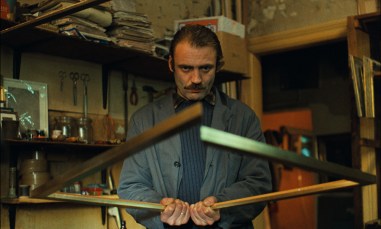 Relative to his New German Cinema compatriots – or sparring partners more appropriately – certifiable humanist Wim Wenders was a late bloomer. His ’70s is dotted with highlights, but you won’t find an Aguirre or a Petra von Kant hiding among them, even if his Road Trilogy begs to be rediscovered to this day. This is no knock on Wenders; his years-long quest to discover something at the mountaintop of (usually American) cinema necessarily required nurturing and exploration that the more primal impulses of Rainer Werner Fassbinder rejected as vestigial structures of sane society. Plus, by the end of the ’70s, Wenders still had the finest modern study of American geography-of-the-mind in his near future, while Fassbinder’s cocaine-addled filmmaking was about to overflow into personal disaster. Neither filmmaker was necessarily superior to the other (although crossing their streams would likely prove a recipe for nuclear fallout), but 1977 was still a year of personal journey for Wenders. He hadn’t yet reached his destination.
  There’s something elusive and mystical about confronting a cinematic stand-by, a work read and tweaked and revisited by directors across decades and nations. The post-They Live By Night world was ushered in almost immediately by the psychotic, sexually-charged thrust of Gun Crazy, which toyed with many of Night’s themes, but it wouldn’t be for another decade until director Nicholas Ray’s contrarian style would emerge as canonical in the minds of the French New Wave. Watching The Live By Night, you can practically imagine the entire Cahiers crowd almost asphyxiating on autoerotic fantasies of their own cinematic futures. This imaginative hyperbole is entirely fitting for a work like They Live By Night, too, since it is at once latently sexual and surrounded by violent hairline fractures that strut into the cinema and threaten its very being.
  With all apologies to the more famous, and more infamous, The Manchurian Candidate, John Frankenheimer’s four-years-later film Seconds makes his prior effort look like child’s play. That earlier film’s bleak, merciless paranoia of the John Fuller get-in-and-ravage-’em school of filmmaking is no insignificant feature length anxiety attack, but it has nothing on the prowling paranoia and devilish absurdity of the more playful and significantly more experimental Seconds, a work that takes about as long as its title suggests to eviscerate the memory of its predecessor in a cauterizing shriek of a hall-of-mirrors credits sequence courtesy of Saul Bass and cinematographer James Wong Howe.
  Return to Oz
 So it was with the raving success (by barely-budgeted, cave-dwelling B-movie standards) of Evil Dead II: Dead By Dawn that Michigan backwoods filmmaker was granted access to the secret gilded chamber of the Hollywood machine. His goal? Not to spit shine the cogs, nor to tear them to shreds, but to rearrange them, to warp them, into a slightly more feral, crazed mad scientist’s contraption. Well, maybe not quite that far, but he was at least about to switch out a few gears and spruce up the place with his own signature cartoon-ghoulish paint brush.
  At the center of Eyes of Laura Mars lie a pair of vexing, pallid portals into terror and gender power dynamics. They are two objects staring on at the crossroads after selling their soul to the devil. They are the titular objects of the film – eyes – and they engage in the everyday dialectic of stunted privilege and latent oppression in their daily ritual of photographing women who are as likely to be clad in gilded chic as bloody crimson terror. The eyes adorn the face of Laura Mars (Faye Dunaway, fresh off her Oscar win for Network), a fashion photographer in the glitzy Disco era of the late ’70s, who has taken to coiling together sex and death in garish photographs of women stricken bloodless by murderous killers. Or women otherwise strewn about, dead, on the carpet. The women are not actually dead – they are models in staged photoshoots – but they might soon be. An unseen killer stalks them, and he or she seems to have it ought for the eyes of Laura Mars by transforming her art into reality, torturing her eyes and implicating her in the violence by turning her eyes into inadvertent weapons of sorts. If she continues to shoot, he will kill the object of her lens.
  With his monumental silent monstrosities of expressionist-tinged paranoia and fervent chiaroscuro-afflicted studies of monomaniacal madmen driving the modern world insane, Fritz Lang practically invented the film noir. That he was somewhat disavowed by producers and abandoned by film audiences after his escape to America on the eve of the rise of Nazism is a quandary. Fellow expatriate FW Murnau was instantly embraced by Hollywood and could have risen to superstar status had the sinister hand of death – the very subject Murnau tinkered with time and time again behind the camera – not intervened. Ernst Lubitsch at least lasted a decade in the top ranks of Hollywood. Billy Wilder’s star would germinate for decades still. Hollywood was generally kind to German filmmakers prior to WWII, or at least, Hollywood was willing to play ball with the Weimar filmmakers who had soundly trounced Americas best efforts during the silent era. If you couldn’t beat em, buy em, or so the American mantra goes.
  And so it was that, upon absolving the world of its sins with his debut feature film Citizen Kane and then tempting the world again with sin for his second feature, The Magnificent Ambersons, Orson Welles decided to sin a little himself for his third and fourth feature films, The Stranger and The Lady from Shanghai. Admittedly, “decided” is not the whole story; Welles, if left to his own devices, likely would have continued evaporating cinema into its intangible elements and reconfiguring it as he saw fit, but the world had other plans. Hollywood had not taken to his second feature, and they were not about to let Welles go off the deep end of his own Frankensteinian ambition for a third time. He was, for the first time in his life, going to know the iron cage of restraint. He was going to play ball with the studios. To commit the sin of cinematic hackwork.
  The Long Take