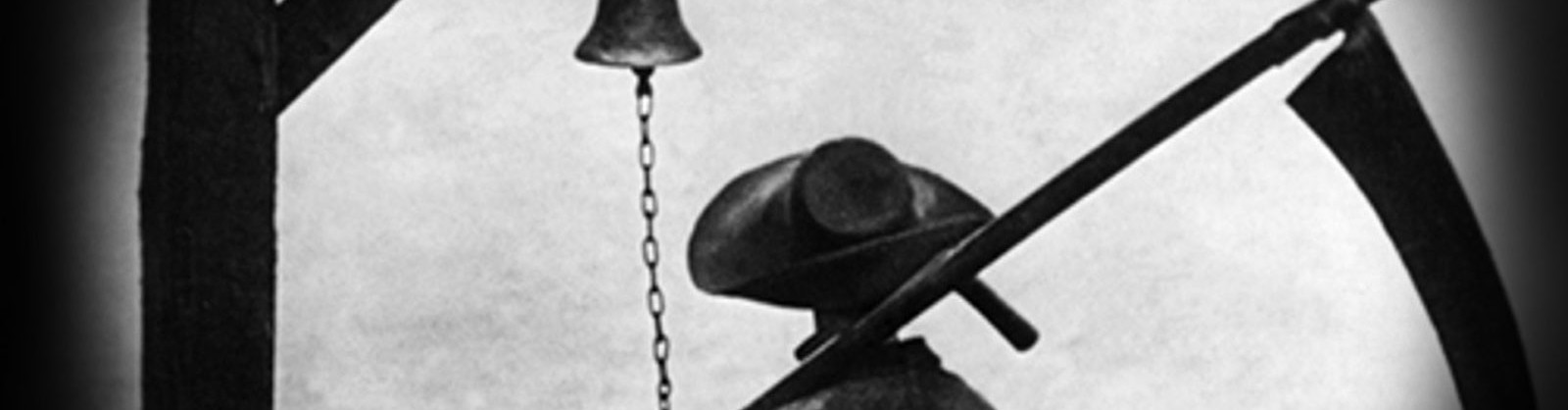
 The mental cracks of an unstable mind loom large over Michelangelo Antonioni’s first color film. But although main character Giuliana (Monica Vitti) is parallel to the film, it isn’t her student. Red Desert is too unresolved, too contingent, too woolly to reduce to a purely psychological reading rooted in Western cinematic bylaws where expression is distinctly and unambiguously a refraction of the protagonist’s mental geometry. The common reading that Giuliana is “mentally ill” mistakenly clarifies and pacifies an instability that the film intentionally, beautifully, cannot quantify. The mistaken assumption unduly emphasizes the individual, the protagonist, as a “special” or “unique” case-study that is different from, or tangent to, the world around her. Continue reading
Films for Class: Red Desert
Leave a reply
 In the annals of screwball comedy, no film more baldly trumpets its sense of collective character perplexity as much as Howard Hawks’ Bringing Up Baby, a screw-loose comedy of emasculation, inebriation, and performative recalibration that upends the collective narcosis of the everyday world. As with many screwballs, the eyes of the world within the film unmistakably do not understand the two main characters, much as audiences at the time didn’t quite understand the film. The inescapable mania of the picture can cause even the peppiest viewer to catalyze an embolism. Or run away in fear. Whichever comes first.
 Largely, the story of The Circus is, much like the circus itself, the tale of performative wonder forever mired by dogged claims of benighted emptiness. Much like a circus, The Circus is whispered about with the hushed tones of an empty-calorie exercise in endlessly travelling around, living a harried, itinerant life as a collection of sketches rather than the presumably more “developed” and forward-thinking narratives of Chaplin’s silent films on either side of this feature (the monumental The Gold Rush and City Lights). You could call it a trivializing escapade into fluff rather than an expedition into psychology or social realism, but you’d be denying the film, and yourself, in doing so. Singularly among Chaplin’s feature-length films, The Circus is a regression to his earlier days alighting one and two-reeler pantomimes, and it is not in spite of this fact but because of it that the film flies as highly as it does.
  It is ever easy to infringe on Michelangelo Antonioni’s reputation with the benighted “pretentious” signifier, avoiding and flattening the mysteries of his oeuvre in the process. The real work, and the effort Antonioni deserves, arrives when one actually looks into the film, engages with the materiality of its existence, and discovers that the act of watching this unquantifiable, unstable film is itself a reflection of the film’s gaze onto the tentative spaces of the world. Antonioni’s cinema isn’t a fixed state, but a thought-process, or a process of gazing and puzzling out a world that is not prefigured or assumed but a project ever in a state of transition. The concept of “the gaze” was waiting in the wings, soon to be all the rage, at around the time of L’Eclisse’s release, but few films transcend the subjective gaze of the character to a higher state of awareness of the subjective gaze of the film quite like Antonioni’s. L’Eclisse doesn’t confound expectation to trick us with a twist but to trap us in a state of affairs where the world must be interrogated. And in trapping us within the world and not allowing us to gallantly stride across it (as most movie characters do), Antonioni’s films are, paradoxically, primarily liberating experiences, works that unshackle us from narrative as well as easy expectations of what the world ought to be.
 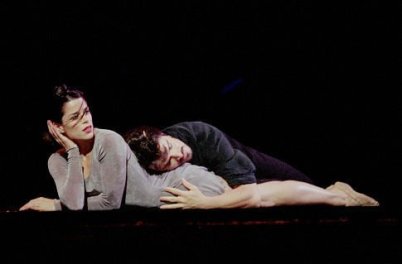 At first glance, molasses rolls uphill faster than The Company, Robert Altman’s penultimate film and his most radical late-period work (excepting perhaps Short Cuts). But beneath the elegance of the pristine stillness, Altman – ever a chronicler of humanity’s dances of distance and performances of connection – stages a malapropism of conventional drama by infusing every nominally placid moment with a galvanic reverie of human possibility, both clarifying humanity’s physical and mental limits and crystallizing around the species’ undying, even improbable, volition to undue those limits by riding the contours of life and inviting love even in spite of its fragility. And I do mean “the species”. Technically the story of a youthful rising-star Ry (Neve Campbell) in Chicago’s famed Joffrey Ballet, Altman instead farms energy out of the interpersonal lives of the principal players as a collective, emphasizing the beauty of movement and marginalia rather than central, individualist conflict.
  Much like his later A Separation, Asghar Farhadi’s About Elly is a bitter respite from the filmic hierarchy in that it refuses to afford us what might be called an omniscient, privileged position. Instead of knowing everything beforehand, it adopts a perspective that slides between characters and perspectives to construct a multiplicity of experiences or opinions that elide the notion of an essential truth. The most obvious characteristic of this lack of omniscience is the film’s disinterest in imparting a cohesive depiction of the world of the characters, instead choosing to construct a minefield of contradictory, contested opinions. This is, first and foremost, a proclamation against the tendentious norms of cinema where a film’s moral mapping is supposed to conspire to slam that film’s presumptive argument home in the final stretches; in comparison, About Elly always, fascinatingly and rebelliously, feels like it is slipping away from us. If most films are lit toward a primary beam of crystal-clear truth, About Elly refracts the light through the crystal and constructs a variegated, prismatic rainbow of varied perspectives and possibilities.
  Edited for Clarity
 The Bitter Tea of General Yen
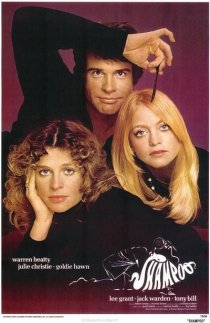 Filmmaking maverick Hal Ashby was an elder statesman of the New Wave, more akin to the literary largesse-and-trepidation cocktails of Robert Altman than the fiery brimstone of the younger hooligans of the era weened on Godard and his fellow travelers. Martin Scorsese he was not, but he did stake out his own claim as a chronicler of the decade that quietly fell in love with him, at least for a film here or there. Although none of his features would meet the vociferous acclaim of his debut work Harold and Maude, Ashby would evolve as a journeyman filmmaker whose comic visions of life belied their exploration of the just-past-due, still lingering, now haunted fantasia that was the death spasm of the 1960s.
 Despite nominally tenanting the early days of the New Hollywood, Hal Ashby’s Harold and Maude achieves a frisky, mischievous barrel-house piano playfulness more at home with the mid-’60s works of Richard Lester, who made films masquerading as larks that nonetheless disobediently dissected society’s fascination with identity with a manic frivolity that both epitomized and upended the giddy image of the 1960s . Prefiguring and serving as an advance riposte to the grisly grottos of Scorsese and friends that embodied the dejected, askew stench of the 1970s, Harold and Maude reflects the unbridled romanticism of the hippie movement, a time before carefree mania was played in the frenzied register of abject pandemonium.
  The Long Take