Category Archives: Film Favorites

Film Favorites: Sans Soleil

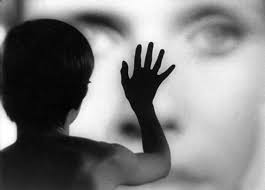
A great deal has been written about Sans Soleil’s meditation on, and mediation of, the link between memory, imagery, and time, much of which frames Chris Marker’s cinema as an attempt to navigate the impasse between self and society, as well as past and present, and to ponder the relationship between the external world and the internal, culturally contingent meanings divined by the viewer from external imagery. To this extent, an obvious reading of the film would be that it vandalizes cinema’s hope to accurately represent the world and corrodes memory’s potential to interrogate the past without bias. Yet, while a highly subjective film – one entirely unsure of its subjectivity – that dissolves linear continuity and causal image relationships to mourn the loss of stable, coherent mental structures, Sans Soleil also enlivens itself with the possibility of imagery unshackled from cause-effect confines, gifted flight to connect with and comment on other images that nominally – diegetically – boast origins in warring time periods and differing geographic locations. Sans Soleil reflects the mortality of the classical conception of cinema as a thread on which a singular “reality” is mounted from beginning to end, a cinema comparatively assured of its own truism. Yet Marker’s film also discovers in this demise a sense of renewed possibility, even refreshed reality, in a more subjective world caught up in the ephemerality of its own meanings, alive to a multiplicity of readings because each meaning, by itself, is ultimately far from completely sustainable. Marker’s cinema embodies Thoreau’s sense of the “I” as a personal and vibrant resonance with the world, one that is closer and more in touch with the world because it knows that it cannot access it completely or without the entanglements of the social.

Largely, Sans Soleil achieves this dialectic through editing with an eye for connection rather than causality, allowing images to echo and remake or inflect each other associatively rather than to “accumulate” over time toward one definitive “answer.” The film also routinely meditates on its own fallible representation by incorporating images of various artistic representations that both fail to encapsulate humanity and somehow exceed or re-interpret human life. Much as death in the film often animates creativity or life, even contact with the unknown or the intangibles of existence, the death/deconstruction of cinema’s classical structure is ultimately a conduit for imaginative revitalization and connection between images, cultures, and ideas. Decrementing artistic manipulation or modernism as an escape from reality and into the castle of the mind may risk implying that external reality is an objective state that can be grasped non-subjectively in the first place. Thinking about how one sees the world is interacting with the world. Sans Soleil thus refuses recourse either to an impenetrably singular will or an ungraspable material multiplicity, offering instead a plurality of sensate connections weaving a constellation of possibility out of the modern maelstrom of images, senses, and feelings confronting us at every turn. Moving across time and space like a ghostly wanderer through the cosmos, it is a cinema of interstellar communion.

Continue reading

Film Favorites: Night and Fog

A right-ward track across the now-abandoned remnants of a concentration camp simultaneously models and critiques the encounter between the roving detective-camera, searching for the trace of history, and the trauma of the past that exposes itself, lying in wait to the perceptually attentive. Just as the film’s narrator remarks that there are “no images of the past,” seemingly resigning us to a doomed present sequestered off from a past stranded in history, the camera is suddenly intercepted, even assaulted, by the sudden shock of the black-and-white “documentary” image. History, the film suggests, insists on being heard.

Yet if the images we see construct a contrast between the moving color present and the grayscale truth dormant beneath, and thus rely on and seem to affirm the journalistic equation of black-and-white with both the past and the “real,” these sights also trouble the very argument they seem to be founding. Shots of marching Nazis intervene in and fulfill the camera’s search for a “real past” only to, in turn, question that very fulfillment, insofar as these images are themselves mediated by their presence in another film. Our first introduction to “the past” is actually an image from Leni Riefenstahl’s infamous 1933 propaganda film Triumph of the Will presented, by this film, as a document of history. Our engagement with the past, the film seems to remark, is already shot-through with its own slipperiness.

It is thus that director Alain Resnais’ seemingly straightforward documentary about the necessity of memory reveals itself as a meditation on the difficulty of history. In these opening moments, 1955’s epochal Night and Fog cuts together three exploratory images, “stitching” various rightward tracks (from different concentration camps) into both an existential demand for engaging the remnants of the past and a reminder of the difficulty of parsing that past and piecing it together. The film suggests the need to capture an ephemeral totality more substantial, and more impossible, than any one camp’s empirical reality. It asks what image – if any – truly indexes the gravity of the Holocaust. The film’s deepest and thorniest conundrum is how to treat the past as at once a necessary shock of light for the audience and an ambiguous shadow stalking that very light.

Continue reading

Film Favorites: Citizen Kane

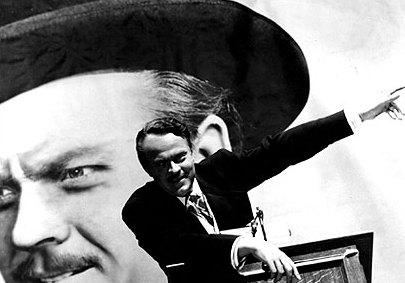
Citizen Kane opens with and then defiles a promise. The first shot is a “no trespassing” sign, and Citizen Kane immediately trespasses. The enigmatic and exceedingly wealthy Charles Foster Kane can wall himself off in a gothic manse that doubles as a prison-of-the-mind, but the camera – cinema – sees all.

Or does it? The shots that come right afterward move us inward toward the man, breaching the fragile barrier set up between him and the viewing public. But rather than clarifying, they confuse, exposing the impossible, unfinished space he has constructed, a monument to a tortured mind that prematurely closed itself to the world despite never truly figuring itself out. We move increasingly toward the lone light in an even lonelier room, a beacon that offers a hope of revelation, but the shots that seem to draw us inward toward a final truth actually scatter us all-around, toward a number of disconnected images that reveal much less than a portrait of a complete man. When we cut inside and finally encounter the titular Kane, we only see his hand, his lips, and finally, his ghostly silhouette. Instead of a procession toward closure, writer-director-star Orson Welles only offers a fragmented portrait of a man in search of a facsimile of wholeness.  

It’s certainly a plentiful opening, and there’s certainly no need to add anything to the reputation of this most plentiful of films. But Kane’s odd, braying charisma endures, even as the film has endured many rounds of analytical licking and push-back. In truth, so few films are so self-important. So few films bite off so much more than they can chew. Yet this is only because so few promise the world to us like Citizen Kane. With its mixture of stylistic bravado and overworked symbolizing, of impenetrability and obviousness, of opacity and underlining, Citizen Kane is very much the film that Charles Foster Kane would have made about himself, a cinematic ego trip par excellence. This is a film that absolutely insists on itself, that demands that we pay attention with all the magnetism and mystique of Kane himself. And, like Kane himself, it ultimately dances right up to the edge of evacuating itself of nuance entirely.

In truth, then, it’s hard to miss what Kane is up to, and yet it still feels potent, a forceful, full-throated, somewhat fatiguing, and sometimes forbidding elegy for a forceful, full-throated, somewhat fatiguing, and often forbidding man who, the film admits, never really amounted to much to begin with. The problem for the film is what it can amount to beneath all the aesthetic show-boating. If Welles’s wunderkind of a film, like Charles Foster Kane’s prodigy of a newspaper, promises to disrupt the Old Hollywood facade and reveal the bristling truth beneath, it also drinks from the same well, and suffers the same conundrums, the peculiar entanglement of fantasy and reality, of films before and after. This is a paradoxical film, one that, like Kane himself, invites us in and keeps us at arm’s length, that studies the world but can be blind to itself, that welcomes us with open arms but can only offer much less that it pledges. It works because it is so patently a victim of its own ego, so unapologetically of the very Hollywood idiom it disdains, so much a product of the very style it seems to think is so soulless. Few films are as misguided as Citizen Kane, but fewer still, perhaps none other than this one, really earn these problems like Citizen Kane.

Continue reading

Film Favorites: Lone Star

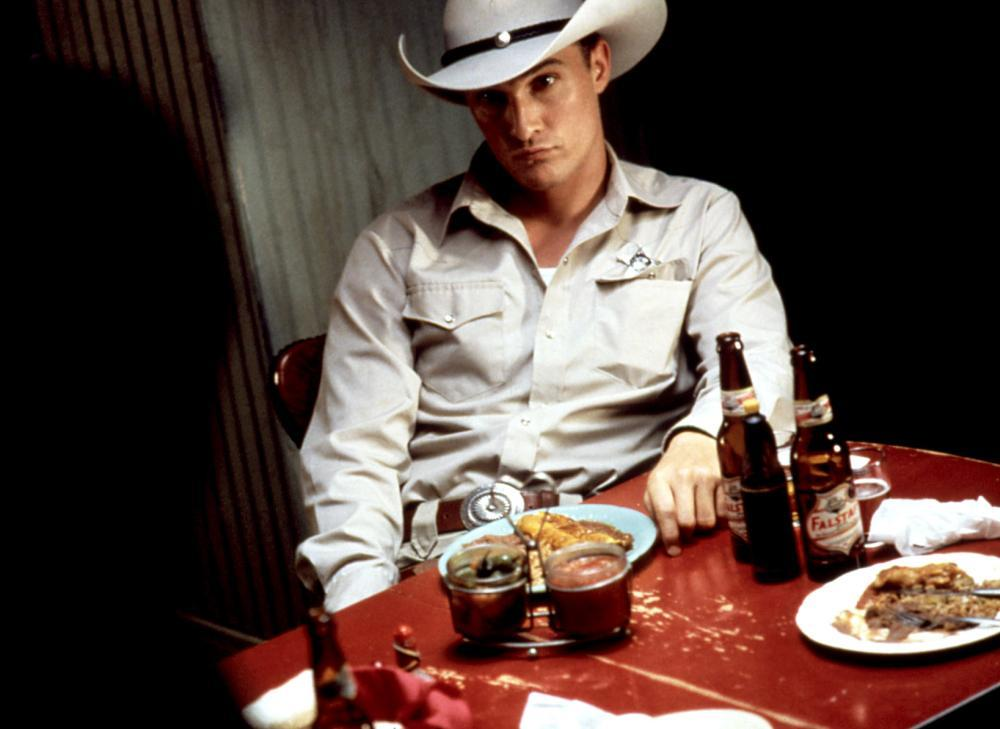
In a key mid-film moment in John Sayles’ beguiling neo-Western Lone Star, a flashback to the early 1970s begins on an image of a film screen at a drive-in showing Black Mama White Mama, a classic about an interracial pair on the run from the forces of law, categorization, and entrapment. The camera skulks down below to the car-bound audience watching the film, a pair of sheriff boots on the prowl to capture another pair of outlaws: two teenagers, the sheriff’s white son and his Mexican American girlfriend enjoying a night of relative freedom watching a movie. In this case, the authority figure hunting the two teens made his name – became a myth in the border town of Frontera, Texas – precisely by rejecting a horridly racist sheriff himself. He is both a frontiersman boldly resisting authority and a specter of his former enemy and the peculiar version of freedom – the freedom to control others, to resist order while sustaining it – that he once stood for, and that defines so much of American outlaw lore. Lone Star asks us to sit with that, with the paradoxes of power and rebellion, with the ambiguities and contradictions of American outlaw culture, with a past that is a multiplex of sensations and memories shot through with false truths and dim presences. It dwells on a history where identities are forged out of cinema-style myths of Americans escaping their pasts, a cinema of the frontier that looms large in the American imagination, a ghost in the machinery of much American violence.

In other words, Lone Star is a knot in a tangle in a labyrinth, a film whose irresolvable complexity is not the result of any unexpected occurrences in the narrative (although there are plenty of those) but of the intricacy and empathy of its interpersonal curiosity. Like any truly great film, it is defined by its mettlesome texture, upsetting any conclusions we draw on a scene-to-scene basis. Its moral imagination is its ability to delineate human relations and then unravel those delineations even in the act of drawing lines. The past will weigh heavily on the present throughout Lone Star, which continually moves across decades without even cutting, but the present is also loose to itself, containing many overlapping currents and frayed stories that circle around but also unravel its seemingly central mystery – whether one sheriff did, in fact, kill his authoritarian predecessor to take over the job, and what happened to the body – a mystery that is the film’s pretext but not its reason. This film continually implies that whatever resolution it can offer us to that story does little to resolve the pressing problems facing the town in many other tales only being briefly visited. Lone Star is a work of fascinating, beautiful, continual disappointment.

Continue reading

Film Favorites: Anatomy of a Murder

After the modernist assault of Saul Bass’ title credits, which abstract and sever a minimalist outline of a human body like an anatomical puppet or an animator’s specimen, backed by Duke Ellington’s bracing, off-kilter jazz score, Otto Preminger’s Anatomy of a Murder throws us a sly curveball. Preminger drops us into a noirish, endless sequence of shots of a car driving through the middle-of-nowhere, slithering on the path to ill intent, seemingly backing up the credit sequence’s promise of nefarious activity underfoot. Except when the driver gets out, it’s Jimmy Stewart, and he’s just been enjoying a leisurely afternoon fishing. And then when Stewart wanders into his unassuming house, a flick of the light switch suddenly reveals a studious, forbidding wall of mighty legal tomes. We get the sense less that we’ve moved from one world to another than that the mise-en-scène has folded multiple layers of existence into one another, layering a chiaroscuro noir on top of a lazy-day comedy on top of a legal drama. This is a man as inviting, and as pungent, and as confusing as an onion, and this will become a film that is interested in casually, continuously peeling, scraping, away at society’s facades rather than giving the audience the satisfaction of a carefully resolved mystery or rushing toward something as superficial as a “guilty” or “innocent” verdict.

Anatomy of a Murder takes its time here and throughout. It never insists on anything, offering a leisurely, observational sidewind through a densely knotted tangle of a crime the film is more invested in walking around and peering at than really untangling. The closest analogue I can think of is Howard Hawks’ loquacious Rio Bravo from the same year, a film that turned the promise of a strenuous, sinewy siege-Western into a loose, go-nowhere hangout picture. Just as surely as that film was a kind of response to the tight-and-trim High Noon (also great), Anatomy of a Murder feels like the anti-12 Angry Men, staging not a masculine juror’s thrust toward the achievement of legal doubt enshrined as a personal moral victory but a complex, latitudinal portrait of loose community layered with decades of history. Certainly, Anatomy has a much nastier bite than Hawks’ laconic oater, but they share an ethos of investment more in the minuscule gestures that define mutual relation than the brutal efficiency of forward movement. While 12 Angry Men can never quite escape the sense that it is moving us to a position we are already, inevitably, primed to support, Anatomy splays out. All while seemingly wasting time with the minutiae of every detail, it secretly, invisibly stabs so many knives into human morality that we can only walk away with our sense of truth having been quietly, almost invisibly pulled out from under us, our hope for what constitutes proper justice melted into a swampy morass of questions and conundrums.

Continue reading

Film Favorites: Popeye

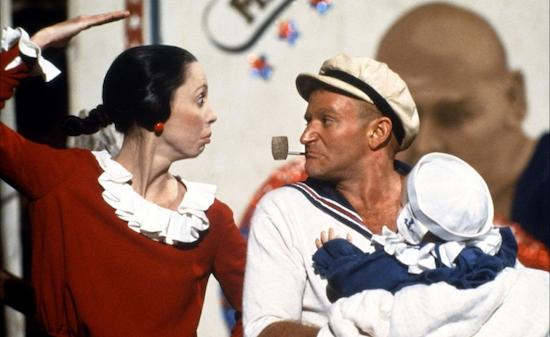
Whatever may or may not be true about the demise of the New Hollywood in the late ‘70s and early ‘80s, the story practically writes itself, and it certainly helps spice up the films. Michael Cimino’s oneiric Heaven’s Gate, Francis Ford Coppola’s dementedly luxuriant Apocalypse Now and his heartfelt, slovenly One from the Heart, and, of course Robert Altman’s own Quintet and Popeye all went grossly over-budget and wear their exaggerated passions on their sleeves. But, unlike the others, Popeye was nominally intended as populist entertainment! And it is as thoroughly scatter-brained and bedeviling and dumbfounding as any last one of them, a truly suis generis slice of creative hack-work, as perplexing as the crystal Mrs. Miller looks at, searching for an impossible answer to America’s riddles at the end of Altman’s masterpiece McCabe & Mrs. Miller. Much like Coppola’s One from the Heart, it is fundamentally about Great Depression popular cultural, and like One form the Heart, it is absolutely deranged. As with Coppola’s film, it went colossally over-budget producing a set that it could not possibly justify (and yet does!) that was constructed, in Altman’s case, on location seemingly with the intent of evoking a soundstage. Or to serve as Altman’s backdrop for a production-length coke party. From Shelley Duvall’s note-perfect, almost impossibly serendipitous performance as Olive Oyl, to Robin William’s dangerously committed, deliberately alienating turn as the titular outsider who genuinely seems to occupy a different world from everyone else in the film – and because the film is so thoroughly estranging, therefore the same world – this is an absolutely uncompromising dispatch from another cinematic world. It is so feverishly committed to its own disturbed wavelength that it feels like it could have been directed by John Boorman, although probably without the Sean Connery nut-slings.

Still, it’s an Altman film, through and through. Many of Altman’s films were, in one way or another, a dissection of how America related to its own visual and aural iconography, finding (at times accidental) truth in fiction. Popeye, at the time chastised as Altman selling out to the pop cultural lexicon he so often dissected, explicitly tackles a recycled consumer property by name, and under the belly of the Hollywood studio system. Opening on a shot of the animated Popeye, black-and-white, speaking directly to the camera, informing us that he’s “in the wrong movie,” the film smash-cuts to a stormy seaside town as “A Robert Altman Film” appears overhead, usurping the titular character’s authority with a decidedly different breed of central figure. Popeye initiates itself by dissociating itself from the fiction audiences might expect, already foregrounding disharmony and hinting at the difficulty, even the incomprehensibility and delirious idiocy, of making a live-action adaptation of E.C. Segar’s comic franchise and the Fleischer Studios animated cartoons at the end of the 1970s. The introduction is a direct descendant of Altman’s Brewster McCloud, where the iconographic MGM lion roars with the audio replaced by René Auberjonois’s “I forgot the opening line,” another confrontational fiction-breaking abnormality and a promise on Altman’s behalf that the story we expect has been distorted and defanged.

Continue reading

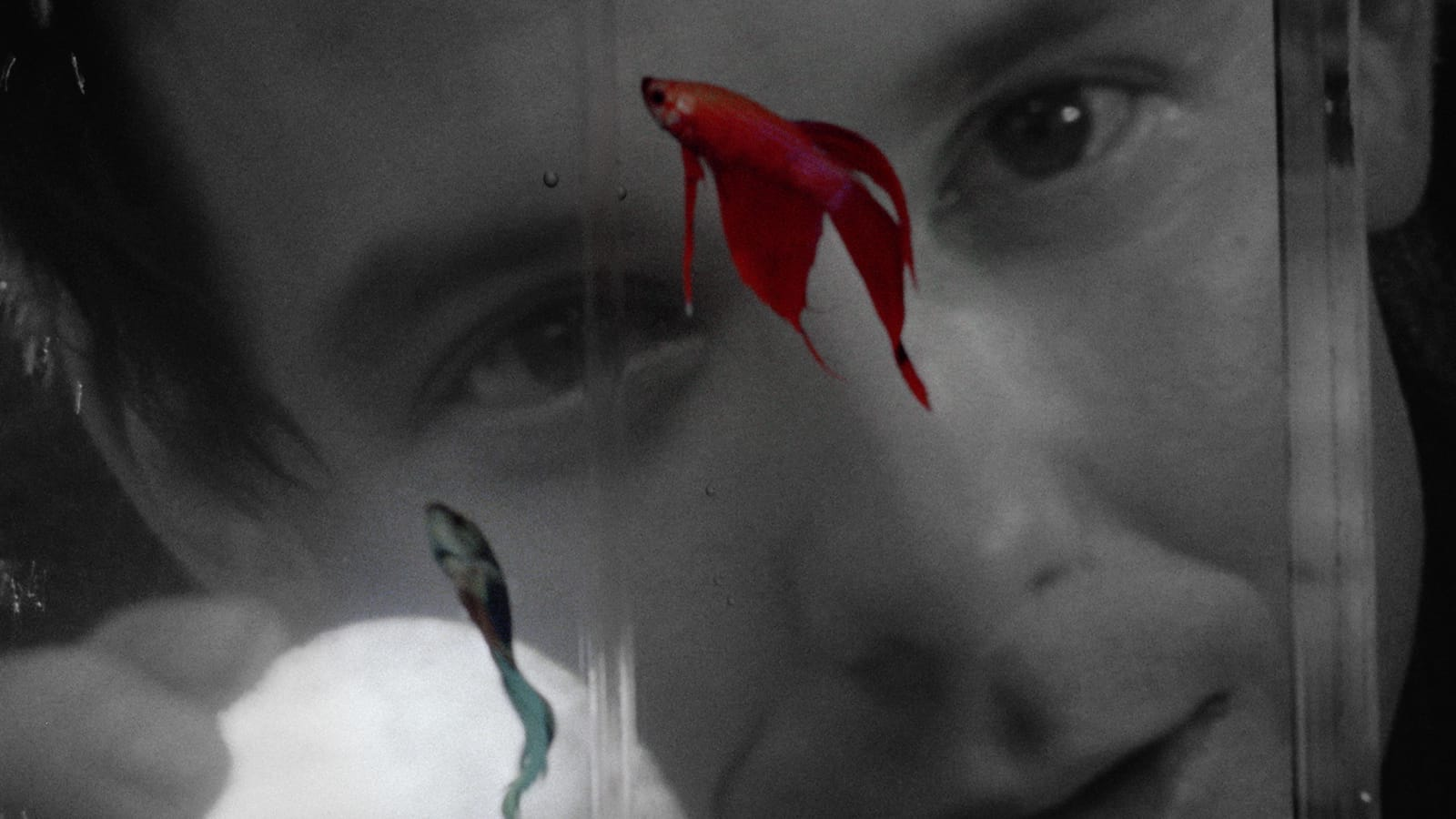
Film Favorites: Rumble Fish

Rumble Fish is plainly the product of a director who had been bruised and humbled. After producing at least four genuine cinematic classics during the 1970s, the near-death experience of making Apocalypse Now, an exercise in cinematic self-flagellation that wanted nothing less than to both channel and contest the very warp and woof of the world,did nothing to quiet Coppola’s ego, which went on to just barely stabilize the remarkable, unfeasible, impossible flop One from the Heart. Reigned in but not daunted, Coppola looked to the aspirations and dreams of his children to make a pair of S.E. Hinton adaptation The Outsiders, which certainly conjured images of his own youthful days. The evocative but nonetheless straightforward The Outsiders was Coppola on guard, proof that he could – for the moment – play ball. But Rumble Fish, his second Hinton adaptation in the span of a few months, was something else entirely. Forced to domesticate himself, to play house with the corporations, he became a termite, gnawing away at the wood from the inside. Working as a director-for-hire turned into a secret, sideways passion project, a buckling of the man’s Ahab-like desire to conquer the cinematic machine becoming a quieter rebellion, a tacit conspiracy with the machine itself. Rumble Fish reaffirms that art, even swallowed by the very belly of the beast it once tried to destroy, cannot be killed.

Continue reading

Film Favorites: 8 1/2

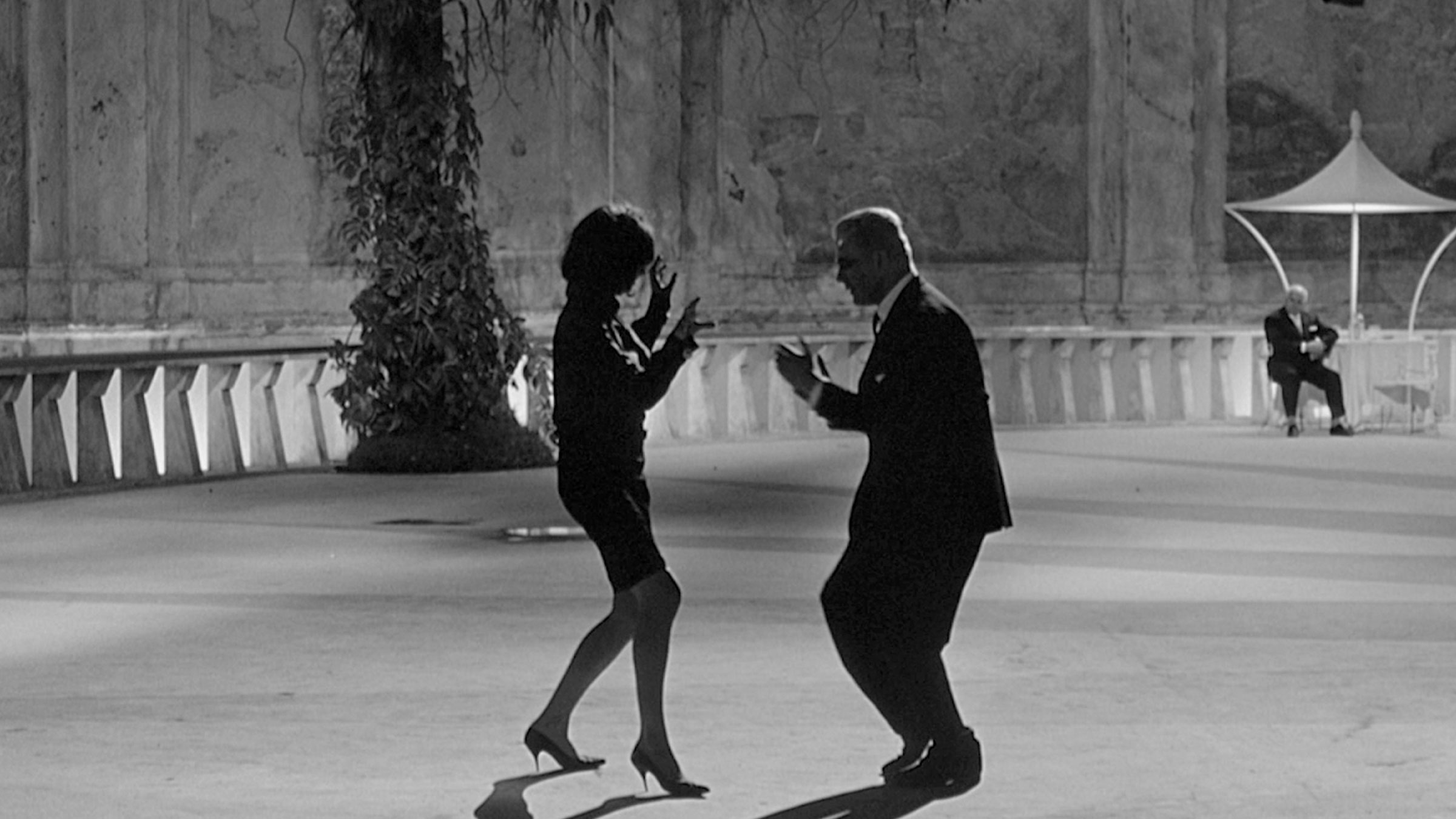
The famous opening of Federico Fellini’s 8 ½ visualizes auteurism – the notion that a director is an Olympian artist singularly responsible for their film – as a psychic and cosmic trap, a road to nowhere as everyone around watches you suffocate. They’re immobile, unhelpful figures in a dreamlike haze trapped in the Gorgon’s glare. Of course, as the film finally reminds us, if Medusa is a metaphor for the world’s horrors (as Siegfried Krakauer famously notes in his 1960 text Theory of Film, just a few years before Fellini’s film) and art is Perseus’s shield allowing us to glimpse the horror and move beyond it. But Fellini insists that art itself can also immobilize. In 8 ½, it is the director himself who won’t let the world and its people move. They can’t help him because he isn’t receptive to their energies. That the film itself amounts to both a validation and an excoriation of its own inability to heed those energies is, depending on your view, its central failing or its greatest success. 8 ½ is a masterful work, no doubt, but it’s also a grand-standing testament to artistic mastery as a form of artistic limitation. Personal responses may vary. 

The auteur in question is Guido Anselmi (Marcelo Mastroianni), who we meet in the middle of a bout of director’s block on a film that has already had a rocket-ship of money poured into it, but has no screenplay. Guido is both an aspirational portrait of a director as ringmaster and channeler of the world’s energies and a tacit admission of guilt on Fellini’s part. He remains too caught up in his own ego to, as it were, release, too lost in his thoughts to let the film really feel. It takes a certain amount of chutzpah to make us spend 140 minutes, and to stake your directorial reputation, on an elaborate metaphor for erectile dysfunction.

Continue reading

Film Favorites: Head

At the beginning of Head, Monkees’ drummer Micky Dolenz runs away from a legion of fans and dives off a bridge into a body of water. If this is too-obviously following in the footsteps of its prankish predecessor, A Hard Day’s Night, where the Beatles suffered a similar crowd-sourced fate, it also blows it to smithereens. Rather than canonizing the ‘60s, Head offers a comeuppance, jumps into the deep end of the next decade, dissolving into an aqueous, collective, diffuse space called the early ‘70s.

 Soon enough, the band performs the phenomenal, acid-stained rocker “Circle Sky,” a mission statement of the band’s newly serious attitude toward their music that ultimately unweaves itself in the very act of coming into being. If the song promises progress, a band achieving new heights of self-worth and self-ownership, the lyrics offer a vision of eternal return that culminates in fans rushing the stage only for the band to be crumble as mannequins, material constructs of composite parts, all image and no flesh. Rather than personal authenticity, the film explodes into gleeful mediation, a promise that ostensible freedom only masks new modes of control, that genuine originality is only one more mask. Head marked the band announcing their recovery of their own catalogue as an exercise in self-becoming, and in doing so they paradoxically destroy themselves. We’re off to the race in the opening minutes, in other words, but we’re also lost in an abyss. In the band’s go-for-broke stylistic tour-de-force, they go beyond playful monkeying around and instead monkey wrench the nuts and bolts of the machine that made them.

Continue reading

Films Favorites: Modern Times

Charlie Chaplin was one of Hollywood’s earliest and largest stars, a filmmaking polymath who performed, directed, composed, produced, and wrote all of his films, a one-man brand who in Modern Times subjects himself to a possibly fatal question: whether he can escape being branded by the hot iron of capital. A British socialist who grew increasingly frustrated with American capitalism and Hollywood business practices throughout his career, he eventually left Hollywood and returned to his native England. Like many silent filmmakers, many of his earlier films explore questions of new technology and skeptically arouse the possibilities of modernization, thinking-through the relationship between new technological forms – both industrial and cinematic – and asking how one navigates modernity. Of course, many of his anxieties about industrial technology were also motivated by his own issues and frustrations with the rapidly growing Hollywood industry, exposing parallels between industry on-screen and industry in Hollywood that seem more prevalent in Modern Times than in any Chaplin film before or since. This is the film in which the personal will displayed in The Kid – where his Tramp character strategically manipulated capitalist products for new purposes with his mental ingenuity – seems to have been finally overpowered by capitalism’s singular ability to manipulate his body as the ultimate tool to its own ends.

Chaplin’s most famous character – the Tramp – was easily identifiable to most Americans, brandishing his top-hat and cane and what would be called the Chaplin mustache. The style of his earlier films tended to emphasize the homeless Tramp as an unmoored figure who had no place in society and had to creatively adapt to survive, refashioning everyday objects from their normal purposes in the swirling, fluctuating world of modern capitalism where, as Karl Marx said, “all that is solid melts into air”. His most famous silent comic rival Buster Keaton tended to fashion his films as linear trajectories, placing his character on train-tracks, moving forward on the way to modernity – locomotives shooting into a technological future – depicting characters who struggled to control these modern-day technologies. Keaton fashioned comic parodies of success narratives in the American tradition, mocking the idea of individuals pulling themselves up by their bootstraps. Chaplin’s Tramp, comparatively, has no bootstraps, and as an iconic vision of working-class resourcefulness, did not traverse space linearly or pull himself up; his comic movement was much more unstable, much more slippery, much more uncertain. He fashions capitalism as something which requires comic creativity to survive. This is why Chaplin’s definitive visual symbol is the circle, his characters frequently forced to run around and around with no end, suggesting that capitalism was not a pathway toward future opportunity but a centrifugal and chaotic uncertainty. Continue reading