Category Archives: Film Favorites

Film Favorites: Gimme Shelter

The ‘60s music movie, in its many permutations, was an attempt to diagnose the manifold mutations of a shifting sociocultural landscape. D.A. Pennebaker’s seminal Don’t Look Back figures Bob Dylan as an almost malevolent blank void courting and interrupting power, a clown prince puppeteering every inch of his relationship to the audience’s desire and his prismatic manipulation of it with Warholian ineffability and Keatonesque implacability. Richard Lester’s A Hard Day’s Night frames The Beatles as impish vagabonds harnessing the recalcitrant energies of an unreconstructed, uncontained modernity. Bob Rafelson’s Head, not to be outdone, mounts a vision of The Monkees as tortured poets of a world gone awry and unable to put itself together again. In these films, without always stating it, pop culture becomes a battleground for the fate of the future and an exploration of the limits of authenticity. In rock and folk music, the cinema of this era discovered a way of interrogating film’s very capacity to index reality itself. What, finally, did it mean to “document” truth when truth itself was a maelstrom, in which the method of inquiry itself – the visual representation of reality – confronted a subject that made visuality itself an unstable ground.

Gimme Shelter, a searingly banal documentary by direct cinema auteurs Albert and David Maysles and Charlotte Zwerin, seems, at first glance, to exhibit no such complication. Nor does the film’s subject, The Rolling Stones. Unlike Dylan, they do not thrum with calculated incalculability. They exhibit none of The Beatles’ self-aware, rakish charisma or peripatetic malice. When they are off-stage, they seem neither prey to nor predators of the forces that the Monkees found themselves wound up in. For the most part, they seem entirely unaware of the world around them, abstract ciphers approached by unknowing cameras.

The aforementioned movies and the aforementioned musicians all project a sense of interdependence and estrangement from the cultures that produce them. They are complex arrays of personal and social complexes, reflecting the ambiguities of gazes and desires that are offered, given, rescinded, and contested. Gimme Shelter, conversely, more or less depicts The Rolling Stones, who seem so happy to characterize themselves as willful collaborators with dark forces in songs like “Sympathy for the Devil” and “Paint it Black,” as entirely helpless. Gimme Shelter punctures the air out of countercultural acts of self-mythologization and optimistic social liberation not, as is usually written, by freighting these aspirations with self-inflated import and forcing them to confront a demonic ground labelled “the end of the 1960s.” What the film offers is more frightening and more thoroughly deflationary. Gimme Shelter implies that it may have meant nothing at all in the first place, that its most shining surfaces may have had much less going on underneath.

Continue reading

Film Favorites: Black Girl

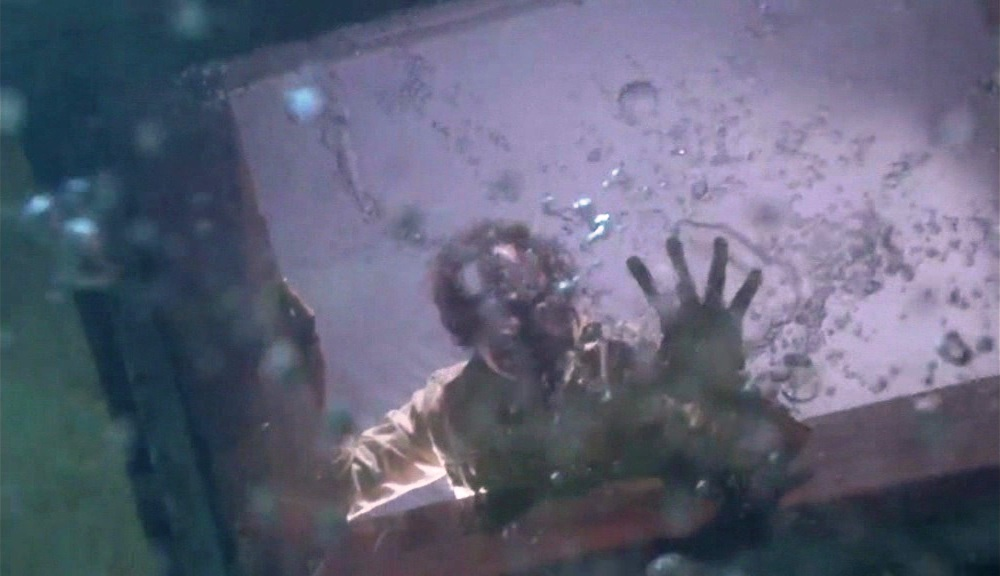
In Black Girl, his 1966 cinematic debut, writer-director Ousmane Sembène casts himself as a local Senegalese schoolmaster, a figure who shares and spreads knowledge but, crucially, does not limit or control it. In his silent, accommodating, generous spirit, as a man who seems to see and explore more than know and dominate, he embodies the non-dogmatic mode of storytelling practiced by the film itself. In contrast to the typical characterization of the Hollywood director as a master-storyteller and moral jurist underlining every gesture, Sembène’s film is a cinema of non-tendentiousness, an act of poetic witness. It embodies the spirit of post-colonial “Third Cinema,” a cinema of righteous indignation that achieves moral clarity through paradoxical diffuseness, that wanders perambulates with its meaning rather than arbitrating it. Black Girl is an elliptical, exploratory text, one that slowly accumulates a deep and abiding frustration with the ghostly after-image of European colonialism but asks us to actively probe its recesses and shift with its resonances rather than passively accept a meaning that has been handed down and foreclosed for us.

When his protagonist Gomis Diouana (Mbissine Thérèse Diop) accepts employment as a childcare specialist for a white family in Senegal, eventually moving with them to France, she gives them a mask from her community as an act of compassion for the employment. Intended as a gift, a continuation of an active tradition of mutual generosity and togetherness, it has to survive becoming a mere totem. To her employer Madame (Anne-Marie Jelienk), it’s a predetermined object to fasten to her wall, an “authentic” marker of a stable and unmoving African culture. It is Madame who embodies the characteristic administrative authority of the dominating director, turning life into a symbolic abstraction, displacing the contingencies of an experientially abundant existence by congealing them into markers of assumed and unquestioned meanings. A mask that signifies so much, that refuses to be prematurely settled, for Diouana and her community becomes, for Madame, an essentialized indicator of an “authenticity” which can decorate without complicating her apartment and anoint without troubling her soul with indicators of her liberality and cultural awareness. Her desire to adorn it on her wall emblematizes her desire to pin its meaning down, to turn it from a living cultural object into an anthropological artifact.

However, the mask, which is so fecund and meaningful in Sembène’s film, always remains deliriously, deviously polysemic. It moves through the film, but it is not, and cannot be, ever summative of it or of any single meaning in particular. In one beautiful shot, Diouana stares at the mask on the wall, only to turn the top half of her body around to look at us. She becomes both the mask’s mirror, a repetition of its objectified silence, and its conduit, quietly implicating us in our own acceptance of inequality as it radiates a kind of resonant stillness. In moving her body toward it but turning back to us, she becomes its conversational partner in an intimate encounter teeming with unresolved suggestion. As a figuration of passage, the mask is a reflection of both oppression and resistance, a mute witness to violence that is also a beckoning social critic.

The mask’s constitutive ambiguity trembles throughout the entire film, especially in Christian Lacoste’s lustrous cinematography, which figures whiteness itself as a kind of luminescent longing that inspires and entraps Diouana, who early on speaks of France as an object of desire, and as the blinding, abyssal emptiness it eventually becomes to her. When she first enters the apartment in France, the shot figures Diouana’s face and the mask as two lonesome black dots on a forbidding white plane. The colonial buildings in Senegal too are viciously white slabs pricked by what we initially think of as black voids, towering edifices of colonial austerity and monolithic banality that trap the dark windows, manifold through they may be. But color remains cinematically multivalent and ambiguous throughout the film, a restless evocation of the fluctuations of identity and home. In Paris, a trapped Diouana looks outside her window and sees a pitch-black apparent nothingness pock-marked by white lights. While it emblematizes her loneliness, the reversal of color also prophecizes a potential refuge in the very darkness, the legion manifestations of a complex blackness, that she sees maneuvering throughout the world, even though whiteness seems to be in control. Like the mask, the darkness itself comes to signify not acquiescence or emptiness but the proliferating possibility of an object that remains impenetrable to the knowing or controlling eye.

Continue reading

Film Favorites: Force of Evil

Force of Evil opens on a god’s eye view of downtown New York, a promise of access to the totality of the city from a harmonious, analytical distance. Within minutes, Abraham Polonsky’s film will explore every nook and cranny of that promise as it descends into a labyrinth of ambiguous relations and inconclusive aspirations. Yet Polonsky never gives up on the ideal of his vision: to confront an amoral miasma with bracing moral clarity. Unlike many other film noirs, Force of Evil is not an equivocal descent into a swamp of unclarifiable social engagements. Polonsky’s moral point, that capitalism is a fundamentally inhuman mode of existence, is strikingly clear. The interesting thing, in fact, is how transparent it all is, how very much the on-location shooting, like the prior year’s The Naked City, presents us with a city that is all too aware of its own comings and goings, its accepted moral calculus, the quiet viciousness it has come to call home. Force of Evil, pace most noirs, is surprising for how unshadowy it all feels. It presents a city that has come to terms with its inner rot and legitimized it.

When we return to the streets much later in the film, Polonsky treats the city as an unforgiving social system but also an opaque region of the mind that might, just might, achieve transcendent clarity. In a mid-film excursion to a city park, a Church leers less as a sinister evocation of muddled ethical allegiance than a moral reminder of the limits of this way of living. When a series of birds fly away behind two characters talking, it’s as though they wish to escape the contours of this film. They float free, and the fact of their freeness implicates the characters in the illusory notion of capitalist freedom they live by. They are the only ones who escape a film about the exorbitant violence of America’s promise, a film in which everyone is trying to save everyone else via a system that kills everyone else, and almost always not knowing which is which, or how they came to become one and the same.

Continue reading

Film Favorites: The Wrong Man

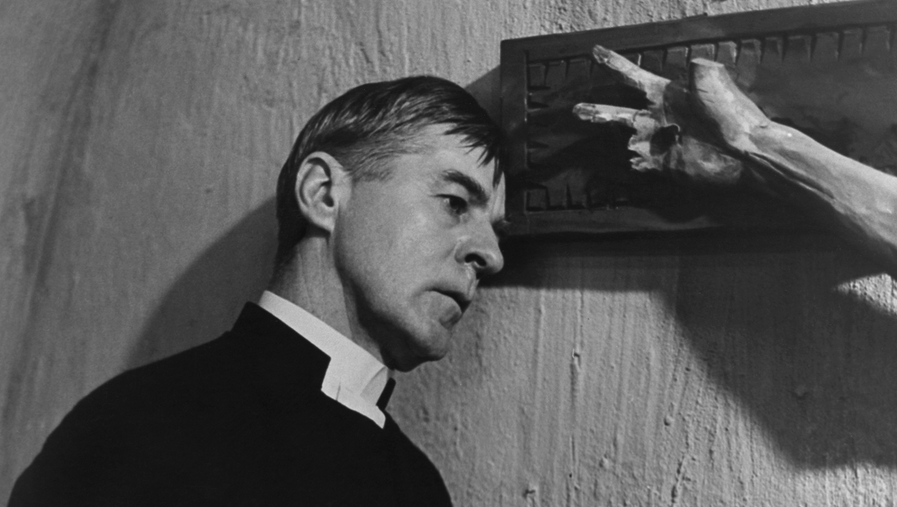
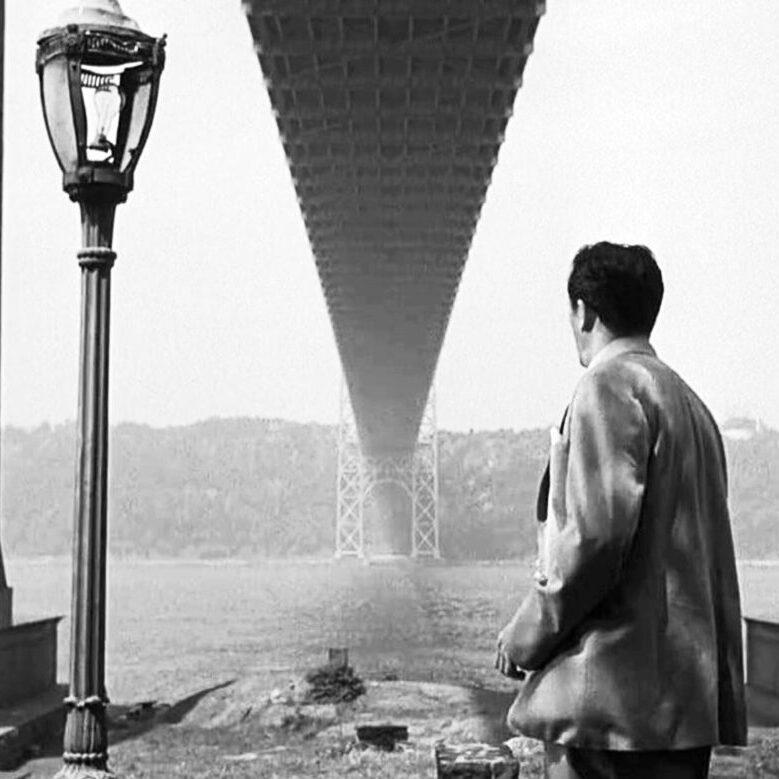
Largely overlooked for the films that flank it in Hitchcock’s oeuvre, 1956’s The Wrong Man is a deviously minimalist minor masterpiece, a slowly encroaching fog of existential despair in between more obviously conspicuous crests of cinematic ability. If his other, more obviously masterful films from the same era constitute apexes of formal control and metacritical acumen, The Wrong Man is striking for how thoroughly unadorned it is, how barrenly it lays itself before us. 1954’s Rear Window dissected voyeuristic masculinity. 1958’s Vertigo analyzed the desire to find patterns in a world of chaos, to bind an unwound world with illusions of control and continuity, even to shape others to fit your prefabricated mold of them. 1960’s Psycho recognized that we are all our own protagonist in our story, and that recognizing this fact might suddenly dismember someone else’s story. The Wrong Man shares imaginative territory with all these films, but it also totally evacuates them. It is not a vortex, magnetically collecting particles of cinematic skill into a violently-wound whole, but a nebula, a dispersed array of images and sounds that collectively expel our expectations for a sophisticated potboiler or a sudden shock. Unusually for this master cinematic magician, it seems to have nothing up its sleeve. It only has itself, and it lays itself bare for us.

The Wrong Man, which nominally traverses Hitch’s most thrilling, most recurrent territory of misidentified protagonists, is not a masterful thriller but a self-consciously master-less one, a film that is absolutely and finally prey to the vagaries of the world around it. Here, and only here, did Hitch suggest that the modern world itself is so chaotically unmoored and so distorted with the vagaries of chance and suspicion, that his capacity to carefully fabricate and painstakingly demarcate complex stories of control and blame can’t match up. Hitchcock’s ability to craft ingenious episodes of spellbinding confusion have nothing, he suggests, on life’s everyday ability to make us enemies of ourselves.

Continue reading

Film Favorites: Blue Collar

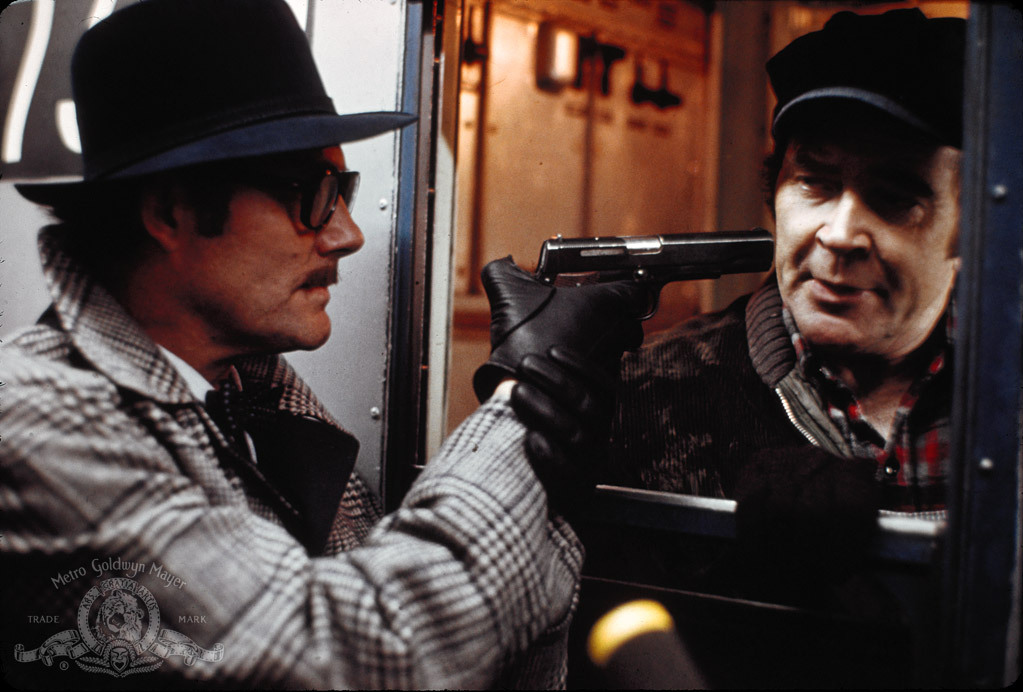
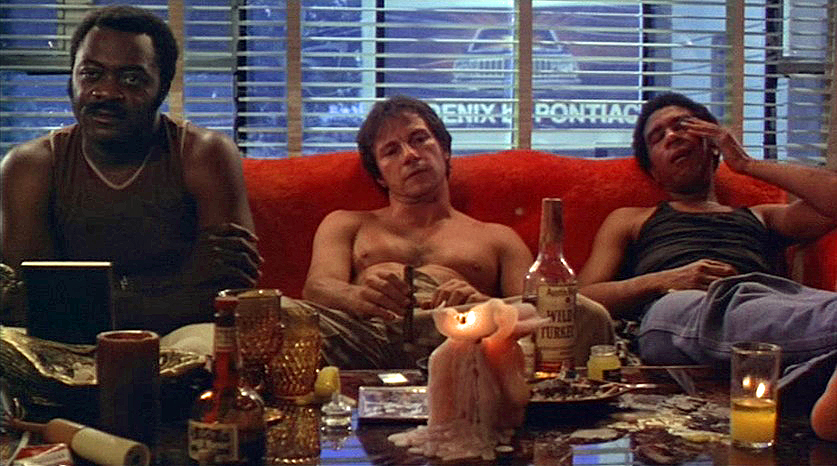
Blue Collar boasts one of the great, self-implicating opening credits in cinema history. As workers at a car factory in Detroit negotiate the everyday mundaneness of life under late capitalism, the film repeatedly freeze-frames their tasks, chopping into their rhythms as the names of the filmmakers themselves seem to terminate their motion, to lock them into a cinematic-industrial prison. These men are busy minting and assembling the very apparatus that controls them, as not only the machinery of capitalism but the hardware of cinema atomizes and exsanguinates these men. The music, a swirl of blues lamentation and industrial punishment, seems at once to keep them alive and to keep them in place, to pulverize them in frames that stop and pause every time you think they’re going to get going. A mordant metaphor for the perils of the modern world, the credits prefigure and anticipate the violence that the world, and the film, will later do to these men as they go about their lives. Pressed in between machines and tools, they no longer even need to be swallowed by the anthropomorphized machine, a la Chaplin’s Modern Times, which at least took on a corporeal form that we could see and name. Here, the style of the film itself is against them. It melds with the very machinery of manufacturing, the two fulcrums of the ambivalent and often abyssal modernity that Michigan-born writer-director Paul Schrader cut his teeth on. It is only when the corrupt union representative struts through the frame that the film is able to smoothly compose itself, to run in full motion, to visualize a supple art in a stable world designed for him, not for them.

Watching (and listening to) this intro, I could not help but think of William Attaway’s classic 1941 proletarian novel Blood on the Forge, the story of three Southern African American brothers who travel to Pittsburgh to work in the steel mills in the early 1900s. Throughout the novel, the protagonist Melody emerges as a chronicler of the soul who inhabits the world openly and evocatively. His endless capacity for music transmutes the sensuous currents of existence into a vagabond poetics of protean presences, channeling the world itself into human energy. At the novel’s end, however, Melody hears a sound “too heavy a load to be carried on the wind,” described as “like a big drum.” He must imagine an instrument of culture, the very thing that has protected him, to avoid the implications of the forces capital has brought to bear on a vast landscape that seems beyond engagement. Music, here, no longer marks his creativity but his delusion, the failure of sound to offer a mode of escape from a system that can produce a far more booming, far more penetrating music than he, alone, ever could. His playful, peripatetic consciousness finally becomes not a redemptive enlivener of stray energies but a wayward monument to capitalism’s ability to render the environment, and the capacity to sense it, into a tool for its own purposes. The blues of his soul finally merges with the very oppressive industry that produces it. He becomes not an enlivened poet of the American laboratory, but, rather, a husk evacuated of his own self.

For Paul Schrader, the film scholar turned writer-director whose most famous academic text is an analysis of cinematic transcendence, Blue Collar is, much like Blood on the Forge, a defiantly un-transcendental work. In this world, everything is arrayed against your perseverance, and even your mechanisms of inhabiting the world creatively and aspirationally are accomplices in your own subjection. The coca cola machines steal your money. In a bar scene, pinball machines in the background echo jackhammers, a momentary reprieve turned into one more background jostler of the brain. One of Schrader’s heroes was Robert Bresson, a filmmaker who turned individualized action into an art of ethereal serenity, an exalted realm of allegiance with the cosmos where individual commitment becomes a devotional act. In many ways, Blue Collar is a vision of a world where that spiritual singularity is not only monumentally threatened but channeled into new methods of control, the protestant ethic metastasized into, as Max Weber wrote, the spirit of capitalism. The rambunctious vibe of their interpersonal camaraderie illuminates a space of potential resistance and momentary disruption, but in no way of real purpose. Compare Blue Collar to Michael Mann’s deeply Bressonian Thief, with its opening depicting bank robbery and safe welding as poetic abstractions of austere masculine determination, of arraying your energies against the world’s forces. Conversely, in Schrader’s film, a cinematic poem of pyrrhic victories, perseverance is not a temporary communication and battle with the cosmos but an inert illusion of escaping from a labyrinth in which the characters are fatally enmeshed.

Continue reading

Film Favorites: Mirror

In Sculpting in Time, his exquisite paean to the soul-nourishing ineffability of artistic creation, Russian cinematic maestro Andrei Tarkovsky promises and then interrogates his art form’s relation to the world.Cinema, he informs us, moves beyond abstraction and engages the real in all its remarkable tangibility. Yet for all its adeptness and flexibility – indeed, because of it – film cannot really see the world as it is.It, like memory, is too distant from the thickness of reality, but also too close, a paradox that marks cinema as more and less than reality, a way of existing that is so touched by reality, so open to it, that it cannot ever distance itself enough to name reality as such. It is torn between feeling out reality in all its hyper-presence and holding back from it like a specter.

This tension, it seems, is cinema’s gift to us. In a world of unclarifiable external forces, acknowledging and reckoning with the complexity of the world around us often feels like an act of condemnation, dooming us to a fatal enmeshment in systems that limit and violate us. Threatened by the world, we produce either illusions of mastery over it or prophecies of surrender to it. This seems to be Tarkovsky’s critique, in his writing, of symbols: they abstract and attempt to master reality, and they posit control as the only alternative to evaporating the self into the world. In between diffusing into the pure immediacy of reality’s flux and, conversely, stopping it in a congealed concept, Mirror instead sees our lives as, to use one of its own metaphors, an impression on a pane of glass fading away. And it sees cinema as the form of our lives. Cinema is not really the mirror of reality, but the process of the ghostly touch leaving its mark and then letting go as it is displaced into the ether of an often ephemeral existence. And cinema, like life, is the act of watching itself come and go, engage with the world enough to stain it and color it anew and then acknowledge and grapple with the eventual invisibility of that interaction. Reckoning with the world not as a cosmic choreography we control but a lived encounter with an experiential symphony, Tarkovsky’s film invites us to see and feel the external in all its unmediated glory and ravishing awe rather than impress dogmatic meaning upon it. However, it also lets us know that symbolizing as an incomplete act of understanding and naming reality is part of this flow, not only a break from it. For this director, with significant spiritual acumen, nature is both a cavernous catalyst of possibility and a diaphanous fabric suffusing all existence. It surrounds us, legitimizing and potentializing our own efforts to exist, and to suffer its existence. Cinema’s capacity to renew our contract with the world, to see it in a new way or expose an alternative aspect of what we might otherwise pass by unthinkingly, bestows upon us a capacity to explore the world generously and expansively, to feel gossamer threads of relation across time and space. Cinema cannot see the world, truly, because it is with the world. While cinema, like all art, abstracts us from the world, it also returns us to it because that abstraction is our ability, as humans, to create with that world. If Siegfried Kracauer once called cinema the “redemption of physical reality,” Tarkovsky is one of physical reality’s most sensitive and receptive prophets. He treats film as the closest thing we have to genuine grace.

Continue reading

Film Favorites: Persona

Not a document of but a discourse with reality, Ingmar Bergman’s Persona mirrors the fragility and disharmony of dual-protagonist Alma/Elisabet’s relationship in the film’s very struggle to represent itself, to marry images together into a smooth, harmonious, and stable whole. Like the characters in the quasi-narrative, the film’s images always retain their agency to disrupt, distort, and disturb the desire for holistic analysis, to produce a dominant meaning or theme argued to completion. Rather than an argument composed of images marshaled collectively toward one conclusive purpose, Persona instead explores how single images – and theoretically stable, singular characters – prismatically contain new meanings over time in polyvalent ways that cannot easily be lashed together into an overall thesis. While Persona treads on familiar ground in its reminders that film is, after all, a constructed and artificial art, the film transcends merely announcing this artifice; it does not merely produce “negative” meaning through renouncing the meaning of images. Rather, Bergman’s film finds purpose not merely in accepting that meaning is artificial but in using the film’s artificiality, its editing and framing dynamics, to suggest that images are capable of producing new, multiple, or alternate meanings precisely because they do not have any “innate” meaning. For Bergman, the fact that meaning is tentative, that the surface façade of an image can be fractured or stripped away, is not merely a nihilistic channel to self-destruction but a chance to open a door to reconsidering and recreating images in new contexts, reimagining the valence and purpose of images by introducing them into a temporal flow that reconfigures their purpose. Persona seems constantly on the verge of self-destruction and shuddering apart, but it is only for this reason that it infuses cinema with genuinely new life.

The film’s endlessly exploratory fluidity boasts critical implications for any psychological view of the main characters. In essence, the main characters are broadly treated in the film as collections of external perceptions/sensations/images that audiences (and the two characters themselves) may wish to understand by lashing together around a supposed internal psychology. Yet, the images of the women, like the more non-representational images in the film’s opening montage, ultimately defy “totalized” internal meaning. Many conventional films attempt to create the illusion of innate, fixed, internal meaning within the images and characters that are depicted externally; these films plaster over the temporal process of actually drawing, from images, meanings which don’t innately exist but rather come into existence when the viewer interacts with the images. Persona, however,not only calls attention to this meaning-making process explicitly (to disrupt an image’s fixed meaning) but uses its foregrounding of disruption and breakage to inflect its images with new meaning over time (to transcend fixed meaning). In a thoroughly modernistic sense, the film’s shredding of foundational, permanent meaning is not simply a catalyst for the endless nihilism of meaninglessness but a conduit for meaning excitably charged with impermanence and slippery intangibility.

In this light, Persona’s opening image is perhaps most telling: two abstract portals of light slowly reveal themselves, failing even to conform to a sense of symmetry as they occupy different regions of the screen and encompass disparate shapes (one a square, one an amorphous, oblong cone). The film thus begins with a non-representational gesture, a duo of images devoid of indexical relationship to the world, two shapes that do not even conform to each other and grow in brightness as the image unfolds. They exist in a state of constant becoming, only revealing themselves as representative of tangible shapes near the end of their fleeting existence. While films usually introduce themselves in a world-establishing gesture – a sequence to set the stage or establish ground rules or meanings for a mostly unchanging world – Persona’s opening images both devour any assumption of the “real” world and refuse to settle down. They are images to contemplate over time, not to compartmentalize and clarify.

Continue reading

Film Favorites: Sans Soleil

A great deal has been written about Sans Soleil’s meditation on, and mediation of, the link between memory, imagery, and time, much of which frames Chris Marker’s cinema as an attempt to navigate the impasse between self and society, as well as past and present, and to ponder the relationship between the external world and the internal, culturally contingent meanings divined by the viewer from external imagery. To this extent, an obvious reading of the film would be that it vandalizes cinema’s hope to accurately represent the world and corrodes memory’s potential to interrogate the past without bias. Yet, while a highly subjective film – one entirely unsure of its subjectivity – that dissolves linear continuity and causal image relationships to mourn the loss of stable, coherent mental structures, Sans Soleil also enlivens itself with the possibility of imagery unshackled from cause-effect confines, gifted flight to connect with and comment on other images that nominally – diegetically – boast origins in warring time periods and differing geographic locations. Sans Soleil reflects the mortality of the classical conception of cinema as a thread on which a singular “reality” is mounted from beginning to end, a cinema comparatively assured of its own truism. Yet Marker’s film also discovers in this demise a sense of renewed possibility, even refreshed reality, in a more subjective world caught up in the ephemerality of its own meanings, alive to a multiplicity of readings because each meaning, by itself, is ultimately far from completely sustainable. Marker’s cinema embodies Thoreau’s sense of the “I” as a personal and vibrant resonance with the world, one that is closer and more in touch with the world because it knows that it cannot access it completely or without the entanglements of the social.

Largely, Sans Soleil achieves this dialectic through editing with an eye for connection rather than causality, allowing images to echo and remake or inflect each other associatively rather than to “accumulate” over time toward one definitive “answer.” The film also routinely meditates on its own fallible representation by incorporating images of various artistic representations that both fail to encapsulate humanity and somehow exceed or re-interpret human life. Much as death in the film often animates creativity or life, even contact with the unknown or the intangibles of existence, the death/deconstruction of cinema’s classical structure is ultimately a conduit for imaginative revitalization and connection between images, cultures, and ideas. Decrementing artistic manipulation or modernism as an escape from reality and into the castle of the mind may risk implying that external reality is an objective state that can be grasped non-subjectively in the first place. Thinking about how one sees the world is interacting with the world. Sans Soleil thus refuses recourse either to an impenetrably singular will or an ungraspable material multiplicity, offering instead a plurality of sensate connections weaving a constellation of possibility out of the modern maelstrom of images, senses, and feelings confronting us at every turn. Moving across time and space like a ghostly wanderer through the cosmos, it is a cinema of interstellar communion.

Continue reading

Film Favorites: Night and Fog

A right-ward track across the now-abandoned remnants of a concentration camp simultaneously models and critiques the encounter between the roving detective-camera, searching for the trace of history, and the trauma of the past that exposes itself, lying in wait to the perceptually attentive. Just as the film’s narrator remarks that there are “no images of the past,” seemingly resigning us to a doomed present sequestered off from a past stranded in history, the camera is suddenly intercepted, even assaulted, by the sudden shock of the black-and-white “documentary” image. History, the film suggests, insists on being heard.

Yet if the images we see construct a contrast between the moving color present and the grayscale truth dormant beneath, and thus rely on and seem to affirm the journalistic equation of black-and-white with both the past and the “real,” these sights also trouble the very argument they seem to be founding. Shots of marching Nazis intervene in and fulfill the camera’s search for a “real past” only to, in turn, question that very fulfillment, insofar as these images are themselves mediated by their presence in another film. Our first introduction to “the past” is actually an image from Leni Riefenstahl’s infamous 1933 propaganda film Triumph of the Will presented, by this film, as a document of history. Our engagement with the past, the film seems to remark, is already shot-through with its own slipperiness.

It is thus that director Alain Resnais’ seemingly straightforward documentary about the necessity of memory reveals itself as a meditation on the difficulty of history. In these opening moments, 1955’s epochal Night and Fog cuts together three exploratory images, “stitching” various rightward tracks (from different concentration camps) into both an existential demand for engaging the remnants of the past and a reminder of the difficulty of parsing that past and piecing it together. The film suggests the need to capture an ephemeral totality more substantial, and more impossible, than any one camp’s empirical reality. It asks what image – if any – truly indexes the gravity of the Holocaust. The film’s deepest and thorniest conundrum is how to treat the past as at once a necessary shock of light for the audience and an ambiguous shadow stalking that very light.

Continue reading

Film Favorites: Citizen Kane

Citizen Kane opens with and then defiles a promise. The first shot is a “no trespassing” sign, and Citizen Kane immediately trespasses. The enigmatic and exceedingly wealthy Charles Foster Kane can wall himself off in a gothic manse that doubles as a prison-of-the-mind, but the camera – cinema – sees all.

Or does it? The shots that come right afterward move us inward toward the man, breaching the fragile barrier set up between him and the viewing public. But rather than clarifying, they confuse, exposing the impossible, unfinished space he has constructed, a monument to a tortured mind that prematurely closed itself to the world despite never truly figuring itself out. We move increasingly toward the lone light in an even lonelier room, a beacon that offers a hope of revelation, but the shots that seem to draw us inward toward a final truth actually scatter us all-around, toward a number of disconnected images that reveal much less than a portrait of a complete man. When we cut inside and finally encounter the titular Kane, we only see his hand, his lips, and finally, his ghostly silhouette. Instead of a procession toward closure, writer-director-star Orson Welles only offers a fragmented portrait of a man in search of a facsimile of wholeness.  

It’s certainly a plentiful opening, and there’s certainly no need to add anything to the reputation of this most plentiful of films. But Kane’s odd, braying charisma endures, even as the film has endured many rounds of analytical licking and push-back. In truth, so few films are so self-important. So few films bite off so much more than they can chew. Yet this is only because so few promise the world to us like Citizen Kane. With its mixture of stylistic bravado and overworked symbolizing, of impenetrability and obviousness, of opacity and underlining, Citizen Kane is very much the film that Charles Foster Kane would have made about himself, a cinematic ego trip par excellence. This is a film that absolutely insists on itself, that demands that we pay attention with all the magnetism and mystique of Kane himself. And, like Kane himself, it ultimately dances right up to the edge of evacuating itself of nuance entirely.

In truth, then, it’s hard to miss what Kane is up to, and yet it still feels potent, a forceful, full-throated, somewhat fatiguing, and sometimes forbidding elegy for a forceful, full-throated, somewhat fatiguing, and often forbidding man who, the film admits, never really amounted to much to begin with. The problem for the film is what it can amount to beneath all the aesthetic show-boating. If Welles’s wunderkind of a film, like Charles Foster Kane’s prodigy of a newspaper, promises to disrupt the Old Hollywood facade and reveal the bristling truth beneath, it also drinks from the same well, and suffers the same conundrums, the peculiar entanglement of fantasy and reality, of films before and after. This is a paradoxical film, one that, like Kane himself, invites us in and keeps us at arm’s length, that studies the world but can be blind to itself, that welcomes us with open arms but can only offer much less that it pledges. It works because it is so patently a victim of its own ego, so unapologetically of the very Hollywood idiom it disdains, so much a product of the very style it seems to think is so soulless. Few films are as misguided as Citizen Kane, but fewer still, perhaps none other than this one, really earn these problems like Citizen Kane.

Continue reading