
 I meant to get this out a month ago for Halloween, but here’s a (delayed) review of one of the great, deranged, unsung horror classics of 1968, and one which by virtue of totally refusing to put its finger on the pulse of that year, seems to encapsulate it all the more so.
So many horror films from the late 1960s feel prepackaged to unpack the fluctuations and transformations of the era for us, as though hyper-conscious of and possibly imprisoned by their self-regarding ability to divulge the hidden truths of time’s passing for us. They read and tease out the machinations and contortions of the era with a self-conscious precision. Their symbolic maneuvers and eloquent gestures of barbed analysis are so clearly and elegantly primed to scrutinize and inspect, statically, what was in reality lurching around them in media res. Some of the hungriest films of the genre produced at that time, namely Night of the Living Dead, still quiver with unassuming dementedness, but many of the otherwise-sharp films from those years exert so much energy monumentalizing the time-period – arriving at the thesis that sums up the time period – that they reject the lower registers of the time period’s insanity for clear-eyed, and thus, somewhat surface-bound, inspection. They order and explain away the tumultuousness so much so that they risk missing the period-specific chaos around them, and where that chaos might take them if they were to listen to it.
That’s certainly understandable. Explanatory potency and acumen are essential features of the cinema, not to be neglected. But they don’t arrive at their conclusions without casualty, and Spider Baby is one of those casualties. Compared to, say, Rosemary’s Baby, released in the same year and a little too aware of the-already canonized importance of that year in some ways, Spider Baby feels positively anti-canonical, unadorned and unalloyed to any critical sensibility consciously informing the material. It’s not as precise as those other films, by virtue of that fact, and it so overtly dismisses the offer to comment on the era that it often seems to be doing absolutely nothing with the heritage that it’s been bequeathed with. It doesn’t feel as predetermined to mythologize any era of horror, in fact, almost as though it exists blissfully unaware of the passage of time around it. Instead, Spider Baby simply convulses, entombed in and liberated by its mania. The young directors of the New Hollywood were cineastes, as inclined to think cinema as to feel it; Spider Baby simply exudes it. It’s Old Horror passing before our eyes like a ghost rather than New Horror studiously dissecting the corpse. Continue reading
 Many self-consciously “weird” motion pictures expend energy and time establishing a stable sense of cinematic self that they will only then destabilize later on, tweaking the style several notches south of sanity as the film progresses. Horrors of Malformed Men lathers the surrealistic absurdity on thick from the first shot. It introduces us immediately to a thoroughly dismembered reality, a cinematic hall of mirrors that finds us wandering into a B-movie and discovering a metaphor for Japan’s mid-century dreams of paternal control, familial destiny, and authoritarian anxiety, all (appropriately) malformed into a kaleidoscopic nightmare. The subject of the cinematic allegory? Deluded men working at any cost to recreate their lineage and preserve the fragile illusion of a linear, biologically-sanctioned family hierarchy.
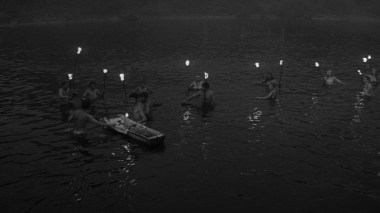 While Andrei Rublev was officially released in 1966, it was not unleased upon the world until one fateful night (at 4 AM, courtesy of Soviet censors) in May of 1969 at the Cannes film festival, and as that screening was one of the most important cinematic events of 1969, it seems entirely legitimate for the film to have a place in this short retrospective.
  In honor of the half-century anniversary of the epochal years of 1968 and 1969, I meant to propose a little series of reviews commemorating the films of those years last summer, particularly with all the academic conferences and articles trying to rekindle the lost spirit of ’68 or otherwise to dissect it. I didn’t get around to it at the time, but with the era lulled to sleep last month by Quentin Tarantino’s phenomenal Once Upon a time in Hollywood, now seems as good a time as any to start! I apologize that I’m a year late to officially celebrate the 50th of some of these films, but a great film doesn’t need a deadline to be remembered.
  In honor of the half-century anniversary of the epochal years of 1968 and 1969, I meant to propose a little series of reviews commemorating the films of those years last summer, particularly with all the academic conferences and articles trying to rekindle the lost spirit of ’68 or otherwise to dissect it. I didn’t get around to it at the time, but with the era lulled to sleep last month by Quentin Tarantino’s phenomenal Once Upon a time in Hollywood, now seems as good a time as any to start! I apologize that I’m a year late to officially celebrate the 50th of some of these films, but a great film doesn’t need a deadline to be remembered.
  The Long Take