
 The pictorial inclinations of King Hu’s rhapsodic camerawork in his monumental wuxia epic A Touch of Zen are his film’s most gilded gestures, but they are no mere poetic filigrees. Rather, Hu’s investment in the physical space of his film and the way that a camera and a mind can intake and reform space informs a conscious refusal on the director’s part to explore character drama in a vacuum. Without the crucible of bounding characters by the natural environments that often remain overlooked in the world of cinema, Hu suggests that person vs. person conflict may be tenuous and unresolvable; an understanding of the earth itself it necessary first. The illusory beauty in the frame often suggests a new perceptual realm beyond the typical threshold of human consciousness, as though we are peering into an ethereal plane of color and space that eludes humanity’s typical tasks and goals. Space is otherworldly here, but also tactile, exerting a magnetic pull on the characters who weather through frames as if attracted by the deception of an unknown specter in the air. Or as though they characters were being exhumed from their internal, civilized spaces – and metaphorically the confines of their internal minds – to confront the outside world, to explore new perspectives in a desperate quest for self-actualization. Continue reading
Film Favorites: A Touch of Zen
Leave a reply
 A pair of surrealistic modern animations this week on Midnight Screenings.
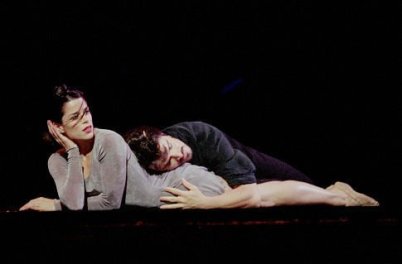 At first glance, molasses rolls uphill faster than The Company, Robert Altman’s penultimate film and his most radical late-period work (excepting perhaps Short Cuts). But beneath the elegance of the pristine stillness, Altman – ever a chronicler of humanity’s dances of distance and performances of connection – stages a malapropism of conventional drama by infusing every nominally placid moment with a galvanic reverie of human possibility, both clarifying humanity’s physical and mental limits and crystallizing around the species’ undying, even improbable, volition to undue those limits by riding the contours of life and inviting love even in spite of its fragility. And I do mean “the species”. Technically the story of a youthful rising-star Ry (Neve Campbell) in Chicago’s famed Joffrey Ballet, Altman instead farms energy out of the interpersonal lives of the principal players as a collective, emphasizing the beauty of movement and marginalia rather than central, individualist conflict.
  Another fell Ice Age demon was unleashed this past weekend by Blue Sky Studios, who rely on the franchise for blockbuster potential to pursue their other, more artistically valuable productions. Let’s guess which ones I’m looking at today!
 After the towering, messianic, heralding-of-a-new-art-form success of Disney’s first feature-length animated film Snow White and the Seven Dwarfs, the spectacularly egotistical businessman Walt Disney nearly destroyed, obliterated, and defaced his company’s livelihood with a duo of divine artistic achievements that were, in their individual ways, far too radical, even fanatical, for the box office mainstream. Pinocchio was an id-logic nightmare glimpsed through a murky ether, and Fantasia a resplendent rhapsody that owed more to avant-garde sound-and-space films like Berlin: Symphony of a Great City and flaunted its rejection of the reality principle at every turn. His company’s shining star had flared and glistened and tested its own mettle and might by flying to the sun in a matter of years, and it was about to implode and burn with Uncle Walt left with naught but a fiddle to wallow away his time watching the tattered rummage of his hopes and dreams.
 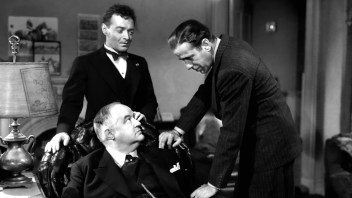 2016 is 75 years on from 1941, one of the finest years ever in cinema. Let’s dredge up a little history for the week in honor of that cabal of films.
  Years later, even if it isn’t always effective filmmaking, it is plainly apparent that Don Bluth’s second film with Fox Animation was never given its due process. Hired to best Disney at their own game with 1997’s Anastasia, Bluth had a one-film hot streak under his belt when he fearlessly jumped into the animation deep end with its follow-up, 2000’s Titan AE. His arrival at that point, the world now on his shoulders, was a two-decade-long torrid affair with the powers that be. After originally rising through Disney’s ranks in the ‘70s, when the company was in a downhill slide, he absconded in the ‘80s in belief that he could outdo them. His dream of besting his once-master was briefly given feral life, but Disney’s ‘90s renaissance was too much for him to handle, ultimately resulting in screwing himself over in the early ‘90s in a desperate craze to keep up with his former masters resulting in failure after failure. His career was over, until Fox Animation ceremoniously afforded him one more shot to best his former bosses (admittedly, he was the only one in history that had accomplished this goal before, so one can see why he was the natural candidate). Anastasia triumphed commercially just as Disney was beginning to falter itself, and the stage was set for Bluth to return to investigating the crevices of animation rather than simply aping his former masters as he did with Anastasia.
  With all the slashing and piercing found within, it isn’t really a surprise that John McTiernan’s disastrously over-budget The 13th Warrior is so disemboweled. This tonally promiscuous production vacillates between effectively brazen horror viciousness and petty, watery cartoon-viking bombast, the two tones functioning like combative enemies rather than fascinatingly differentiated tonal inversions. Devious wrongdoings behind the camera and disastrous reshoots ensure a production that runs the gamut from pastoral myth to Manowar album cover, a grungy, dirge-like epic of alternately jaundiced and flowery discombobulation.
 An elephantiasis-afflicted, dismal anti-epic of undying malfeasance, Kevin Costner’s The Postman is positively drunk on its own grotesque patriotism and egotistical self-interest. From the man who directed Dances with Wolves and starred in (and may have directed) Waterworld, The Postman is just plain engorged, a foolishly endearing attempt to flare-up every operatic cue and hyperbolic shot in those films, fling well past the point of common logic, and invade the realm of Rococo drama. Fittingly, it is a missed target of a distinctly and unambiguously Costner-esque caliber. While Dances was a questionable but undeniably poetic epic that suggested something of America’s own mythic grandeur, The Postman finds the bottom falling out as Western pastiche becomes accidental Western parody.
  The early ’90s was a phoenix-like ascent for animation, a time to rise from the grave of the ‘70s and ‘80s and flaunt the medium’s wares anew. Taking little time to clear its throat, a renewed Disney Animation huffed and puffed The Little Mermaid, Beauty and the Beast, Aladdin, and the epochal The Lion King out into the world in a manner of years. In doing so, they blew down the house of their reputation as a failed, past-its-prime studio of has-beens. Meanwhile, Don Bluth, the rising star of the studio and its potential savior throughout the ‘70s, had jumped ship – firmly believing his clout was wasted on the irrelevant Disney old fogeys of the ‘70s – and by the late ‘80s, his own star was shining with works like An American Tale and The Land Before Time. Although both pillars of animation would struggle before the decade was out (Bluth faltering almost immediately upon the turn of the ‘90s), the landscape was hot for the moment, so hot that even animation’s famous bad boy (long dormant and lost in the fray) couldn’t miss out.
  The Long Take