
 Customary criticism of quasi-documentary works like Lionel Rogosin’s On the Bowery (or any for-real documentary for that matter) is wont to retreat into critical waves of the hand like “realistic” or “authentic” which sound more important and inlaid with meaning than they truly are. That something depicts reality is less meaningful than we’d like to think. What does matter is what kind of reality art depicts, and here is where On the Bowery is stomping on new territory with its in-the-trenches, verite-adjacent camerawork that invokes a world that is unstable, unvarnished, and seemingly invisible. Every film, to put it succinctly, imagines its own reality, and the reality of On the Bowery is weathered, woozy, and altogether bracing in its alien familiarity, a place we’ve all seen and pass by but do not truly know. Continue reading
Films for Class: On the Bowery
Leave a reply
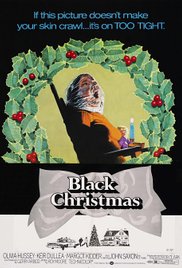 Bob Clark’s maniacal 1974 classic is perhaps less remembered today for its own caliber as cinema than for the hell it wrought on the American film industry. Here, I refer not to the necessary, provocative, disobedient, slash-and-burn kind of hell the film wrecks with its wonderfully imprompriotous filmmaking, but the vile, corporate, franchise-baiting kind which turned horror filmmaking in the ’80s into the most cringe-inducing attempt to market the genre to the lowest common denominator. But that’s less a slight to the film’s quality than a marker of the sheer deluge of sequel-itis this proto-slasher unleashed (Tobe Hooper’s masterfully malevolent The Texas Chainsaw Massacre was the other obvious culprit on that front). It’s a tough reputation to live up to. No film short of John Carpenter’s ur-slasher Halloween could stand up and stare at the massacre of common decency the slasher represented in the ‘80s and remain un-mortified at the devastation its inferior slasher-children had caused to the intelligence of the horror landscape. Still, nu-metal will never halt me from claiming that Faith No More is the most defiantly demented rock band of the past 25 years And Nickelback only occasionally makes me feel guilty for liking Soundgarden and Nirvana. I’m not about to slander a film for the sins of its descendants. Besides, those antic, anxious perspective shots strangling Black Christmas like garrote wire sure made John Carpenter happy when he weaponized them for Halloween four years later. And if we have Black Christmas to thank for John Carpenter, then who really cares how good this film is? It has already done its due diligence to the cinematic landscape.
  Not really progenitors to any new film specifically so much as to the spirit of every Christmas movie. Again, I recognize I’m a couple weeks late here. Enjoy nonetheless.
  Actor Robert Mitchum’s bedraggled visage in The Friends of Eddie Coyle lays bare the crippling exhaustion of nearly two decades slugging it out to remain relevant after his early run of alternately lusty and haunted film noirs cast him as the de facto face of wounded mid-century existence. Back in the day, his slightly slurred baritone was the perfect mouthpiece for the archest of masculine men revealing the hesitancies and anxieties behind their robustly manly confrontations. But by 1973, Mitchum was no longer a white-hot emblem of a vision of American questioning itself. Decades of both personal and national tension remade him as the hoarse, dog-tired poster child for an America that was now not only struggling but seemingly disqualified, and The Friends of Eddie Coyle takes full advantage of every crack adorning his face. With an uncertain humor and paranoid visual style, director Peter Yates’ film is a return, and an extension, of that very spirit of wounded noir cinema. Not only a work of darting eyes more than the classical steely glares that punctured many classical film noirs, it is also a return to the forefront for Mitchum that paradoxically revitalizes his screen life by casting him in a faded, funereal gloom that drives him right back into the grave. Eddie Coyle’s skeletal framework, with an emphasis on absence rather than presence, suggests a world of unassimilable people splayed across a suffocatingly finite space, lost in a dulled, silenced universe.
  While so many of his kindred company directed films so busy getting high-strung, coked-out, and animated with a life on the edge, reveling in the tension of their own deathless drive teetering on the edge of demise, Hal Ashby’s unhurried The Last Detail may actually be mistaken for druggy, hazed-out ‘70s relaxation. However, peering beyond the tempo of the film, or reading it more accurately, reveals that Ashby’s looseness is less relaxation than resignation. The Last Detail, like many of his films, is a sighing and reflexive awareness of the essential anonymity of energetic wild-man rebellion against a system designed to truck on against you until it flattens you to the pavement of a hopelessly square, domesticated existence. Wounded and shot-through with a brittle awareness of the ephemeral nature of the hippie dream, the film embodies the weary, wounded trajectory of time. It replaces Scorsese’s or Coppola’s nervous alacrity, a fear aimed at a coming insurrection, with a post-destruction elan, a strained sense of giving in to the amiable pleasures of fooling around as the only leftover joy during the decade-long amble that was the American ‘70s.
  Dimensions of Dialogue
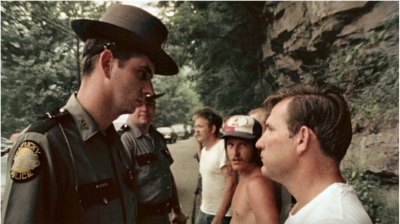 Humanistic agitprop at its finest, Barbara Kopple’s documentary is the rare cinematic work that is both a ferocious vanguard for humanity and a glimpse into the heart of a depleted American identity. Adopting the verite mantra as a way of life and exploring the months-long United Mine Workers strike in Harlan County Kentucky, Kopple’s film rings out with both the dust-caked haziness of human exhaustion and the fevered perception of dissent against all odds. One can feel how the miners had spent months incubating in harsh conditions without losing sight of the hard sear they bring to strife and soldiering on. Kopple’s film, although entirely humble, takes them out of the crawlspace of American memory and uses the currency of the camera to explore the potholes of American existence with venom and frailty in equal measure. The experience of the strike was no doubt fatiguing, and Harlan County, USA is a dispiriting film that nonetheless energizes itself with cinematic gusto in a bold attempt to fight against the dying of the light, mimicking the miners who no doubt had to invent an excuse for continued passion at any cost.
  Quixotic and paranoid in equal measure, Grey Gardens’ protagonists Big and Little Edie Bouvier outstrip a legion of Rocky Horror vamps for moxie and general disarray. They live in a perpetual fugue state that also doubles as filmmaker Albert and David Maysles’ vision of the American Mishap. If the 1970s carried a stench of permeating, askew discombobulation for the American public, Big and Little Edie serve as reflections that perverse economic conditions don’t always heed seemingly iron-clad class boundaries and notions of cultural capital. Beyond that, their connection to the Kennedy family not only enhances the admittedly trashy, voyeuristic pleasure of the film. It also transforms the film into an off-kilter work of near-speculative fiction, like some demented teenagers’ cultural pile-up of inverted Americana iconography and nastied-up sitcom routines. The infested, post-hurricane manse at the center of Grey Gardens is like some parallel universe missing link between Munsters’-level suburban middle-class cultural airs and Addams Family-caliber aristocratic eccentricity. How fitting is it that the film’s central gruesome twosome boasts both the populist twinge of desire to belong and the need to assert difference from the rapidly homogenizing American public, a central dialectic of American culture’s existence post-WWII. These two blue-bloods act like reptiles and yet, in their own way, they reflect an equally mordant and morose breakfast nook of the wayward American dream.
 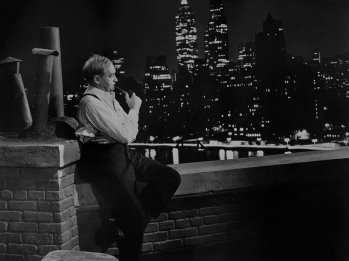 Excuse anyone expecting a grizzled true crime story from this early work from Jules Dassin, arguably the missing link between American noir and those malarial European art-house crime pictures of the ’50s and ’60s, films that in their own way paved early ground for the spatially-focused art-cinema likes of Antonioni. For those filmmakers, narratives were but loose constellations of events to hang questions of human modernity and architectural geometry on. And while those filmmakers would truly reorient cinema, Dassin’s films peek open the door that someone like Jean-Pierre Melville (not to mention the French New Wave) would eventually dynamite, laying brick work for a cabal of hungry young American film school students with a voracious appetite for anything radical and foreign. So the name Jules Dassin is, if nothing else, a name you, the consummate cinephile and obscure film blog reader, ought to know.
 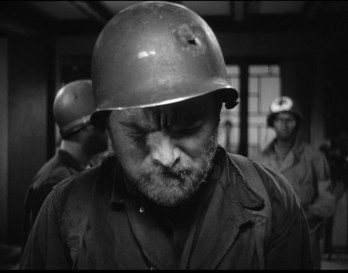 The first Korean War film, Steel Helmet was released mere months after the war formally began, and it benefits from the kind of irrevocable, in-the-moment anxiety that all of director Sam Fuller’s films do. Frankly, the master narrative about the war was still a bundle of unconnected nerves with no central focus yet, so Fuller did what a good Fuller was accustomed to doing: he grabbed the nerves by the claw and jostled them even further. Steel Helmet is infused with a ramshackle vitality and a sense of vicious, viscous dirt seeping into every crack that Fuller so astoundingly tightens up with garrote wire. This is catgut filmmaking, muscular and taciturn and brutish in the manner of a war of attrition mixed with a combustible blitzkrieg, and more importantly, its expediency ensures that the film cannot bother with the tangled geopolitical board-room ideologies of war in a broad sense. Because the war had no overarching narrative (yet), the film only had one choice, the Fuller special: to leave the board rooms behind and make things deeply, uncomfortably intimate, as in camera-too-close-to-the-character-sweat intimate.
  The Long Take