
 I had these written from a prior engagement, so I might as well post them, since I’m in a music mood.
Like Clockwork, Queens of the Stone Age
It’s likely that Josh Homme’s motley crew of hard-partying vampire rockers will never top their 2002 monster mash Songs for the Dead, but the (not alternately but simultaneously) vulnerable, sardonic, and hard-charging Like Clockwork is a stiff enough cocktail to make you forget for a minute or two. There are weak-links: the scorched-earth intro “Keep Your Eyes Peeled” never rouses its jagged riff into anything more than a dogged march, and “I Sat by the Ocean” is catchy but neither as venomous nor as lascivious as it should be. (It feels like it washed up on the beach when it should be skulking out of the gutter). But after a negligible intro, the band begins firing on all cylinders. The adenoidal, whiskey-soaked “My God is the Sun” marries the parched throat of ZZ Top to the merciless churn of Black Sabbath, the phallic “Smooth Sailing” boasts a sweaty strut and a libidinal charge, and the nasty underworld of “If I Had a Tail” is pure pelvic gyration that locks into a searing groove like one throbbing aural erogenous zone.
Even better is the heaven-and-hell platter “Kalopsia” which creeps through minimalistic, neon-inflected glam menace before razing the low-level buzz of uncertainty with a merciless guitar ion storm that mows the song to the ground. And I don’t know what crawl-space the closer “I Appear Missing” emerged out of, but it might be Homme’s best song ever, a slurry of ruminative, cheeky, and bruised attitudes building ever-kindling tension for six unflappable minutes, a soul-searching twilight zone trip through the desert after the apocalypse. Individual songs aside though, it’s the overall mood, the vibe, that elevates Like Clockwork. Queens of the Stone Age remains just about the only superstar rock group with a sensibility all their own, synthesizing masculine and feminine principles, melodically creamy and ragged impulses, to create a sound that exists in a permanently liminal space between feelings and sensations. For such a helter-skelter schism of an album, the texture is remarkably balanced. As superficially muscular as they are on the surface, Queens of the Stone Age is mainstream rock’s only current suis generis.
A-
 The Hunter, Mastodon
From the graveyard-crunch of “Black Tongue” to the strutting, sassy “Curl of the Burl”, The Hunter is the molten aftershock of Mastodon’s ash-speckled supernova Crack the Skye. After four increasingly proggy albums bursting toward eruption and shooting for the sky, this 2011 work is sweatier, less fragmented, and thicker on the bottom, eschewing the antediluvian, twisted psychedelia of Skye – with its knotty song structures and gonzo concept – for something so down to earth it pummels into the core. The result is simpler, no doubt, but never simplistic; “All the Heavy Lifting” is as viciously antagonistic as anything they’ve ever done and “The Hunter” submerges a ballad in the brine of paranoia.
Obviously compared to Metallica’s mainstream bid The Black Album (a band dishing out crunchier, punchier songs after a decade of increasingly robust experimentation and prog inflections), The Hunter matches those metal gods for thunder but frankly surpasses them for caustic unpredictability and epileptic energy. Even the poppiest song, “Dry Bone Valley”, unleashes the kind of moonshine-fueled, Allman-Bros-set-to-overdrive gallop that could have only been concocted in a bathtub laboratory. And the high-camp Pink Floyd Swamp Thing morass? Cling to it like a brief moment of safety, wreckage in an album that amounts to a hell of a storm. Continue reading
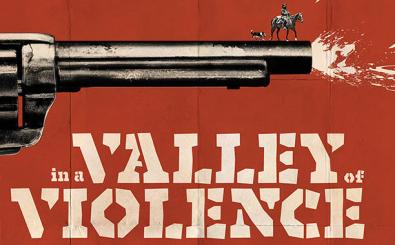 A handful of small impact tremors in the horror genre under his belt, Ti West, the only so-called mumble-gore director worth a damn, taints the Western with his particular brand of suggestible, dark energy in the gravidly-titled In a Valley of Violence. A nomadic firecracker of a film that recalls the existential-crisis minimalism of Ride in the Whirlwind and The Shooting, this slice of vintage pulp fiction eschews the grandiloquent game of Once Upon a Time in the West for a kind of taciturn swampy pop-art. With the intro credits slinking like a pink panther gone feral, the spirit of the ‘60s hang high here, looming over this parched throat of a film like a sun that just won’t set. Thankfully, reverence to the past never feels like a noose held around the film’s neck. There’s an analog spirit here, but West never loses himself in the wayward mire of classical pastiche or overly-hagiographic reference to Westerns past. This is West’s West, not a feeble attempt to ape Leone’s or Ford’s.
  Although mostly cottoning to Mark Twain’s insouciance and witticisms rather than his gothic, mortally wounded ruminations on society (so it’s more Tom Sawyer than the superior Huck Finn), Band of Robbers gets us partway toward what anointed the early Coen Brothers as the cinematic exhumers of Twain’s rascally, still-kicking corpse. Recasting Tom (Adam Nee) and Huck (Kyle Gallner) as modern day slackers (the latter recently released from jail and the former a lethargic police officer), the film’s decision to revise Twain’s prose as a rattle-snake of a heist film is not exactly inspired in an age where that genre is an easy target for indie success. But that doesn’t make it ineffective. Obviously, it reeks too of filmmakers-of-a-certain-age basking in the warm glow of Wes Anderson’s Bottle Rocket, but Band of Robbers is spunky enough and clearly enjoys the old-fangled spirit and the messy malarkey of childhood campfire tales, not to mention their more ruminative underbellies.
 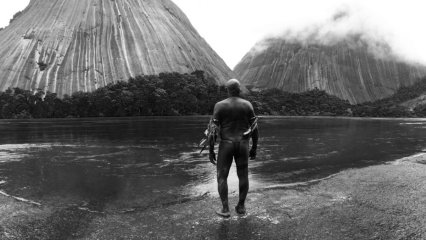 Ciro Guerra’s Embrace of the Serpent constricts itself with the sinister snake of history – venomous, elusive, alluring, and difficult to unravel – about as tightly as a film can. It’s not perfect; Guerra once or twice drowns in a swamp of historical allusions and metaphors that are never really allowed the free space to lash out as dangerously and free-associatively as they could. But his film at least allows history to vibrate rather than remain trapped in a film’s distanced reverence like a waxworks display. A provocative, even downright brash film, Embrace of the Serpent is wisely emboldened by its stylistic and political radicalism. Even when it sinks into symbols like quicksand, it is at worst “a nice try” or a near-miss rather than an outright failure, and, frankly, its missteps are only as hurtful as they are because of the potential lurking in the film’s head. This is not timid cinema, and it burrows un-hesitantly into the post-colonial mindset with more aesthetic vigor than most other morally-charged films would know what to do with. For all its flaws, there’s something essential about it, and not only because its political fangs are so often unsheathed. Like the mythical psychedelic flower that is a kind of MacGuffin for director Guerra’s robust scrutiny of cinematic depictions of the “Other”, Embrace boasts enough of a visual pull to send sparks every which way, even if the prospect of truly igniting is ultimately left off the table.
  The sequelitis-affronted, relatively lame, stilted title of Kill Zone 2 really does not do Soi Cheang’s inspired storm of a film the justice it deserves. Brandishing an initially worrying surfeit of ephemeral plot, the film actually scurries along with grace and kinetic motion, bucking the overloaded Raid 2 trend of expositing everything to death. Cheang’s film is operatic in scope but limned with B-picture sharpness and a nimble nature worthy of Jet Li if he was actually out for blood. It cannot muster the elegantly streamlined, relentlessly pure giddy alacrity of, say, the epochal The Raid, the golden child for martial arts films in the ‘10s. But, even still, this physical free-for-all threshed with melodrama boasts a bloody, bursting heart and a touch of genuine evil.
  I do not know that I can meaningfully defend The Protector 2, which is why it is for the better that no one involved particularly seems to respect my opinion at all. Less a feature film than the Tony Jaa variety hour, The Protector 2 is disarmingly free of stakes, coherency, and even tension. It is, as drama, almost disturbingly inept, entirely daffy in the way it tortures a narrative out of scenes of mayhem and malarkey. There’s a focus on wholly inadequate compositing shots that is endearing in its disregard for common courtesy and the social propriety of visual logic. At times, the shenanigans on display approximates an anti-narrative hostility that is nearly inspired in its casually self-effacing “plot”. The RZA took Tony Jaa’s elephant, and you don’t take Tony Jaa’s elephant.
  Disney clearly has a fetish for manning the bellows to raise old properties teetering on the edge of irrelevance, especially to the tune of spending several hundred million dollars on them. Often (John Carter, The Lone Ranger), this resurrection quickly mutates into a séance: the properties remain dead, and the best we can do is ask the characters why Disney is affronting them by not allowing them to rest in peace. Yet Disney’s most recent such semi-forgotten property carries the Marvel brand, which means commercial success for once. At least this skeleton back-from-the-dead has a little visual meat on its bones and a couple of fascinatingly splintered compositions, but that isn’t enough to truly salvage the nefarious acolyte of science and nerd-cred bolster Dr. Steven Strange. If the prospect of one of the world’s most monolithic and voluminous corporations resurrecting a wiry little swashbuckling B-comic from the ‘70s raises any false alarms in your head, well, consider yourself intelligent. Lest you think that the title is a harbinger of things to come, Marvel’s one-size-fits-all aesthetic is as plastic and only superficially strange as ever in this new film. In breathing life into a product from the Bronze Age of comic-dom, Marvel continues to package and primp their creation in service of creating something masquerading as malignant, dangerous, and different. And something ultimately too benign to last past the 90-minute mark.
  Just when it seemed that the premier ‘00s national cinema for delivering international audiences into darkness was ready to find the light, Na Hong-jin’s The Wailing is here to raise some cain. With its bounty of sensory delights and cavernous, existential troughs, it warps its style so far past the safety regulation that South Korean cinema feels just about covered in full for a good decade or more. Swaggering and shaggy, The Wailing is a vibrant devil-in-a-new-dress tale of great lateral expanse and gothic grandeur, a wonderfully devilish repository of human foibles and elemental disturbances. It also offers a deep descent into humanity’s awkwardly slovenly attempts to fumble through traumatic and unexplainable events as grandiloquent gloom meets its mortal enemy: human imperfection.
 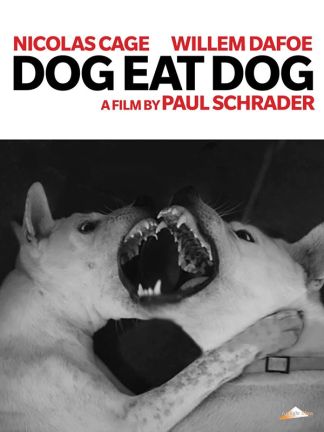 Paul Schrader is definitely hell-bent on something, but I’m not sure he knows what it is. Say the least for the famous screenwriter, journeyman director, and racist-anti-racist: he’s using the theoretically democratic “direct” medium of video-on-demand releases for unhinged stylistic, aesthetic purposes rather than simply a way to achieve distribution when the theaters have abandoned him for his maddened ways. The addled, feverish style of Dog Eat Dog feels like Schrader’s attempt to unleash the agitation he feels at being mostly dumped from the A (or even B) list as a writer-director. Rather than simply releasing an A-picture, the kind that would pass in one theater and out the other in a week or so, Dog Eat Dog is so disobedient, even dysfunctional, that it would feel like a raving mad dog in the hallowed space of a film theater. With the screen always lashing out in some new stylistic or thematic direction (almost by the second), the public audience of a collective theater-going experience probably wouldn’t have known what to do with it.
 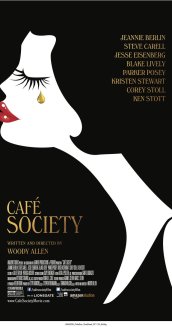 Decades into Woody Allen’s mirror maze career of inward-looking, self-reflecting gazes and upper-class first-world problems, a “new” thesis from this particular director whose only theater is his own mind is not exactly a prospect anyone is likely to expect any time soon. That Allen only ever repeats himself is, at this point, of less concern than whether his variations on old themes are inspired on their own terms. Without exactly spoiling anything, Café Society is the platonic ideal of Allen hovering around in his middle-brow, middle-tier. Café Society is more or less how you contextualize it, a prism for refracting one’s personal tolerance for the octogenarian who has canonized himself almost as many times as years he’s lived. A slight, pleasurable uptick in his continued slide into irrelevance? Another totem to his conceited brand of self-loathing self-aggrandizement that long ago lost its luster or rabid-dog intelligence? Café Society is all of the above and not much else. Which is to say: your mileage may vary.
  The Long Take