
 Sydney Pollock’s Jeremiah Johnson is, paradoxically, a resolutely, almost defiantly, old-school production, but it discovers a modernistic rejection of modernity in this very backward-looking milieu. As a Western, its interpretation of nature and mankind within it finds imaginative camaraderie with American art dating back to the Romantic painters of the mid-1800s who looked to nature – America’s bounty, they felt – to rebel against the earliest American painters, who mostly copied European high-art style, which codified as individualistic portraits lionizing heroic figures. These mid-1800s American painters, the first art rebels of the American vernacular, sought to uncouple themselves from European identity and establish a uniquely American sensibility. They found safe harbor in ruminating on, and enlarging the imaginative mythology of, the landscape, prophetically proposing – and thus clarifying into being – that America’s identity would be corporealized in the society-shunning, and paradoxically society-creating, individualism of a transient, undomesticated life on the road and through the forest. Continue reading
Films for Class: Jeremiah Johnson
Leave a reply
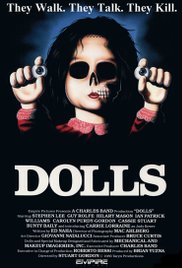 A new Annabelle sequel I haven’t seen is out; faced with the grim opportunity of reviewing its immediate predecessor, here is a much better killer doll film.
  Queens of the Stone Age
 The wide-ranging berth of writer-director Jia Zhangeke’s multipartite, all-across-China film, A Touch of Sin, cannot deny its impeccable eye for the specificity and complication of even the least of its individual tales. A Touch of Sin is obviously the story of a society; its nature is polyphonic, paralleling four individual tales and hinting at many others, asking us to look at a wider portrait of the world, even one in which many souls feel atomized and alienated. But, despite the length and size of this film, it never feels like a belabored or overly-grandiose obelisk, a sky-high statement that attempts to encompass all of China. Its rhythms are minute and intimate, its portrait of modern-day China finding its genesis not in any declamatory, macro-level statements but in the tight minutiae of four tales playing out on canvases of inward regret, internal dissolution, and people yearning for other selves.
 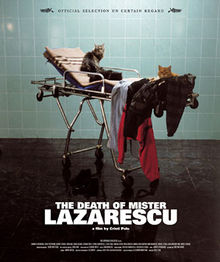 It would be astonishingly difficult to convince a viewer to watch director Christi Puiu’s The Death of Mr. Lazarescu if they weren’t already predisposed to adore Puiu’s strange, sardonic, drunken but deeply compassionate 150-minute account of exactly what its title suggests. The plain-spoken brutality of the film’s title is not an ironic or even a metaphysical signpost for the symbolic scholar. It is not simply an imaginative foothold for the audience to understand that the film is really using its narrative to plumb some epochal commentary on life in modern-day Romania, to expose a “death” that is abstract or societal in nature, as though the world’s compassion is withering away. The title is not merely an intimation or a whispered poeticism, a literary flick of the pen meant to draw us into the film’s thematic caverns.
 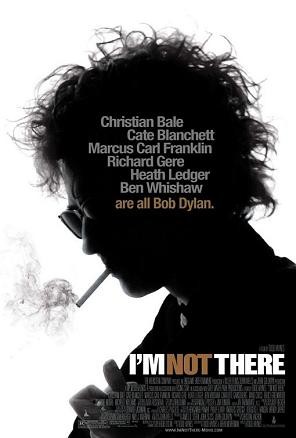 A whirlygust of synapses fire, intellectually, emotionally, and sensually in director Todd Haynes’ thematic invocation of Bob Dylan, I’m Not There, which is a tone poem about Dylan as a concept, as an ache in the belly, as a mind for dissent, and as a troubadour that infects the minds of everyone willing to listen. It is not a picture about Dylan as a human being or a flesh-in-blood person, although it is defiant in its unabashed humanism, calling on a panoply of styles and personhoods to refract Dylan across numerous time spaces and identities to reveal not only his polyphonic self but the many valences of the nation he both represented and challenged. Dylan here is omnidirectional, paradoxically both a symbol for anything you want and a hungrier creature that swallows symbols whole and runs away in his (or her) own direction. Most biopics – a genre I’m Not There is only very tenuously related to – are a kind of pedestrian par excellance, as cinematically dead and intellectually bankrupt as any Michael Bay film, even though biopics wear their intellects less lightly and call on the spirit of the middlebrow rather than the lowbrow. They draw a decisive quotient of their beings from their belief that they can unravel and pin-down their subject-matter, that they are educators imparting true knowledge to the viewer. In contrast, I’m Not There cannot be pinned down, and it shows that its subject cannot either.
  Inhabiting a gradient from electrifyingly un-ironic romanticism to baleful malevolence to existential calamity, Jonathan Glazer’s follow-up to his debut Sexy Beast is subtle in its implication but implosive in touch, feel, sensation, and style. It hangs over you, with premonitions of doubt and stenches of inclement weather overhead, but it avoids many (most) of the easy tricks films use to evoke the shadows of modernity: expressionistic shadows, a thick gauze of lighting, canted angles. Many films today are embalmed in expectations and mental prisons for what horror might mean, and here is the fiercely alive Birth, an otherworldly film not because of the presence of diegetic aliens or space travel but because it confronts our world through an alternate perspective from the one most of us call home. Although its intellectual and sensory channels were undeniably forged from the ghostly modernistic vibes of Resnais and the self-inquiry of Antonioni, it nonetheless inhabits the frontiers of consciousness.
  By the looks of things, The Dark Tower – the film – has been shot, stabbed, poisoned, manhandled, fed to the lions, and drawn-and-quartered on its way to release, sending the scattered remains of Stephen King’s I’m-told-dense seven-novel book series to random corners of the Earth. At a scant, emaciated 95 minutes, the filmic adaptation of the tale has been limned and trimmed down to a shockingly skeletal version of the story. This isn’t inherently an evil. We live in an era of blockbuster bloat and vacuously overdriven narratives that slog through 150 minutes of screen time, dragging their thematic underbelly on the ground as the asphalt scraps away any of the depth hanging beneath all the filmic fat.
 Leave it to Luc Besson to turn a mere diversion into a proper plunge into the headstrong imagination of a topsy-turvy grown-up-adolescent with decades of mid-century fiction in the heart and worlds of possibility in the brain. Valerian radiates unchecked ambition and rains down wild-eyed mania like a convivial, cosmopolitan celestial star. Let’s go ahead and say it is a feature film, because if I don’t start with that as a certainty, I’ll speculate and speculate until its wobbly, star-bright edifice collapses upon me. And it does collapse after a fashion; its two protagonists are mismanaged and a paper-thin foundation for the deafening array of stylizations and imaginations Besson spews on top of them. But blockbusters today all have their edges sanded off, playing – like biopics and every other populist genre – like museum pieces beset by the deadening, franchise-conscious, homogeneously styled eyes of a JJ Abrams or some similar soul. Comparatively, even a filmmaker as brashly awful as Michael Bay seems like a breath of auteurist fresh air, a genuine iconoclast of garbage in an era of bland, indifferent, tidy, and thus flattening, cinematic perfection. In its ambition to exhaust the sensory and its imperfections, Valerian isn’t just warts and all. Its warts fuse it together.
 The Founder is neither a jubilant cheer for bootstrap American capitalism (a gross idea, but committed) nor a lament for genuine compassion and humanity, a film hued in shades of wrath and righteous indignation. It seems not to have much of a perspective at all. Instead, it is a careful, timid, tempered, cautious film that is deliberately micro-managed to dip neither into hagiography nor legitimate criticism. Sure, it acknowledges McDonald’s “founder” Ray Kroc’s venom and the foul underside of capitalism, but the dominant thrust of the narrative – the very oxygen it breathes – is the piston-like ambition of Kroc and his achievements. In some sense, The Founder is even more sinister than an overt hagiography. In clotting the free expression of Kroc’s passion, The Founder reminds us that Hollywood is self-aware enough to manage its enthusiasm for capitalism, not enough to actually challenge it, but simply to let it run free in a slightly less liberated, minutely more compassionate tone.
  The Long Take