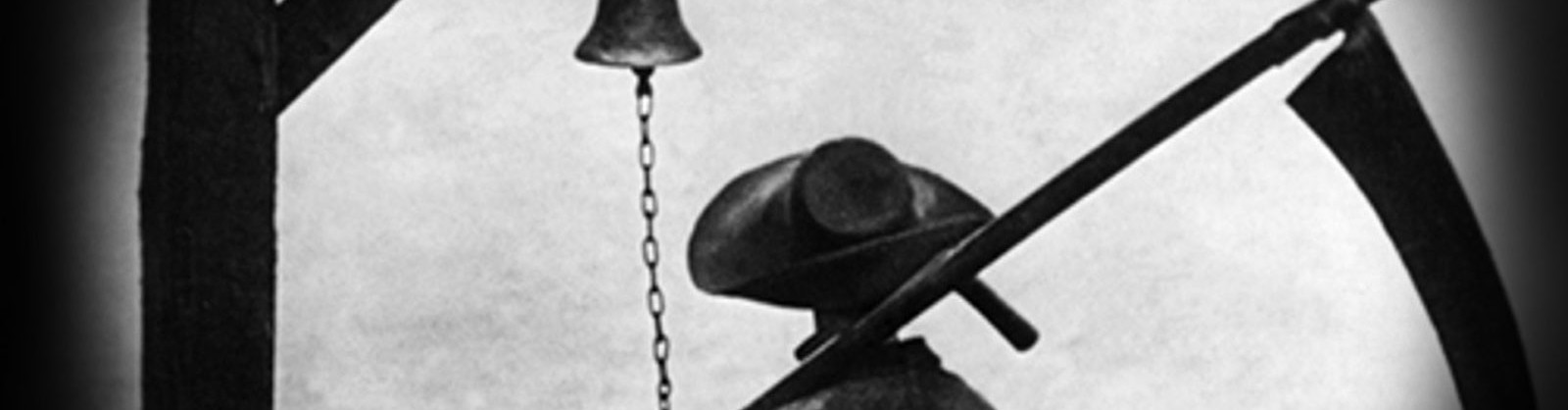
 Loosely in honor of the MCU’s recent announcement of a new Blade picture, and in honor of a film that I think is better than any of the 22 films in the MCU.
Seventeen years on, and with director Guillermo del Toro’s respectable Hollywood bona-fides secured in a Best Picture and Best Director win for a film that, superficial lacquer of oddness aside, is really no less oblique or off-kilter than any other Oscarbait picture, one longs for the freakish B-movie voluptuousness of a film like Blade II. Famously, del Toro only took the film so he could have more control over the film’s follow-up, 2004’s Hellboy, the director may consider it a skeleton in his closet. Frankly though, that sense of hushed disreputability – both a film that isn’t to be spoken about and a film that refuses to easily speak its own mysteries and themes – is what makes Blade II perhaps del Toro’s most pungent English-language film, a dismembered parable of ethnic cleansing less hopelessly literal than Pan’s Labyrinth and more cutting than any of del Toro’s films in the decade since.
While some of his later films bend over backwards to explain their themes to us, Blade II doesn’t feel the itch to sanctify del Toro’s obvious glee at being granted full access to play in the Hollywood toy-box (regardless of what he says about the film). Unlike many of his later films, Blade II does not launder the director’s interests in the fetishistic and the demonic aspects of family lineage and bodily malformation – no less obvious here than elsewhere – in tidily packaged moral schemas. The original Blade played its vampire themes loosely, giving traditional questions of power, marginalization, and the decay and exsanguination of the body a sleek, technological update, but Blade II folds these questions into the action so thickly that they don’t even register as themes. Which may be why it’s something of an ugly duckling in del Toro’s filmography. Continue reading
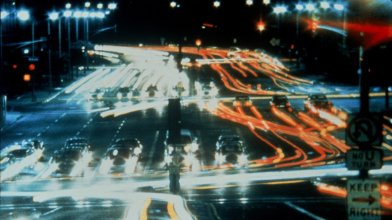 Koyaanisqatsi offers what can only be described as a radical defamiliarization of humankind, treating civilization as a known-unknown and humanity as an alien artifact. Famously soundtracked by Phillip Glass’ gloriously minimalistic score, Godfrey Reggio’s first of three environmentalist impastos offers a symphonic image of the human experience, contradictions and curiosities existing in tenuous, frictive harmony. Transparently environment and even polemical, Reggio’s film is less a plea for salvaging the environment than a call for a new kind of perspective on existence: the camera turning, warping, acknowledging its mediation of nature’s might and igniting the potential of the natural world that is often taken as backdrop, a mere resource to be plundered rather than imaginative energy to be mined.
 Bruce Lee is rather unceremoniously written-off in Quentin Tarantino’s new film, which I finally saw and thought was otherwise terrific, but it seemed a little counter-argument was necessary for Midnight Screenings this week.
 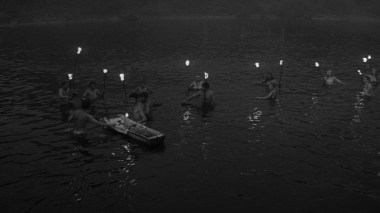 While Andrei Rublev was officially released in 1966, it was not unleased upon the world until one fateful night (at 4 AM, courtesy of Soviet censors) in May of 1969 at the Cannes film festival, and as that screening was one of the most important cinematic events of 1969, it seems entirely legitimate for the film to have a place in this short retrospective.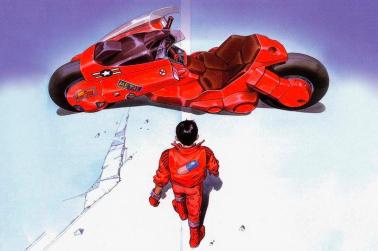
 It’s been a while since I’ve done these Friday B and/or cult movie reviews, and I’ve decided to return with two dystopian films set in the year of our Lord 2019, offering visions of THE FUTURE that may or may not have come to pass.
  In honor of the half-century anniversary of the epochal years of 1968 and 1969, I meant to propose a little series of reviews commemorating the films of those years last summer, particularly with all the academic conferences and articles trying to rekindle the lost spirit of ’68 or otherwise to dissect it. I didn’t get around to it at the time, but with the era lulled to sleep last month by Quentin Tarantino’s phenomenal Once Upon a time in Hollywood, now seems as good a time as any to start! I apologize that I’m a year late to officially celebrate the 50th of some of these films, but a great film doesn’t need a deadline to be remembered.
  In honor of the half-century anniversary of the epochal years of 1968 and 1969, I meant to propose a little series of reviews commemorating the films of those years last summer, particularly with all the academic conferences and articles trying to rekindle the lost spirit of ’68 or otherwise to dissect it. I didn’t get around to it at the time, but with the era lulled to sleep last month by Quentin Tarantino’s phenomenal Once Upon a time in Hollywood, now seems as good a time as any to start! I apologize that I’m a year late to officially celebrate the 50th of some of these films, but a great film doesn’t need a deadline to be remembered.
  It goes without saying that Widows is more of a crackerjack offering than we’re used to from director Steve McQueen, who typically specializes in the soul-rotting malaise of a cold-blooded world and/or the existential disfigurement of an abandoned person barely surviving in it. But Widows still bears McQueen’s ruthlessly stark, almost psychotically perfect formalist streak. There’s a little more wiggle-room in the style – more drive, more chaos, more flippancy, more immediacy, maybe even more of a desire to please – but it’s still a Steve McQueen film. Which means, although its gears run faster and it’s more soul-shredding than soul-rotting, it’s still all cold muscle, coiled nerves, and ready-to-pounce fury.
 Forgive the fact that this anniversary was last fall; I wrote this then, but didn’t publish it here until now
 The Long Take