
Update early 2019: The original Alien is such an incredible exercise in negative space and sonic absence, an unwelcoming dispatch from an all-too-fathomable future, a transmission from the dark side of the 1970s that pushes the haunted house film to its constitutive limits. Scott’s attempts to expand the mythology here misfire on all counts, only diffusing the purity with a kind of thematic dilettantism – a little Bible here, some Greek mythology there – as though the screenwriters were afraid that anything other than reconsidering the entire Western canon would be a failure of ambition. That original film remains a stark howl of cinematic minimalism, a fugitive, monstrous insurgent into the increasingly grand and self-important cinematic landscape of the late ’70s, but this new one just replicates the grand, Gothic tendentiousness of every other blockbuster film in the 2010s, all sound and fury signifying ego.
Original Review
Alien3 was its gloomy adolescent faze. Alien: Resurrection was it mid-life crisis where it put on a clown costume and rode around on a fluorescent motorcycle to prove its hipness. The AVP films are the lost years. And Prometheus was a kind of rebirth, a newfound, new-agey euphoria where intelligence and pseudo-intelligence intermixed to the point of abject indecipherability. But what does that make Covenant for the Alien franchise?
A film that is usually unsure of itself, above all, one which tries to repeat and reconcile the entire franchise in the course of one film. One that struggles to decipher some point of solubility for many films and as many essentially irreconcilable viewpoints about cinema and the world. In this series of films whose entries have uniquely little tonally or atmospherically to say to one another, Covenant is also a return to the good old days, a regression, and a stasis of sorts, an attempt to retain and harden the philosophical musings of Prometheus while finding salvation through a return to the franchise’s younger days of cold-blooded, efficient brutality. To fossilize what intelligence the at-least self-consciously oblique Prometheus had for fear of it slipping away and to efface that intelligence by cutting through the fat with a lean, mean monster film, a marriage of pulp and phenomenology that just does not mix. As if afraid to acknowledge that less can be more, director Ridley Scott demands to be taken seriously as an auteur, which for him, means thematizing and seeking solace in headiness with a capital-H even when it is to the detriment of the overall production. As a down-and-dirty horror film, Covenant is retreading old ground, sure, but doing so with gusto and panache. As a rambling monologue (or dialogue, I suppose) about the nature of creation, creator, and created, it’s just another patch on the quilt proving that these pseudo-pretentious sci-fi action films have nothing new to say about their robot fetish. Continue reading →

 Admirably quaint but radiating a felt force that can puncture all, David Lowery’s kiddie-Malick concoction benefits from that good old country comfort, from a deep resonance for quiet majesty. Lowery doesn’t inherit director Terrence Malick’s radical revisionism of American narrative tropes, but his fractured fairy tale debut Ain’t Them Bodies Saints carried the residue of Malick’s sensitive and innocently mature visual poetry taken from the American Western canon. That debut also suggested Lowery’s way with Malick’s beguilingly understated melodrama (a cinematic oxymoron if ever there was one) and his pseudo-impressionistic blend of modernism and traditionalism, a tone matched by few directors this side of David Gordon Green. Pete’s Dragon, Lowery’s follow-up, similarly feels both bred in the 1950s and essentially out-of-this-world, displaced from time. It is less aggressively painterly than Saints, to pull out the most over-used adjective in the critic’s canon, but no less silently magisterial. If push came to shove, I’d say the debut was the superior film, but Pete’s Dragon extends Lowery’s philosophy to the mainstream with admirable restraint and melancholy. Continue reading
  Insofar as Netflix’s Castlevania “television show” is a wobbly forward half-step for video-game adaptations, it is because of its commitment to unbottling the aesthetic-first spirit of classical video gaming and relishing the principles of form, geometry, and negative space, all brandished here with a suitably diabolical disposition. If nothing more, it makes a convincing case for animation as the obvious cinematic corollary to video gaming.
 The Virgin Suicides
 New Zealand’s Taiki Waititi (soon to fulfill the all-too-common-place indie director trajectory by helming the third Thor film) continues to outfox basically every comedy director in the game just a year after his What We Do in the Shadows took the cinematic underworld by storm. Hunt for the Wilderpeople isn’t as gut-busting nor as defiantly misanthropic as the earlier film, but it’s the better film, owing largely to its more fungible tonality and willingness to introduce a sense of outsider melancholica to Shadows’ aloof sensibility of quotidian insanity. Waititi doesn’t hunt down every joke opportunity with extreme prejudice. Instead, he creates a fundamentally depressed mood piece and then proceeds to nick and graze the attitude with comic filigrees that hurt like paper-cuts: small, but all so piercing, and stubbornly refusing to heal up as the wounds fester and grow over time. Hunt for the Wilderpeople is not unlike something Bergman or Malick might direct if they got really high during filming.
 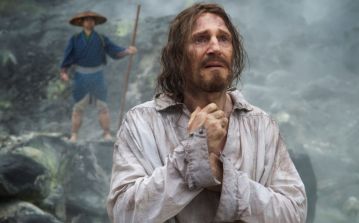 (Edit: While I do not love this movie, it is lodged in my mind far deeper than many passing, more immediately pleasurable 8/10’s. Silence does not go down smoothly, but it lingers and stings, and I’m inclined, if not to disregard this review, at least to accentuate the film’s strengths and to suggest that its weaknesses are part and parcel with Scorsese’s lone film of the past 15 years to genuinely explore the darkest recesses of this man’s mind as well as the sublime, intimate heights of his vision rather than simply the length of his films or the girth of their visuals)
 A decade out of play, everyone’s favorite one-man-circus of a filmmaker Mel Gibson remains a wily, spirited, and altogether untactful filmmaker bearing a murderous sensibility for lacquering his traditionalist moralities (not quite the same as American conservative moralities, mind you) in his almost unblinkingly erotic fetish for violence. Which is all well and good, and Hacksaw Ridge comes alive in fits and starts. But Gibson’s return from director jail has a perverse moral paradox at its core, and Gibson – probably assuming this is his only chance to return to the A-list – handles the material too cleanly, too respectably, and with too much pristine professionalism to unpack the eccentricities and thorns of the subject matter. There’s a philosophical battle at play deep down, but the old fashioned A-picture tone, while largely effective as a from-the-hip war picture, lacks the jagged edges and exploratory digressions to submerge into the knottier nooks and crannies of the film’s situation just begging to be torn into.
  A pall, an impenetrable haze of dejection, suffuses both Kenneth Lonergan’s Manchester-by-the-Sea and its main character Lee Chandler (Casey Affleck), a Boston-based apartment superintendent called back to his hometown of Manchester-by-the-Sea (about 30 minutes north of Boston) for the death of his brother. Set in the dead of winter, Lee’s trip is extended because the brother (Joe, played by Kyle Chandler) has a son (Patrick, played by Lucas Hedges) who needs temporary looking after and because the more-snow-stricken-than-snow-blanketed New England soil isn’t soft enough for a grave until Spring. Lee is a quiet, sensitive soul, but we quickly learn his attitude and personality are the casualties of his displaced worldview and clinical depression stemming from an initially unspoken past tragedy involving his ex-wife Randi (Michelle Williams).
  Released as Netflix’s first blockbuster – a fact that bears some weight for scholars of the industry of cinema but less for the connoisseurs of films themselves – Okja is significantly more enticing as the new film from South Korean cinemagician Bong Joon-ho, marking his second Korean-American co-language film after 2014’s Snowpiercer. A leftist parable – although less brazenly radical than Snowpiercer – this lightly Miyazaki-esque eco-critique of American capitalistic practices is extremely broad, but like Snowpiercer, it treats its populist-front, excessive sense of caricature as a boon to its political ambitions rather than a restriction on them. Both of these films lack anything resembling the delectably sinuous pitch-black brio of Joon-ho’s two best films, Mother and Memories of Murder, but they do not erase his expert knack for Warner Bros-esque absurdism, nor do they stamp out the truest quality of all his films: the intoxicating commotion of conflicting energies.
  The Long Take