 The only thing mesmerizing about 47 Ronin is the thought experiment wherein Japanese master visualist Kenji Mizoguchi, directing a film of the same title and based on the same classic Japanese myth in 1941, imagines that 70 years of the Hollywood machine threshing at full force will result in a new version of the film fronted by actor of actors Keanu Reeves, starring opposite a rough approximation of a horse demon and a witch dragon. Proof that it’s the simple things in life that get you through, imagining how Mizoguchi might react to this film is vastly more compelling than the film in front of us.
Simple things, by the way, are not in the vocabulary of 47 Ronin, a film that makes the bewilderingly common mistake of assuming it is smarter than it is as it lays down a tale that vacillates between deep, distinct homage to Japanese myth and a more corporate utilization of Japan’s tangential relationship to dragons. In other words, we have a film that is both completely assured of its totalizing respect for Japanese culture and oblivious to the way it confronts Japan with an exclusively Orientalist bent. Being but a humble film reviewer, I can’t proclaim this with any accuracy, but presumably the original folkloric version of the tale offered fewer characters designated only as “Lovecraftian samurai”. Since, you know, Massachusetts writers from the early 1900s weren’t exactly bosom buddies with a Japan that is both, at various points in the film, “ancient” and “feudal” (which, together, is an oxymoron, but whatever). I mean, theoretically the nebulous fantasy realm of the film’s diegesis (undone only by its otherwise heavy-handed commitment to legitimizing itself historically) implies that this could actually just be Cape Cod in 1920 after all, but I like to give the film a little more credit than that. Continue reading →

 A behemoth even at the baby-faced age of 31, Charles Chaplin released his first feature film in 1921 to uproarious public applause, effectively constructing (and with Chaplin, an auteur before auteurism, it was undoubtedly him constructing it) the second highest grossing film of all time by that point. Having already ushered in a flurry of short films that established his plucky Tramp character and co-founded a production company (United Artists) with the other American name-brands of nascent Hollywood (Griffith, Fairbanks, Pickford), he took to his new company not only as a factory for increasing his self-worth but as his paintbrush. Affording him near authoritarian control of his films (funded by his company after all), he would write, direct, star, and answer to no one but himself. Continue reading
  In hopes that box office failures are among the more wonderfully drugged-out and anti-social blockbusters released in the world, I’ve decided to look at a cabal of the most significant box office failures in history. I’m first going to dip my toes in with a pair of very modern films, this one ceremoniously coincidental considering that this summer’s The Legend of Tarzan is yet another Edgar Rice Burroughs adaptation that is good and bad, much like John Carter, exclusively as a function of its willingness to consider itself as pulp fiction rather than proper narrative.
 Released two years after the New Wave volcano of Easy Rider, Monte Hellman’s Two-Lane Blacktop visualizes the tattered remains of America encroaching on its own emptiness after the acid-freakout of ’69 disrupted the old ways and left the scattered ashes of the American populace reaching for new ones. Following two desecrated human carcasses played by James Taylor and Dennis Wilson as they coarse through the crucible of the American road, they search for the contours of a narrative or a life that doesn’t seem to exist anymore. We watch in vain as they grasp onto the only hope they have left: a desperate, disheveled odyssey to find compatriot-combatants to race cars with them into oblivion. Each character wanders around like a James Dean simulacrum searching – literally – for a semblance of the youthful confrontation and auto-shop phallus-comparing that they see as the embodiment of the renegade American Dream.
  Spielberg and Dahl sounds like the right cocktail, but Dahl has been manhandled at the cinema before to differing results. Let’s take a look at the original, and by a wide margin still the most famous.
 The internet’s favorite bete noire, the new Ghostbusters, is out this week, and having reviewed the original and not much caring to revisit the sequel, I decided to review the most successful copycat of a formula that largely died out around the turn of the century.
 So Rod Serling, Charles Dickens, and Alfred Hitchcock walked into a bar…
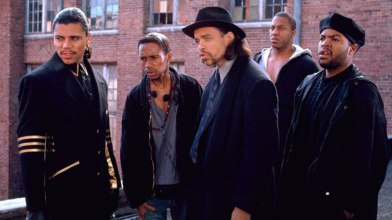 Trespass
 The Man From UNCLE
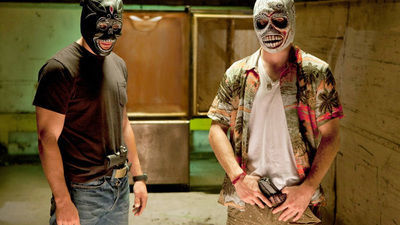 Oliver Stone’s twenty-years-late return to his barn-burning, muck-racking, mutinous youth as a hit-the-fan molester of respectable cinema, Savages is both undeniably admirable and definitely worn and torn by the years of middlebrow cinema Stone exerted onto himself over the years. After expending the ‘00s on pointless, anemically respectable productions like W and World Trade Center, two of-the-moment “take me seriously” political films with none of the director’ momentous, ribald energy, Savages is a return to form of sorts. But the lethargy of lost time has set in a little bit, and the film’s ricocheting-but-not-undulating formal hassle sometimes feels like Stone overcorrecting for the staid, empty crucibles of his turgid ‘00s work by inducing their polar opposite: an undomesticated, totally neurotic rollercoaster. Less Stone at his best than a phoenix raised from the ashes of Stone’s aimless 21st century films, Savages is an intermittently great filmmaking blast of alacrity and elan, but it feels more like Stone-knew-a-guy than Stone himself.
  The Long Take