
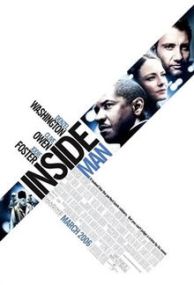
 With Spike Lee’s temperamental Chi-Raq finally unleashed upon us, let us turn to Lee’s last unambiguously popular film, a work that has now largely been forgotten and lamented with cries of “selling out”.
It is tempting to claim that an auteur like Spike Lee is at his best when he is at his most personal. A true statement, but not a complete one. Spike Lee is at his best when he is at his most personal, he is at his worst when he is at his most personal, and he is at his most middling when he is at his most personal. In other words, all of his films are his most personal; even a threadbare indie like 2015’s Da Sweet Blood of Jesus, one of Spike’s most nonchalant, slackened films ever, is a quiet sting of an ode to one of Lee’s favorite forgotten filmmakers, Bill Gunn. Even Lee’s vampire film is about race, the divining rod of most of his best films, but like all of his films, it is not only about race. Lee is not only a protest-artist (although he is a great one), but an aesthetic maestro with a adoration for film history, a probing eye for gender relations and power dynamics of all varieties, and a fixation on place and space.
 With his monumental silent monstrosities of expressionist-tinged paranoia and fervent chiaroscuro-afflicted studies of monomaniacal madmen driving the modern world insane, Fritz Lang practically invented the film noir. That he was somewhat disavowed by producers and abandoned by film audiences after his escape to America on the eve of the rise of Nazism is a quandary. Fellow expatriate FW Murnau was instantly embraced by Hollywood and could have risen to superstar status had the sinister hand of death – the very subject Murnau tinkered with time and time again behind the camera – not intervened. Ernst Lubitsch at least lasted a decade in the top ranks of Hollywood. Billy Wilder’s star would germinate for decades still. Hollywood was generally kind to German filmmakers prior to WWII, or at least, Hollywood was willing to play ball with the Weimar filmmakers who had soundly trounced Americas best efforts during the silent era. If you couldn’t beat em, buy em, or so the American mantra goes.
  Edited for Clarity
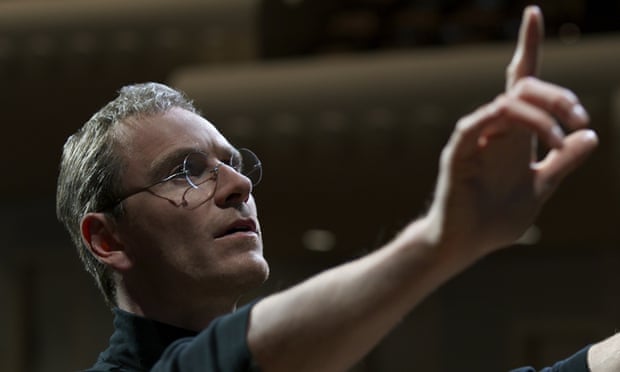 Allow me to indulge myself in the most obvious comparison I can humanly muster for analyzing Steve Jobs: it is a little like Apple, the company ushered into the modern age by the titular behemoth of this film, who, with said ushering, may have ushered in that modern age with it. Which is to say, Steve Jobs is sleek in its interface, pinpoint in its clarity and ease-of-use, slightly idiosyncratic in its egotistical imperfections, vaguely refreshing and unique, and when you chew away the eccentricity and the fat, not all that different from anything else on the market. With its highly literate, theatrical three-act structure that eschews the conventional “life story” approach for a just slightly less conventional “process-oriented, real-time discover-the-man-as-he-works” parade of sequences, Steve Jobs promises something different, maybe something revolutionary. Like Apple, or any number of other vacantly, circumstantially liberal corporations like it – Google, the Democrats – its superficial differences only serve to mask its pat, corporate nature.
  With Denis Villeneuve’s Sicario, a pummeling potboiler dressed to the nines in contradiction and complication, it is tempting to pull the same old same old, the routine, now a ritual, that has been carted out for every “drug war” motion picture since Steven Soderbergh’s genre-defining Traffic. It is tempting to layer criticism under a diaphanous ruse of beautifully skulking ambiguity, to throw down the time-tested gauntlet of “characters not in black-and-white, but in gray”. It is tempting to go the epistemological route and employ critique about how Sicario sees the crippling no man’s land that is the War on Drugs, that is spans the gamut from down-in-the-trenches to up-in-the-boardroom. To claim that it “sees all sides” and “plays no favorites”.
 Update at bottom
 Spectre begins as it closes: festering paranoia, sinister purposes, and just a touch of evil. A man in a skeletal mask devoid of humanity skulks across the screen, phallically piercing the frame from the background and doing bodily harm to the image. He is in search of a target, the specifics of which don’t matter. Presumably, he is our prime antagonist, an assassin who would do wrong by the world. In a sly moment of visual wit, we are proved right. He is an assassin, and his name is James Bond. In an unbroken long take in Mexico that lithely swirls and slithers around the backwoods of the frame, the camera preys with Bond, following him and preparing for the prowl. We understand Bond for who he is: a specter in the dark, a ghost in the light. A hunter, and a killer.
 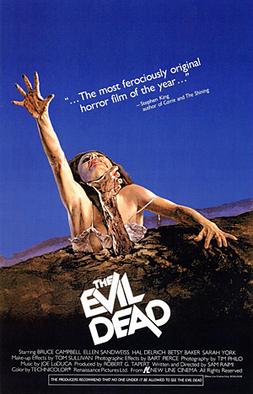 What with Ash vs. Evil Dead trouncing the television world, a review of the film that started it all is in order…
 And so it was that, upon absolving the world of its sins with his debut feature film Citizen Kane and then tempting the world again with sin for his second feature, The Magnificent Ambersons, Orson Welles decided to sin a little himself for his third and fourth feature films, The Stranger and The Lady from Shanghai. Admittedly, “decided” is not the whole story; Welles, if left to his own devices, likely would have continued evaporating cinema into its intangible elements and reconfiguring it as he saw fit, but the world had other plans. Hollywood had not taken to his second feature, and they were not about to let Welles go off the deep end of his own Frankensteinian ambition for a third time. He was, for the first time in his life, going to know the iron cage of restraint. He was going to play ball with the studios. To commit the sin of cinematic hackwork.
  The Long Take