
 It ought not be a surprise that the greatest cinematic study of American iconography, both tangible and nebulous, was unearthed by a German. That film is not Kings of the Road, a sort of slantwise proving ground for greater things to come. It was Paris, Texas, a later film by Wim Wenders and a film whose name evokes the sentimental but bristling irony of a slice of Europe in America. Wenders was that slice, always infatuated with American cinematic styles and moods but trapped in the mortal coil of separation from his ideological homeland, with an unforgiving body of water blocking his way to the land that his heart so clearly desired. Continue reading
Un-Cannes-y Valley: Kings of the Road
Leave a reply
 You don’t feel the seasons in many movies. You don’t feel the grip of the seasons on the humans that would threaten the natural locales that beckon those seasons. You don’t feel the weight of temporal weather and the last forbidding gasp of a season’s tectonic force before it fades away having unleashed the heftiest dying breath it could fathom. You do not feel winter, especially. Frequently, the shorthand for the most temperamental of seasons is a lot of pale white, but we seldom see the nebulous majesty and the tactile dampness of a winter that vacillates between elegant and cruel, often both in the same moment.
  I have written before that, more than any other cinematic movement, the French New Wave was a line in the sand. If so, Jean Esutache’s The Mother and the Whore is very likely the only film ever to divide up the line, or to redraw it. Not only that, but it draws on the face of the New Wave mythology by casting the mask most commonly associated with the movement – Jean-Pierre L
 Due to ease of access, I’ll be covering 1974 and 1975 before 1973.
 Due to ease of access, I’ll be covering 1974 and 1975 before 1973.
  Solaris is many things, but it is most of all the greatest answer film in all of cinematic history. By 1968, Andrei Tarkovsky had already earned the cinema’s eternal respect and humility by debuting as a major world director with the greatest film ever released about the nature of spirituality as it exists in relation to humanity, as it is felt in the senses. He clearly saw the light in Andrei Rublev, but it asked him not to falter or recede, but to continue to preach his gospel. Eying Stanley Kubrick’s eternally cryptic, disquieting, rigidly and pointedly mechanical work of genius, 2001: A Space Odyssey, Tarkovsky plainly grasped the film as a battle cry, as I certainly am not the first to notice. It was Western, for one, and scripturally infested in machines and production, and Tarkovsky was so fundamentally a bleeding-heart humanist that even the early Soviet focus on labor and metal had no use for him, let alone a Western focus on materialism. With 2001 shaking its head at humanity’s ambition and positing a certain greater humanity found in space we could never hope to understand or know, Tarkovsky no doubt refuted the ghostly specter and vast, echoing void of inhuman spaces in Kubrick’s film. Tarkovsky, essentially, felt a calling to bring out the guiding light for humanity once again.
  Luchino Visconti sort of had it all, huh? A chameleon by trade, he spent a few decades hop-scotching from proto-Nouvelle Vague Italian Neo-Realism (Rocco and his Brothers) to ghostly melodramas (Senso) to gravid poetic epics with long takes like nitroglycerin by way of molasses (The Leopard) to out and out scorching the Earth with Molotov cocktails of Grand Guignol (The Damned). But his final masterwork was not a picture of succulent opera or intentional, declamatory fire or ice. It was simply a story of an elderly man, played by Dirk Bogard with melancholy sangfroid and still emptiness battling with impenetrable longing in his eyes, and the boy he comes to love while on vacation in Venice. It is an almost wordless work that consists almost exclusively of that man walking around and that boy walking around, and the two sometimes crossing paths with nary a word spoken between them. It is not necessarily Visconti’s best film, but it is his most misread, and possibly for the same reason, his most human.
  And another Midnight Screening, because I had it prepared this week anyway, and because it celebrates the 25th anniversary of a personal favorite.
  It is with a heavy heart that I post this Midnight Screening on the occasion of horror maestro and professional boogeyman Wes Craven’s untimely demise. But what better way to honor his legacy than with a review of his best film?
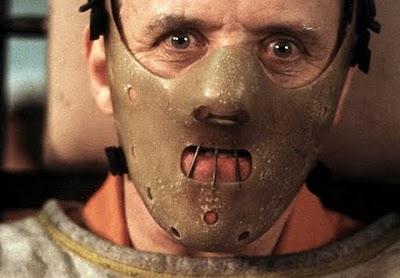 What with all the hullabaloo around the televised Hannibal struggling to survive, let us turn our attention to the grand opus of the character and, with all apologies to Michael Mann’s Manhunter, the primary cause of the character’s continued social relevance today.
 The Long Take