
 Deeply, unremittingly accepting John Huston’s blithely woozy, boozed-out vibe in full flourish, the strung-out, rampaging The Night of the Iguana is probably a little farcical in its over-heatedness. But then, this is Tennessee Williams. At least we’re in the presence of a full-throated, deviant, near-hallucinogenic dive into haughty, drunken melodrama, much more synonymous with the post-Faulkner Southern-modernist Williams spirit than most other Williams adaptations, usually quasi-heated chamber pieces vaguely tied to false-naturalism. In comparison, Iguana is unapologetic and viciously lacking in timidity, rejecting the half-hearted naturalistic ticks of most Williams adaptations for a merry expression of demented, licentious, sinful goodwill. Unlike, say, the good but overrated A Streetcar Named Desire, where the Method acting bug (as it often did) turned performance into a calculated private experiment rather than a vocally external art, The Night of the Iguana isn’t afraid to be to-the-rafters cinema. Baldly, even oppressively cinematic, it treats the brambles of melodrama as a wellspring of possibility to wrap itself in rather than as a shopworn, past-its-prime memory of Old Hollywood to skirt around. Continue reading
John Huston: The Night of the Iguana
Leave a reply
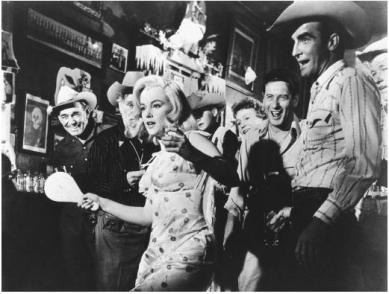 A little upstart four-part series of reviews on less-remembered John Huston films.
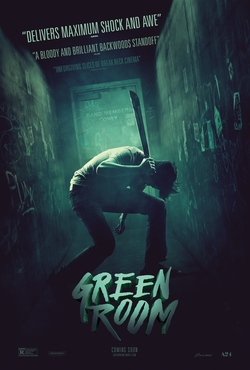 Belting out the Dead Kennedys’ “Nazi Punks F Off” in a neo-Nazi club without missing a beat, Jeremy Saulnier’s Green Room cuts through backwoods molasses malevolence with anarchic glee. Following in the spirit of Saulnier’s similarly titled 2014 thriller Blue Ruin, the definitive ethos of Green Room is low-hanging menace interrupting a scruffy, scrappy semi-comedy with violence that is even shaggier. Genre interrupted by genre is perhaps a Saulnier trope now, but it’s not as contorted and overburdening as that might suggest. Instead, the tone of the film is one of doodling in the margins, adopting the underwire of a nasty-minded rural grotto and sketching circles of wonderfully quotidian detail and character within the mode.
 With The Little Prince on Netflix these days and Kubo and the Two Strings out soon enough, stop motion is making a comeback. You know what that means.
 With The Little Prince on Netflix these days and Kubo and the Two Strings out soon enough, stop motion is making a comeback. You know what that means.
 Limned with atomic-age zest and riddled with nervous rays of icy energy, Night and the City is singular in director Jules Dassin’s oeuvre, not to mention a kind of apotheosis of the noir form, in its unmitigated diagnosis of human society as a rogues’ gallery and a murderers’ row. Scouring the self-mutilated streets of London with a spectral sense of allusion and spare poetry that stimulates a positively magnetic charge, it doesn’t take any mental gymnastics to discover how Dassin’s personal turmoil around the time of filming Night and the City inscribes itself in the singed chiaroscuro and the barbed, irregular editing mechanics of Night and City, shaking the frame into submission. This English wild cat of a film is the platonic ideal of its genre’s unremitting reconnaissance of urban scrawl, a vision of a world useful primarily, even exclusively, for nighttime, even night-terror, skulking and nothing more.
 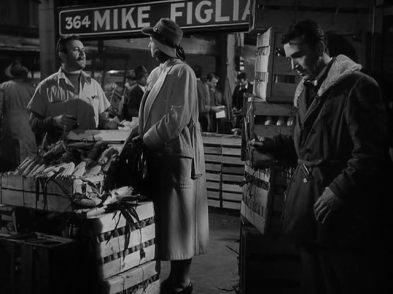 More or less, “film noir” doesn’t immediately conjure images of the fruit markets and roadside truckers adorning Thieves’ Highway, but any cognitive dissonance about the disconnect is allayed almost immediately in Jules Dassin’s wonderfully rotted-out picture, his final American film before an intercontinental exodus prompted by the dastardly House Un-American Activities Committee. Dassin’s communist sympathies inscribe themselves elegantly in the noir world where capitalist rot reigns supreme and disillusionment is the only, albeit temporary, salve against the Western lie of individual morality and pulling oneself up by one’s bootstraps. In the noir world, one person’s success is exclusively an agitated avenue for unsettling the possibilities of other humans for whom hope is an albatross and the American Dream is little more than a poisoned apple.
 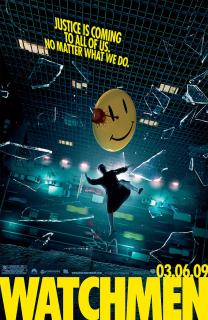 Bad guys equal bad time in a DC comics team-up. This Progenitors practically writes itself.
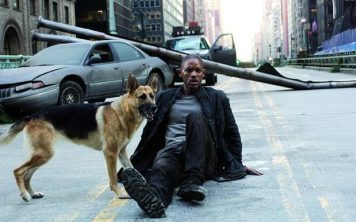 Remember when Will Smith’s name in the center/top/left/whatever of your poster was enough to guarantee a hit? 2007 sure does.
 Perhaps inevitably, The Conjuring 2 can’t exert the primal, pared potency of its immediate predecessor, although it certainly tries to: James Wan’s sequel to his original film is blissfully insular, wonderfully happy to simply exist without the burden of a franchise on its back. In practice, this eases the transition to the pulpy genre material, the bread and butter of director Wan’s craft, with the film resisting the urge to force itself through the fire-trial of self-legitimization through psychoanalytic babble or metaphoric shenanigans. It’s another “from the files of” ghostly haunted house yarn, plain and simple, one that doesn’t unpack box after box of added meaning as most films do when they are overconfident in their skills and try to take on the world. Although it doesn’t quite justify Wan’s A-list status and meteoric rise to artistic credibility after striking out last decade with Saw and Dead Silence, The Conjuring 2 is primarily pleased to serve its principal interests of satisfyingly lean, mean flair and virtuosity.
  The Long Take