
Sofia Coppola’s films are all slices of a larger whole, somewhat non-decodable without contextualizing them through their webs of harmony and counterpoint with her other films. Their best collective feature is that they all feel incomplete on their own, as though they are unable to get to the point or locate their center. Perhaps this is why no one can agree on a stable canonical ranking of films (which is for the best). With Lost in Translation having been somewhat dethroned from its “best of the aughts” high standing, her filmography is all the more embattled, liminal, unformed, and unable to coalesce today, and thus more exciting to ponder. With the release of her new film, The Beguiled, adopting a tone of diametric opposition to Don Siegel’s original Southern Gothic female-hysteria 1971 picture, let us take a retrospective look at the biggest “name” female director of the 21st century. The Beguiled maintains Coppola’s signature quality as a film that seems to erode, even vanish, before our eyes, as though thrumming with dazzling fits of impermanence, a sense very much alive in each of the films below. I won’t rank her features, largely due to my expectation that I’d change the ranking tomorrow. The benefits of a fascinatingly frustrating, liquid filmography keep on giving.
 The Virgin Suicides
Thus begins Coppola’s now 19-year-old comingling of languorous directorial aura and her perennial interest in social displacement. Although it doesn’t do anything Coppola wouldn’t better with her second film, her debut The Virgin Suicides already introduces that wandering, ungrounded milieu Coppola has become so famous for, her films floating with ghostlike half-presence above the ground. Although Edward Lachman’s kaleidoscopic cinematography half-steps toward a mental world of internal signifiers, Coppola rebukes the impulse to crack open her characters’ minds. Her characters are not only un-placeable in the world but essentially unassured in their relationship to the camera. But that’s because Coppola’s icy, displaced frigidity never presumes to tear open her characters’ brains, never disposes itself to the aesthetic hubris of understanding its subjects completely. The whole film is encased in a shroud, a deathly sense of uncertainty. Continue reading
 New Zealand’s Taiki Waititi (soon to fulfill the all-too-common-place indie director trajectory by helming the third Thor film) continues to outfox basically every comedy director in the game just a year after his What We Do in the Shadows took the cinematic underworld by storm. Hunt for the Wilderpeople isn’t as gut-busting nor as defiantly misanthropic as the earlier film, but it’s the better film, owing largely to its more fungible tonality and willingness to introduce a sense of outsider melancholica to Shadows’ aloof sensibility of quotidian insanity. Waititi doesn’t hunt down every joke opportunity with extreme prejudice. Instead, he creates a fundamentally depressed mood piece and then proceeds to nick and graze the attitude with comic filigrees that hurt like paper-cuts: small, but all so piercing, and stubbornly refusing to heal up as the wounds fester and grow over time. Hunt for the Wilderpeople is not unlike something Bergman or Malick might direct if they got really high during filming.
 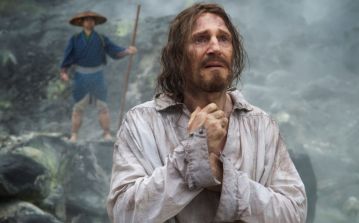 (Edit: While I do not love this movie, it is lodged in my mind far deeper than many passing, more immediately pleasurable 8/10’s. Silence does not go down smoothly, but it lingers and stings, and I’m inclined, if not to disregard this review, at least to accentuate the film’s strengths and to suggest that its weaknesses are part and parcel with Scorsese’s lone film of the past 15 years to genuinely explore the darkest recesses of this man’s mind as well as the sublime, intimate heights of his vision rather than simply the length of his films or the girth of their visuals)
 A decade out of play, everyone’s favorite one-man-circus of a filmmaker Mel Gibson remains a wily, spirited, and altogether untactful filmmaker bearing a murderous sensibility for lacquering his traditionalist moralities (not quite the same as American conservative moralities, mind you) in his almost unblinkingly erotic fetish for violence. Which is all well and good, and Hacksaw Ridge comes alive in fits and starts. But Gibson’s return from director jail has a perverse moral paradox at its core, and Gibson – probably assuming this is his only chance to return to the A-list – handles the material too cleanly, too respectably, and with too much pristine professionalism to unpack the eccentricities and thorns of the subject matter. There’s a philosophical battle at play deep down, but the old fashioned A-picture tone, while largely effective as a from-the-hip war picture, lacks the jagged edges and exploratory digressions to submerge into the knottier nooks and crannies of the film’s situation just begging to be torn into.
  A pall, an impenetrable haze of dejection, suffuses both Kenneth Lonergan’s Manchester-by-the-Sea and its main character Lee Chandler (Casey Affleck), a Boston-based apartment superintendent called back to his hometown of Manchester-by-the-Sea (about 30 minutes north of Boston) for the death of his brother. Set in the dead of winter, Lee’s trip is extended because the brother (Joe, played by Kyle Chandler) has a son (Patrick, played by Lucas Hedges) who needs temporary looking after and because the more-snow-stricken-than-snow-blanketed New England soil isn’t soft enough for a grave until Spring. Lee is a quiet, sensitive soul, but we quickly learn his attitude and personality are the casualties of his displaced worldview and clinical depression stemming from an initially unspoken past tragedy involving his ex-wife Randi (Michelle Williams).
 Released as Netflix’s first blockbuster – a fact that bears some weight for scholars of the industry of cinema but less for the connoisseurs of films themselves – Okja is significantly more enticing as the new film from South Korean cinemagician Bong Joon-ho, marking his second Korean-American co-language film after 2014’s Snowpiercer. A leftist parable – although less brazenly radical than Snowpiercer – this lightly Miyazaki-esque eco-critique of American capitalistic practices is extremely broad, but like Snowpiercer, it treats its populist-front, excessive sense of caricature as a boon to its political ambitions rather than a restriction on them. Both of these films lack anything resembling the delectably sinuous pitch-black brio of Joon-ho’s two best films, Mother and Memories of Murder, but they do not erase his expert knack for Warner Bros-esque absurdism, nor do they stamp out the truest quality of all his films: the intoxicating commotion of conflicting energies.
  Baby Driver makes a palpable and committed bid to attain the action sublime. It is a work of testosterone-auteurism that falls short of the sheer aesthetic bravado and emancipatory charge of Mad Max: Fury Road but at least matches The Raid in the top tier of ‘10s action cinema. Its style spreads like a pandemic, sidewinding into the realm of avant-pop music video, turbo-charged but with flickers of whimsy where restive full-throttle motion is contraposed by plateaus of stillness and silence that reveal writer-director-mad-scientist Edgar Wright as a true summoner of the cinema. He conjures the long-dead spirits of style-as-substance ‘70s car thrillers that matched pedal-to-the-medal with moments of melancholy and pensive reflection about the nature of a life lived watching your rear-view-mirror, hurtling at a hundred miles an hour but never truly moving forward.
  A toxic swirl of competing and conflicting energies and moods, The Bad Batch relishes both a freakish, convulsing elan and a border-town’s sense of dispossessed, out-of-the-way melancholy. It definitely carries a streak of hot-tempered punk aggression and rambunctiousness. But the energy is tempered with the ethereal disposition of punk’s younger, more reptilian late-‘80s-alt cousin, Alt-Goth, which was the prevailing ethos of Amirpour’s first film, A Girl Walks Home Alone at Night, and which carries its own attitude of vaguely stoned, quasi-psychedelic, chilled-down depression. The Bad Batch has a feminist spirit – more riot grrl than Gloria Steinem – but also a lean, mean musculature, parts of which Sam Fuller or Anthony Mann might have directed. It defies reasonable meaning at almost all turns, but its dyspeptic drone is palpable and feels thematically united in its exploration of the pushed around, both the people and the films of the furthest corners of the world where rules are guidelines and communities are tenuous and volatile. It is flawed, deeply so, and, at times, its poetic brand of outsider melancholy can become less of a mood proper and more of an affectation or, at worst, a fixation Amirpour just can’t quit. But the film’s iconoclastic zest is undeniable.
  Jordan Peele’s Get Out is most appealing because it busts through the shackles of hopelessly milquetoast race-themed Oscarbait persistent to this day, and not only the old standbys like Guess Who’s Coming to Dinner?. Get Out also ousts and decentralizes more modern fare like Hidden Figures for their contentedness to coast on shuffling black historical figures into the relatively unchanged narrative structure gifted to white historical figures for decades: down-and-outs persist, struggle, and triumph. By thrusting African-Americans into this all-too-American success narrative thrumming with national mythologies of potency and virile capability, Hollywood only allows this agency-narrative to continue unabated as the dominant acceptable lexicon for black characters in film. If you are black and not a scathingly regressive stereotype in a film, essentially, you better be a success story, operationalized to validate America’s go-to narrative of assimilating all races into its fetishization of “opportunity” as an opiate keeping discussions of real equality at bay.
  The Long Take