 A note on “worst”: As mentioned before, this series is an attempt to dissect some of the alleged “worst” movies of all time, and primarily not a hope to actually find them. It is ridiculous and arguably mean-spirited to refer to any of M. Night’s films as among the worst ever made. They are a special sort of badness, and he is now four films deep into a wonderful, scorching form of incompetence, but it is wrong-headed to claim that “the worst movies ever made” all happen to be well-budgeted Hollywood films from the past ten years from a major director and with major stars.
What these films are, instead, are the most hurtful films in their badness, being that they corralled budgets and talent and screening time in major theaters and producers and such. In other words, M. Night Shyamalan’s films, like say some of the perpetual targets on lists of “worst” films ever, say Batman and Robin or Battlefield Earth, are notable not because of being the most artistically inept films ever made (although Battlefield Earth makes a great argument for itself on this front). They are notable because they are among the most artistically inept films ever made to ride notable budgets and be marketed in major motion picture theaters. It is a small but important distinction, and it allows us to move away from claims of “worst” and just get to the meat of these awful despicable films without having to back-up claims that they are legitimately artistically inferior to say, a horror film your dad made with his friends and a curling iron in 1973 that got screened once by a theater-runner, presumably via misdirection or trickery or losing a bet in a back alley. Continue reading →

 First things first when discussing Battlefield Earth: Scientology is a red herring. Criticizing the film for its association with the religion is petty and largely recalcitrant to sensible criticism. In addition, the connection to Scientology is also largely inessential, and in this respect, Battlefield Earth is utilitarian. It gives the reviewer caverns and caravans of badness to discuss, and it spends its entire existence excavating new tombs of incompetence to prop up inadequately in its museum of all that is and has been bad about cinema in the century of its existence. Next to the crimes that Battlefield Earth performs on the world, Scientology is ephemeral. Continue reading
  After Earth is the sort of bad movie anyone could have made, which is disappointing after the release of three tried and true “M. Night Shyamalan”-encrusted bad movies of the sort that only his holiness could make. Or Kirk Cameron, maybe. But the point is there was a certain personal touch of badness on display, and following that tripartite masterpiece of anti-filmmaking, After Earth is just bad movie leftovers.
  M. Night Shyamalan is the gift that keeps on giving. Just when you thought he’d hit his true low, and just when you thought less creative control over his material would save the day, he pulls a fast one and comes up with something even worse. As it turns out, Shyamalan can vividly ruin a known property about as well as he can dream up mindless drivel of his own creation.
 And then he made The Happening. Lady in the Water was a collage of self-important grand movie statements about the state of the world doctored up by a man who had not one clue what the world was, let alone how to convey that on the screen. What could be a better counter to the big-boy statements of a preachy message film than an elementally chilly exercise in pure nihilism and horror? With the idea for The Happening, Shyamalan seemed to be at least listening and returning back to the muck and earthen horror of what he does best (indeed, atmospheric horror is the only thing he ever did well). Ideally, The Happening could have been an exercise in humorless style and pure cinematic horror, entirely visual and lacking in any of the pretentious import of Shyamalan at his worst.
 Many of the films I’ve reviewed for this month’s descent into the darker regions of cinema at least welcome the benefit of general acceptance. They are, if horrible, known quantities in their horror and thus well-equipped to inform the viewer of their badness beforehand. Put simply, you know what you are getting into. Yet, deep down, any traversing adventurer of the medium secretly knows that the movies that are regularly trumpeted for their badness cannot truly take the cake, that the real depths of incompetence are almost certainly unknown to anyone but the form’s most cherished devotees. When you get down into it, we know that the films that are generally well-known to be the “worst movies ever” benefit from a certain functional quality that makes their badness understandable to the general public. It makes them actual movies, in other words, capable of being judged in relation to other movies and considered worse.
  In the frantic next-big-thing post-haste grab-bag of follow-the-leader early ’80s pop cinema, the successes of Star Wars and, to a lesser extent, more barbaric works like Conan the Barbarian, took the cinematic landscape for a ride and everyone was struggling mightily to stay on board. The general thrust of the plan was “make it like the 1950s would have, but add in just a bit more violence for the kiddies”, and with this, we can single out a few filmic years caught searching for cover under the perpetual hail of hyper-masculinized, macho bro-forces that mistook the likes Rambo: First Blood for a Reaganistic hagiography of big dudes with bigger guns. Littered deep under the fallout, after you move away the rubble for a few hours, one of the most culpably misguided, and among the earliest of these films, emerges: Megaforce, perhaps the most perfectly captured distillation of the year 1982 anyone was ever capable of dreaming up.
 To truly review a film, you should go in accepting its basic existence. Specifically, you should debate with the concept, make peace with it, and develop your critical faculties to move beyond criticisms of a film’s idea and toward criticism of the execution to fulfill that idea. You should go in accepting everything you could know about the movie simply by seeing the trailer or the poster, or else your criticism should be taken with a most sodium-infused grain of salt.
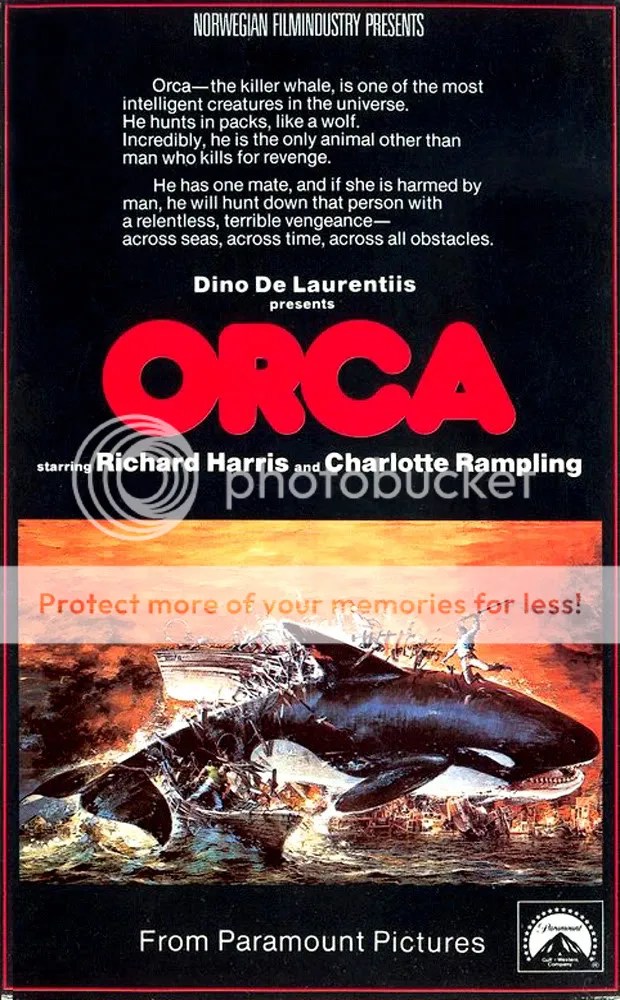 Nature gone amok was not a new fixation in film by 1977; it was merely, and suddenly, a now respectable one after the release of Jaws. From the heyday of the early 1970s, with infamous concoctions such as Frogs and the dumbfounding, absolutely beguiling Night of the Lepus, environmentalism and scientific experimentation on animals were on the mind, and like any good red blooded progressive concerned about their country without forgetting its make-a-buck capitalist origins as a nation, every huckster in the business wanted in on the trend.
 Calling a film one of the“worst films’ ever is a loaded statement, usually because it comes from the mouth of someone who most assuredly has not seen the large majority of the library in the gods’ hall of bad cinema. In some cases though, or perhaps only this one case, the descriptor of “worst film” is a misnomer for a very different reason. When you have a puzzle piece like Hercules in New York, you cannot merely append descriptors to the word “film” to describe its unholiness, for that itself relies on the false given that the descriptor of “film” applies to everything that is released under the moniker. Case in point, Arnold Schwarzenegger running around New York, flexing muscles and fighting bears, and a work that almost exists outside of descriptors entirely. Certainly, we should be cautious to use the word “film” to articulate its unaccountable, freakish milieu, and we should be even more cautious of implying that anyone “worked” toward it at all.
  The Long Take