Category Archives: Uncategorized

Midnight Screenings: The Dead Zone

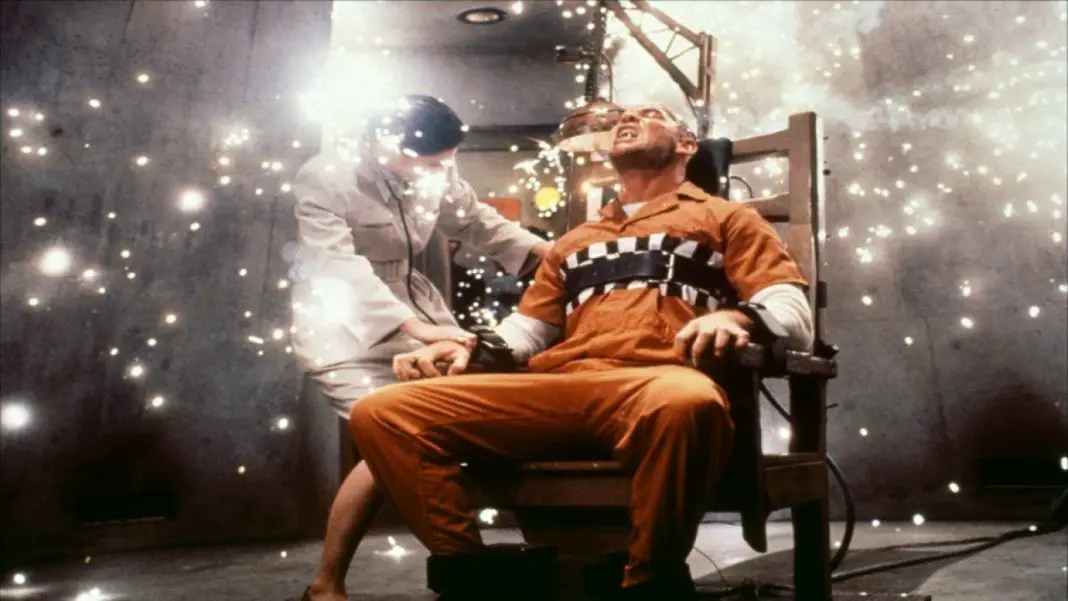
Compared to director David Cronenberg’s Videodrome from the same year (or any film he had previously made), The Dead Zone initially feels like a populist slab of straightforward, uncerebral, hip-fired entertainment, an attempt to make his name by getting on the Stephen King bandwagon. Unsurprisingly, then, Dead Zone feels ever so slightly alienated, as though itcan’t quite commit to its themes, can’t fully enter into its own world and explore it, as though it always exists at an imaginative remove from its content compared to Cronenberg’s earlier works, so obviously passion projects he was fully invested in. Something about the work seems to exist at a remove from its narrative, as though it is hovering slightly above or looking at it through a tear in the fabric of the universe it can see through but cannot quite invest itself in.

Yet, this is also a perversely well fit for the film’s themes, adapting King’s book about a Maine schoolteacher who awakes from a five-year coma with a form of second-sight, suddenly able to see beyond his present world into the future, and who has to find his way back to a present that has seemingly abandoned him and which he can no longer cope with. The Dead Zone is all about alienation, about falling below society’s threshold for engagement and perception, about fumbling, half-hearted attempts to rhyme with the rhythms of a society that you feel you are ever-so-slightly askew from. Much like the film’s protagonist Johnny, there is a clear sense that Cronenberg’s film feels, sees, and experiences in ways that are more receptive to strangeness than those around him will allow themselves to, and the mis-match between theme and director paradoxically becomes a match. The Dead Zone’s odd gambles and lurching half-steps come to suggest the difficulties of marrying personal sensibilities with the flow of everyday social life clearly resonate with Cronenberg’s own attempt to make a Hollywood product, to engage in the kind of personal self-sabotage necessary to produce a film that was almost certainly lorded over by producers. More philosophically, The Dead Zone seems to be reaching for ideas that it cannot express in clear terms, glimpsing fragments of a world that it does not have complete access to.

Continue reading

Film Favorites: Uptight

With Judas and the Black Messiah one year in the rearview mirror, I decided to look back on a much more full-throated critique of American modernity, a vicious screed and an acidic reminder of how far we haven’t come.

Uptight wears its frustration right on its sleeve, palpitating and sweating and threatening to tear apart the screen. Indeed, it might have been torn apart before release. Focusing on government attempts to internally dismantle black radical organizations, seeding them with informants, following the assassination of Martin Luther King Jr. on April 4, 1968, the film crew itself included at least one unknown FBI informant in a case of life imitating art imitating life. Uptight thus justified its existence in the act of its very production. For African American writer-actors Ruby Dee and Julian Mayfield and white writer-director Jules Dassin, the film resonated with their own experiences as leftist organizers, especially Dee’s work with the SCLC and CORE. Mayfield and Dassin’s own respective exiles to France (for Dassin’s membership in the Communist Party) and the recently liberated Ghana (for Mayfield’s work with NAACP local leader Robert F. Williams, who famously resisted the NAACP’s non-violent philosophy and provided a crucial link between liberal integrationism and Black Power) also haunt the film, potentializing it with awareness of how much is at stake in resisting the status quo. Uptight was the product of organic intellectuals who invested their personal energy into a film that kindles and threatens to overflow. It feels electric, like it could explode at any minute, but also weary and anxious, encroaching on exhaustion, like it knows that it might not be able to sustain itself, looking both over its shoulder and into a foggy future, worried about what comes in the hazy oncoming 1970s.

Set in Cleveland, Ohio, Uptight nonetheless begins with Dassin’s own guerilla-shot footage at Ebenezer Baptist Church in Atlanta following the murder of Martin Luther King Jr. As diegetic images ostensibly placing us in Atlanta reveal groups of Cleveland radicals observing the funeral on television, Uptight immediately foregrounds viewing and perception as key fulcrums of collective engagement with a national consciousness. Concerning increasing friction in black organizing after King’s assassination, Uptight nonetheless makes clear the shared bonds of frustration that resonate with every character on-screen. The narrative through-line concerns Tank (Julian Mayfield), asked by his brother Johnny (Max Julien), leader of a local organization chapter (implicitly a chapter of the Black Panthers but not named as such), to accompany them on a night raid to steal guns. Shook by the death of King, he initially refuses. Although he gestures, perhaps disingenuously, toward joining at the last minute, Johnny doesn’t hear, ultimately killing a guard in the raid. The rest of the film concerns the police’s attempts, largely through black informer Clarence (Roscoe Lee Browne), to convince Tank to inform on Johnny, and, once Tank gives Johnny up, the organization’s attempts to track him down and resolve their problem.

Based on John Ford and Dudley Nichols’ 1935 classic The Informer, itself adapted from Liam O’Flaherty’s novel about an IRA member who defected, Uptight retains the same narrative spine but alters both the thematic focus and the style. Ford’s film is an early American gloss on German Expressionism and a noir progenitor, resonating with Depression-era works like You Only Live Once in depicting social renegades lost in a quagmire of confusion and uncertainty. Dassin inherited those sensibilities in his early classic 1948 film The Naked City, which thoughtfully combined neorealist and film noir styles and, in doing so, suggested that shambolic non-structured realism and shadowy expressionism were, despite being ostensible antitheses, both expressions of post-war malaise and rampant social oppression. Uptight finds an analog for these anxieties in Dassin’s grimy hyperbole for Ford’s astonishingly misty chiaroscuro. Formally, Uptight most closely resonates with Dassin’s astonishing London-set Night and the City, a similar story about a fumbling, sweaty mass of nerves being pulverized by the film’s very ontology, throwing him down circles of stairs and spinning in circles around his head. Dassin turns the dial way back to these earlier days in Uptight, before he spent much of the ‘60s sprucing up some truly phenomenal but more collected works like the glistening Topkapi, films that were generally more elegant and anointed than Dassin’s hungrier, earlier works. Uptight, conversely, feels like a cinematic raw nerve, a clammy, live-wire film, flexing wiry muscles in nearly every scene, all the more brazenly direct in light of the fifty-three-years-later Judas and the Black Messiah, a fine film about similar themes that is not as politically astute and not nearly as formally accomplished or thornily textured.

At times, Uptight feels like it’s at its own throat, being torn apart by competing impulses. Perspiring and grubby, a New Hollywood hot-house of a film rejecting the niceties of Classical Hollywood, it is also nonetheless very much in the tradition of mid-century theater of morals. Drawing from Dee’s and Mayfield’s own theatrical backgrounds, everything is stylized and tilted toward a layer of heightened abstraction, from the stage-like streets to the somewhat manicured acting. Yet the contrast produces sparks, threading the needle between characters as people and figures as ideas, staged with a heavy, just-barely-invisible Proscenium that emphasizes the performativity of radicalism, the way in which being seen and not being seen can inform the fate of any situation, or, as the Panthers themselves put it, the “shadow” of the gun, the threat of violence and the pressured, organized capacity to resist, means as much as the gun itself. This tension, between grimy workaday reality and mannered unreality, lends Uptight an almost dialectical tension, the film pitting internal and external selves, realities and desires, off of each other.

Of course, the film’s focus on Tank, a wayward, excommunicated soul who sells out a community, has enough history in U.S. cinema, with the likes of On the Waterfront and High Noon obviously dueling it out with subliminal HUAC themes, conduits for their creators’ frustrations with telling or being told on. But Uptight poses difficult questions that twist the knot of depoliticized individualism that many of those films rely on. Rather than a nearly metaphysical question about individual purity and goodness, Uptight is thickly enmeshed in the social status quo, beginning with black Clevelanders mourning Dr. King’s death in the streets and several film characters reacting in a slurry of mixed emotions. Self-aware about the layers of interrelation that inform the radical activity, Uptight threads multiple intermeshing levels of conspiratorial activity and perception around Mayfield’s character, his long night of the soul resonating with multiple layers of social reality as the film pushes us to empathize with multiple perspectives without sympathizing with Tank’s tragic willingness to sell out his comrades.

Many of Dassin’s classic mid-century noirs explore the lonely individual just barely eeking by in the maelstrom of a modernity where city spaces are increasingly populated but all the more anonymous, where every site is a potential crowd for disguising oneself or being discovered, where new forms of collectivity are generated that nonetheless lack conventional or a priori group identities or similarities around which to congeal themselves. Uptight latches onto this implicit theme in many noirs, more often tackled in classic works like The Killing by focusing on teams gathered together to commit crimes, and explores what it means for politicization and organized revolt. Communities seem always in motion between connecting and diffusing, every presence soon a potential absence just as much as every absence holds the space for a potential presence. Uptight never loses this friction, but it does catalyze sparks. Johnny’s death is staged as a social theater affecting the entire neighborhoods, metaphorically (and literally) tilting the film off its axis, a more-than-360-degree camera turn unraveling the film’s tightly coiled energy as Tank’s collapsing star is subsumed into a metaphorical carnivalesque. Dassin’s work as a crime and noir director turns the film in on itself, the city becoming a distorted and confused space that breaks, mid-film, into a fun-house mirror. Slightly later, Tank visits his old job at a steel mill and has a nearly incandescent mental communion with it, industry figured in its mid-century guise as a sublime and world-altering radiant power. At the film’s end, Tank’s fate recalls another noir classic, 1948’s White Heat, mentally prefiguring the ‘70s and ‘80s as a desperate tumble. The same sublime power Tank wished to return to mid-film now drowns him out. Coal and soot and industrial malaise blanket the screen in a toxic fugue of post-industrial confusion, a dark harbinger of neoliberal notions of unregulated free-market capitalism and self-help soon to displace revolutionary urges that, as Uptight reminds us, were less failed than consciously corrupted and distorted by the powers that be.

Score: 10/10

Midnight Screenings: Predator

John McTiernan’s Predator is a real bait-and-switch: a colonialist venture where the bottom falls out and seven masculine archetypes are stranded in a territory they know much less about than they assumed. As a critique of American chauvinism and pretensions of access and visual mastery, it’s a frankly startling inversion of American blockbuster cinema, action tightening into suspense before curdling into something approaching horror in the ‘80s slasher movie mold. A post-Vietnam parable not fundamentally different from Walter Hill’s 1981 film Southern Comfort seven years before, it’s a too-tight tourniquet of a film, sopping up the bloodlust of an audience too excited to notice they’re losing circulation in their limbs.

Continue reading

Midnight Screenings: Cape Fear (1991)

When Cape Fear’s antagonist Max Cady (Robert De Niro) is released from prison early in the film, he strides toward the screen in a gesture almost as terrifying as David Lynch’s famous, signal defilement of the audience’s body the same year in Twin Peaks, when the demonic Bob gets so close to us that he nearly assimilates us into his body. It feels like he’s about to leave the diegesis, to enter our world, to have his way with the audience. He presages a film that goes for the throat: split diopter shots, reverse images, cameras tilting on their axes like several screws were loose, film negatives enervated of color, creeping, lecherous dolly shots. This stylistically omnivorous film is cinema-addicted and cinema-addled in equal measure. Martin Scorsese’s ode to the days when Hollywood B-pictures genuinely knew what “B” meant (rather than striving for domesticated A-picture prestige and getting a C like so many films today), Cape Fear is, perhaps even more than his 1985 film After Hours (a quite literal attempt to convert his frustration and rage into a plaything), the result of Scorsese letting his hair down. This is a clammy, sweaty, anxious film, nearly panting and falling over with its own energy, and it’s pretty wonderful to boot.

Another early moment suggests that our intoxication with a film screen that is now devouring us whole is precisely the point. The screenplay metaphorically lards up the value of style with an early conversation about the balance of movement and stability in an airline advertisement, and Scorsese seems to be putting that balance to the test with every shot, forcing us to walk the ricketiest rope bridge he could find. There’s so much work being done to fold in and massage out motifs of water, cinema, and smoke, figuring each as obfuscating and revealing, mutable yet omnipresent, pliable and amorphous yet very much present, that the film almost loses itself to playful gesturing, never precisely connecting its dots. But the confidence of the film keeps us working double-time just to stay afloat, daring itself forward unceasingly. Rather than crossing all the T’s and dotting the I’s, it leaves them unfinished and pointy and tries to prick us with them. In one sense, Cape Fear is “about” cinema in much the same way that Oliver Stone’s same-year JFK vexes and distorts us, invites us into a portrait it then vandalizes. The Bowdens, Sam (Nick Nolte), who withheld evidence years before on Max, and Sam’s wife Leigh (Jessica Lange) and daughter Danielle (Juliette Lewis), are the nominal frustrated figures, but we are really the subjects. Why are we watching, the film asks, and rather than punishing us like so many other mean-spirited works, it pitilessly experiments with us, turning us into both its laboratory variables and its sand-box play-things.

Continue reading

Midnight Screenings: Shocker

With the new Scream out in theaters, I decided to double-up Midnight Screenings this week and pair my exploration of the meta-critical Gremlins 2 (anticipating the new Matrix) with Wes Craven’s Shocker, his most unheralded exploration of media logic, and in many ways a more interesting and fearless work than his original, genre-redefining Scream.

Shocker is, to be clear, quite a bad movie by any reasonable standard. But it feels so perfectly and obviously like the film that writer-director Wes Craven, a philosopher who became a porn director who became a horror film director despite not watching movies growing up, wanted and maybe needed to make to show those bastards cannibalizing his beloved Nightmare on Elm Street franchise in the late ‘80s, that I can’t help but find it a worthwhile experience. If Nightmare explored main-street U.S.A.’s dark underbelly as evocatively in the mid-’80s as any director not named David Lynch did, Shocker clearly wants to interrupt its strange candy-coated offspring, the paranormal slashers of the late ‘80s, less through critique than entropic explosion. Shocker is no more narratively or thematically coherent than any of those films, but it goes far out of its way to make a virtue of its chaotic and inexplicable narrative logic, equal parts dream theater and surrealist televisual channel-flipping, that it’s perversely difficult to turn away from. Recreating the addled meta-logic of changing the TV channel, half asleep at two in the morning, this is supernatural slasher cinema run amok all over your eyeballs, fluid cinema’s revenge on liquid television.

Continue reading

Midnight Screenings: Gremlins 2: The New Batch

A month late here, but with the fourth Matrix film exploring its own existence as product made by Warner Bros., it seemed appropriate to do a midnight screening of the last sequel that attempted to kill the same master.

A key moment always sticks out to me in director Joe Dante’s maddened Gremlins 2: The New Batch. Working in the laboratory of their mega-corporation the Clamp Center, a trio of scientists headed by Christopher Lee (who else?) encounter the titular creatures drinking experimental liquids, products of gene splicing and other incalculable exercises in heterogeneity and cross-fertilization. Watching the creatures transform into unholy concoctions as a result of ingesting improbable fluids (a wonderful opportunity for special effects genius Rick Baker to run wild), Lee’s character laments their efforts to tamper in God’s domain by “splicing” various species together. In the middle of this speech, the film starts to burn. Not the set, not the characters in the film world, but the celluloid itself. In one of the most unexpected Bergman rips ever, the Gremlins take over the projectionist’s booth of the film we are watching, causing the linear progression of celluloid to stutter and stammer, to go a little mad. Reorienting popular cinema’s grammar, the Gremlins tinker and test, prod and provoke, splicing themselves into the film and sending it spiraling outward, running amok, going haywire. The natural rules of filmmaking no longer apply, Dante suggests. For this cinematic mad scientist, cinema is an experimental, liquid fusion of strange currents, impossible tensions held just barely together with comic, frictive energy.

Continue reading

Film Favorites: The Passion of Joan of Arc

Exploring the inexpressible, ineffable qualities of desire pressed tenuously and incompletely but immediately onto the surface of screens that cannot quite accommodate those desires but nonetheless must try to relate to them, Carl Theodor Dreyer’s film remains one of cinema’s great meditations on human communication in all its valences: both achieved and failed, asked and given, demanded and foiled. For the same reasons, it remains one of the great films about the possibilities of the medium, exploring cinema at both its barest essentials and its furthest reaches. What, the film ponders, does it mean for its titular character, nominally the historical figure Joan of Arc, French hero of the Hundred Years’ War during the 15th century, to doubt and feel and desire, to commit against the flow of the world, to sense other flows unacknowledged by the powers that deny her? What does it mean for actress Renée Falconetti to essay a soul-rending performance of a woman she never knew outside of her work to recreate (and thus create) her? And what does it mean for us as viewers to confront the senses essayed in this film, largely unknown but somehow known to us, to wrestle with the very capacity of imagery to explore the possibilities and limits of representation, to represent connection across space and time? What, simply, does it mean to visualize Joan’s desire, which, the film makes clear, is unmaterial, is beyond visual comprehension? What does it mean to know a human from their face? What even is it to be interested in the material on screen?

Continue reading

Film Favorites: The Parallax View

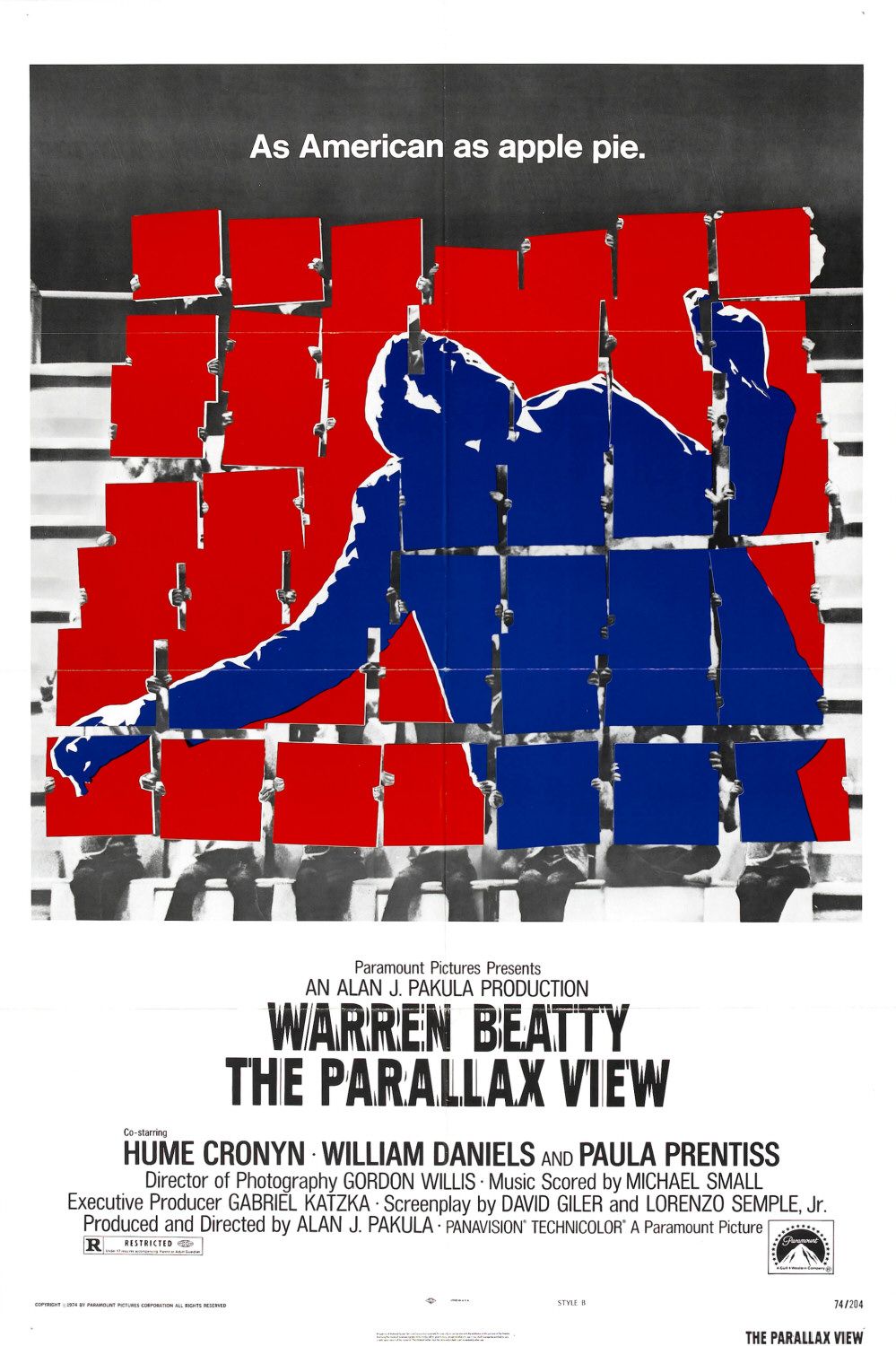
From the nearly decontextualized prologue to the astonishing opening credits, an Altman-esque zoom in to a court finding (echoing the Warren Commission) that freezes in a tableau of American deceitfulness, Alan Pakula’s The Parallax View imbues quotidian happenings with malicious intent. At first it seems merely peerlessly menacing, in the same way concurrent works like All the President’s Men or Chinatown diagnose paranoic ‘70s personalities, but Pakula’s most sinister coup is to render even menace banal, to turn anxiety about specific occurrences into a thoroughly incomplete response to an unfathomable and all-consuming social fabric that seems completely beyond sense-perception and comprehension. Drawing audiences in with the promise of final revelation, the film emerges with something much more discombobulating than a simple bait-and-switch: slowly (and then quickly) fragmenting and shivering apart into abject chaos, rendering the grammar of celluloid both one of society’s greatest witnesses and hopelessly incapable of truly grasping the depths it plunges into.

Continue reading

Midnight Screenings: Christine

I’m promising to publish at least one Midnight Film review every Friday or Saturday this year, starting with two underrated John Carpenter classics, one of which recently celebrated its twentieth anniversary, while the other is nearing forty. Both, though, summon dark energies against idealist vistas, reanimating American folklore to render it monstrous, implying that the nation’s cultural norms and iconography will be its own undoing.

By 1983, tackling a Stephen King adaptation had already become a fertile testing ground for horror auteurs to flex their cinematic muscles and interrogate their idiosyncrasies within ostensible crowd-pleasers and corporate products, to infest cinematic hallowed ground with exploratory personal devils and fixations. A King adaptation was sort of like the old Cahier du Cinema proof about auteur theory, which suggested that a director’s personality, their difference, could be gleamed best when they were most mediated by various corporate interests rather than left to their own devices to construct a film from the ground up.

Continue reading

Midnight Screenings: Ghosts of Mars

I’m promising to publish at least one Midnight Film review every Friday or Saturday this year, starting with two underrated John Carpenter classics, one of which recently celebrated its twentieth anniversary, while the other is nearing forty. Both, though, summon dark energies against idealist vistas, reanimating American folklore to render it monstrous, implying that the nation’s cultural norms and iconography will be its own undoing.

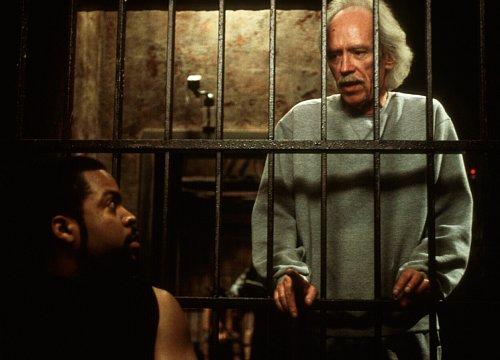
Although it didn’t officially put John Carpenter in director jail, one suspects that everyone involved would just as soon forget 2001’s Ghosts of Mars. It doesn’t even get the respect that similar-era catastrophes like Battlefield Earth and The Room receive, resigning itself to the historical dustbin of “just another bad film.” Perhaps the blame truly lays at Carpenter’s feet: just as his major achievements work in fascinatingly minor keys, so too do his ostensible failures refuse to grant us easy access to their odds and ends, their opaque mysteries and strange digressions. They refuse to go bad in a big, obvious way, preferring workmanlike craftsmanship and subtle twists of the knife. On the surface, Ghosts of Mars is a by-the-numbers failure, an indifferently bad film, rather than an exceptionally bad one.  A self-consciously minorized work, an exploratory termite in an elephant’s world, it is absolutely Carpenter-esque: spare, spartan, economical, but also subtly exploratory and strange, eating away at itself by exploring its nooks and crannies, taking the form of a carpenter building a chair and the termites that are simultaneously devouring it.

Continue reading