

At the beginning of Head, Monkees’ drummer Micky Dolenz runs away from a legion of fans and dives off a bridge into a body of water. If this is too-obviously following in the footsteps of its prankish predecessor, A Hard Day’s Night, where the Beatles suffered a similar crowd-sourced fate, it also blows it to smithereens. Rather than canonizing the ‘60s, Head offers a comeuppance, jumps into the deep end of the next decade, dissolving into an aqueous, collective, diffuse space called the early ‘70s.
Soon enough, the band performs the phenomenal, acid-stained rocker “Circle Sky,” a mission statement of the band’s newly serious attitude toward their music that ultimately unweaves itself in the very act of coming into being. If the song promises progress, a band achieving new heights of self-worth and self-ownership, the lyrics offer a vision of eternal return that culminates in fans rushing the stage only for the band to be crumble as mannequins, material constructs of composite parts, all image and no flesh. Rather than personal authenticity, the film explodes into gleeful mediation, a promise that ostensible freedom only masks new modes of control, that genuine originality is only one more mask. Head marked the band announcing their recovery of their own catalogue as an exercise in self-becoming, and in doing so they paradoxically destroy themselves. We’re off to the race in the opening minutes, in other words, but we’re also lost in an abyss. In the band’s go-for-broke stylistic tour-de-force, they go beyond playful monkeying around and instead monkey wrench the nuts and bolts of the machine that made them.
Continue reading Charlie Chaplin was one of Hollywood’s earliest and largest stars, a filmmaking polymath who performed, directed, composed, produced, and wrote all of his films, a one-man brand who in Modern Times subjects himself to a possibly fatal question: whether he can escape being branded by the hot iron of capital. A British socialist who grew increasingly frustrated with American capitalism and Hollywood business practices throughout his career, he eventually left Hollywood and returned to his native England. Like many silent filmmakers, many of his earlier films explore questions of new technology and skeptically arouse the possibilities of modernization, thinking-through the relationship between new technological forms – both industrial and cinematic – and asking how one navigates modernity. Of course, many of his anxieties about industrial technology were also motivated by his own issues and frustrations with the rapidly growing Hollywood industry, exposing parallels between industry on-screen and industry in Hollywood that seem more prevalent in Modern Times than in any Chaplin film before or since. This is the film in which the personal will displayed in The Kid – where his Tramp character strategically manipulated capitalist products for new purposes with his mental ingenuity – seems to have been finally overpowered by capitalism’s singular ability to manipulate his body as the ultimate tool to its own ends.
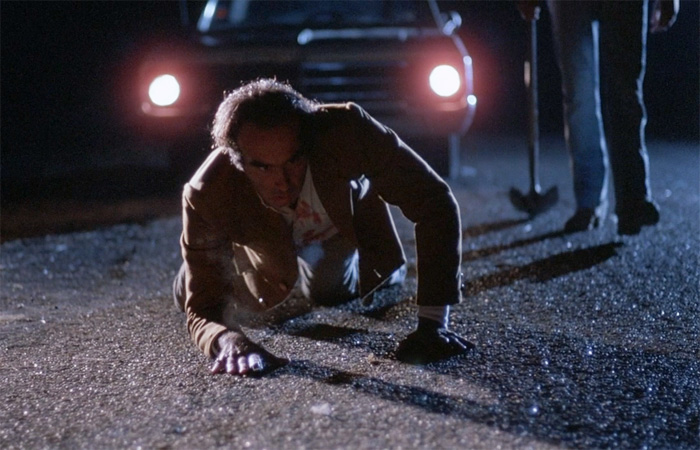 Until 2007 when they unchained No Country for Old Men on unwitting audiences, Blood Simple was the black sheep of the Coen Brothers family. Their second feature Raising Arizona is, on the surface, its diametric opposite, a harried, maniacal fracas of disheveled lunacy and Southwestern loneliness. That latter film has, more or less, paved the way for many of the Coen Brothers’ more famous features, inaugurating their reputation as the pied pipers of modern artful screwball. But Arizona shares two central components with its predecessor despite Blood Simple’s reputation as the wild card in their canon. Tones aside, both films are mordant, fiendishly cunning grasps of dour, melancholic tragedy, both comedies-of-loneliness. And both are acid-washed images of people in need of an escape hatch. The sheer surfeit of mood aside, Blood Simple frequently feels like a premonition of the Coen Brothers’ entire career. Considering Blood Simple reveals the crestfallen image of a destitute US and stunted, criminally miscommunicating people that skulks, almost subterraneanly, within the notionally-chipper heart of many of their later films.
  I’ve been away for so long … Here’s a holiday classic to re-inaugurate the site.
 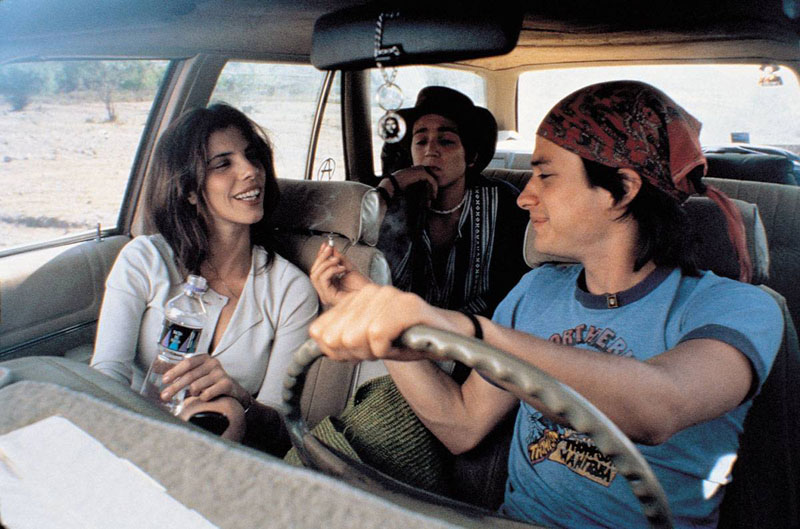 Y Tu Mama Tambien is inauspicious, but like many great films, it reaches for and touches the world and humanity in everyday actions and seemingly small gestures. Here, for instance, we have teen sexuality, laid out with all its romanticism and reality, filled with the kinds of empty-but-meaningful gestures that define humanity’s desires and their foibles. Director Alfonso Cuaron is a highly personal director, but he’s always most interested in defining his characters in relation to the world they inhabit. His two protagonists here are immature and petty yet deeply human, reflections of a society that won’t admit it has given birth to them and which they, initially, want no part in. He gives us a profoundly human story, built on the eternal humanness of sex as a marker of adulthood and childishness, and given life by Cuaron’s wonderfully and contrapuntally painterly version of sloppy, slovenly reality.
 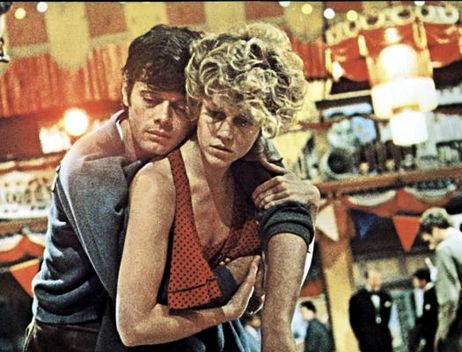 An astonishingly hopeless anti-myth odorized with the stench of failure and bloodstained with the tattered remains of hope, They Shoot Horses, Don’t They? twists the idiom of dance away from its usual home in restless fantasy, treating human gyrations as the small-scale reverberations of a slowly-tilting edifice ready to crumble to the ground. For Sydney Pollock’s film, dance movements are first particles of movement that exist not to fling us into a hopeful future but to topple us from below, subsuming us to the movement of our feet that seem no longer tied to our minds or our personal agencies. Our bodies are no longer uncertain adventurers carving out a bold future but frantic chasers of a dream deferred, hoping to catch up to the scraps of nothingness thrown our way. They Shoot Horses is a parable of America as a collection of lost souls wandering into dancehall marathons – brandishing hopes and dreams of Grace Kelly and Fred Astaire, or the Charleston – and succumbing to the barren, unforgiving economic destitution that undergird and consume the romantic aspirations that nominally lacquer the surface of these activities. As Pollock sees it, bone-dragging, fall-out-of-bed-and-stumble-upwards days are the only ones America had in the ‘30s, and maybe ever again.
  The wide-ranging berth of writer-director Jia Zhangeke’s multipartite, all-across-China film, A Touch of Sin, cannot deny its impeccable eye for the specificity and complication of even the least of its individual tales. A Touch of Sin is obviously the story of a society; its nature is polyphonic, paralleling four individual tales and hinting at many others, asking us to look at a wider portrait of the world, even one in which many souls feel atomized and alienated. But, despite the length and size of this film, it never feels like a belabored or overly-grandiose obelisk, a sky-high statement that attempts to encompass all of China. Its rhythms are minute and intimate, its portrait of modern-day China finding its genesis not in any declamatory, macro-level statements but in the tight minutiae of four tales playing out on canvases of inward regret, internal dissolution, and people yearning for other selves.
 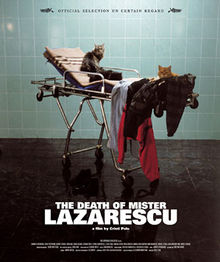 It would be astonishingly difficult to convince a viewer to watch director Christi Puiu’s The Death of Mr. Lazarescu if they weren’t already predisposed to adore Puiu’s strange, sardonic, drunken but deeply compassionate 150-minute account of exactly what its title suggests. The plain-spoken brutality of the film’s title is not an ironic or even a metaphysical signpost for the symbolic scholar. It is not simply an imaginative foothold for the audience to understand that the film is really using its narrative to plumb some epochal commentary on life in modern-day Romania, to expose a “death” that is abstract or societal in nature, as though the world’s compassion is withering away. The title is not merely an intimation or a whispered poeticism, a literary flick of the pen meant to draw us into the film’s thematic caverns.
 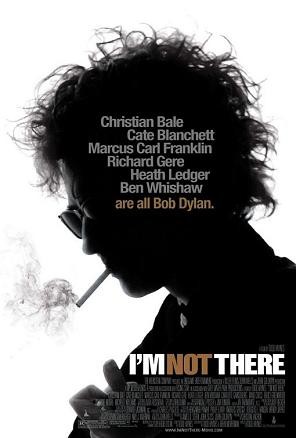 A whirlygust of synapses fire, intellectually, emotionally, and sensually in director Todd Haynes’ thematic invocation of Bob Dylan, I’m Not There, which is a tone poem about Dylan as a concept, as an ache in the belly, as a mind for dissent, and as a troubadour that infects the minds of everyone willing to listen. It is not a picture about Dylan as a human being or a flesh-in-blood person, although it is defiant in its unabashed humanism, calling on a panoply of styles and personhoods to refract Dylan across numerous time spaces and identities to reveal not only his polyphonic self but the many valences of the nation he both represented and challenged. Dylan here is omnidirectional, paradoxically both a symbol for anything you want and a hungrier creature that swallows symbols whole and runs away in his (or her) own direction. Most biopics – a genre I’m Not There is only very tenuously related to – are a kind of pedestrian par excellance, as cinematically dead and intellectually bankrupt as any Michael Bay film, even though biopics wear their intellects less lightly and call on the spirit of the middlebrow rather than the lowbrow. They draw a decisive quotient of their beings from their belief that they can unravel and pin-down their subject-matter, that they are educators imparting true knowledge to the viewer. In contrast, I’m Not There cannot be pinned down, and it shows that its subject cannot either.
 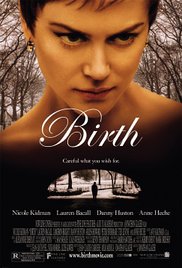 Inhabiting a gradient from electrifyingly un-ironic romanticism to baleful malevolence to existential calamity, Jonathan Glazer’s follow-up to his debut Sexy Beast is subtle in its implication but implosive in touch, feel, sensation, and style. It hangs over you, with premonitions of doubt and stenches of inclement weather overhead, but it avoids many (most) of the easy tricks films use to evoke the shadows of modernity: expressionistic shadows, a thick gauze of lighting, canted angles. Many films today are embalmed in expectations and mental prisons for what horror might mean, and here is the fiercely alive Birth, an otherworldly film not because of the presence of diegetic aliens or space travel but because it confronts our world through an alternate perspective from the one most of us call home. Although its intellectual and sensory channels were undeniably forged from the ghostly modernistic vibes of Resnais and the self-inquiry of Antonioni, it nonetheless inhabits the frontiers of consciousness.
  The Long Take