Category Archives: Black History Month

Black History Month: The Brother From Another Planet

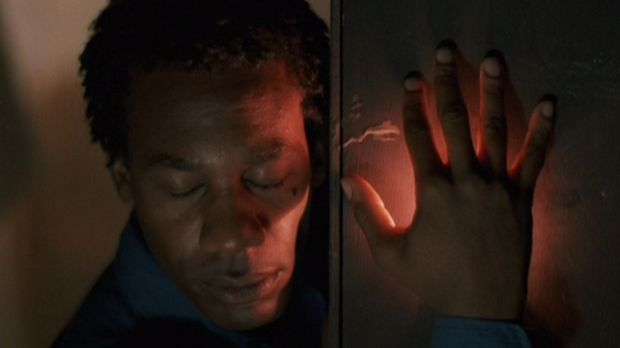
A shivering man (Joe Morton) lands on Ellis Island. We pan down to see that he is missing a foot. An interstellar fugitive from a chain gang, to use a metaphor the film will draw on later, the man is lost and lonely but also strangely filled with potential. When he bends down to take care of the wound, there’s a new foot there, albeit with three toes. Cinematographer Ernest R. Dickerson, in his second film after his student film with Spike Lee Joe’s Bed-Stuy Barbership: We Cut Heads (and before a lucrative further decade with Lee) shoots Morton with a gorgeous, crepuscular glow that weaves an inextricably cinematic spell, an iridescent halo seeming to illuminate him. The film offers a play of light and shadow that invites us in but allows Morton to remain somewhat obscure and impenetrable to us, even as the film will go on to meditate on the ability of this wayward traveler to vibrate with the world around him, to connect more deeply than we may be able to and in spite of the odds being stacked against him. Already, within minutes, we have an enigma that is far deeper than any superficial narrative mystery to be successively doled out in pieces by the filmmakers: what does it mean to find connection within and via alienation? As the film unfurls, filmmaker John Sayles conjures and concocts a whimsical meditation on cosmic loneliness that becomes an exploration of local togetherness.

Continue reading

Black History Month: To Sleep with Anger

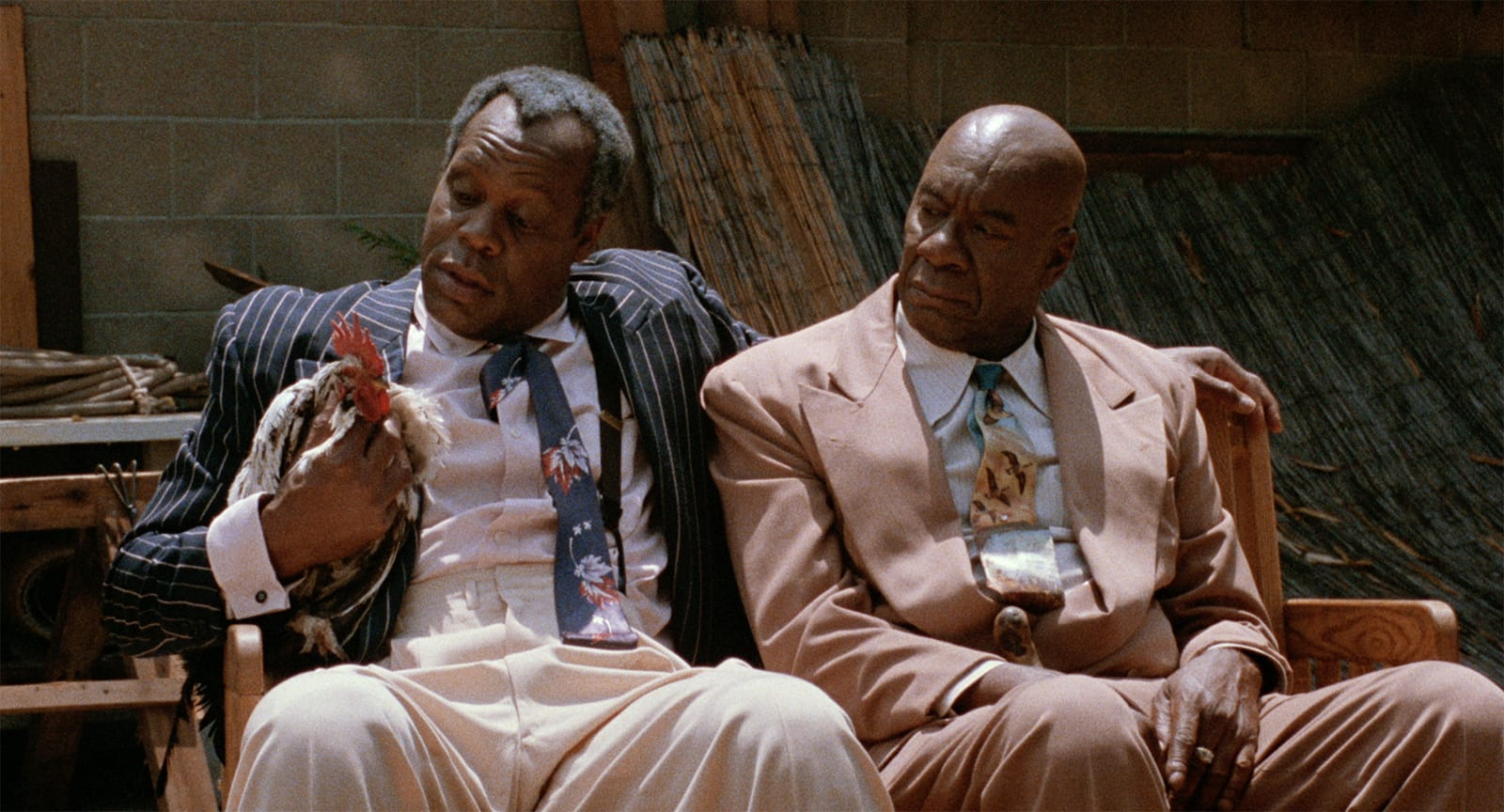
Race, and America’s history of racial discrimination, suffuses every nook and cranny of To Sleep with Anger, but it is never “about” race per-se. In fact, Burnett’s film isn’t “about” any one theme in particular. Its ambiguous textures and lived rhythms are too finely observed to be pigeonholed, or to avoid the necessary complexities of the social tapestry that ever-presently shapes but does not define the lives of its characters. To Sleep with Anger percolates with micro-textures and minuscule gestures, all of which weave into a panoply of lived experience. It reckons with numerous wider structures that inform the world it inhabits, but it doesn’t feel the need to overtly manifest them in order to artificially demarcate its own contours or to map how we are supposed to read the film.

Burnett’s film opens with a startling intermixture, not only of quotidian naturalism and oneiric speculation but middle-aged comfort and undercurrents of disruption. As the patriarch of a Los Angeles African American family Gideon (Paul Butler) sits in a church, the camera panning to an apple slowly browning that soon catches fire. The apple browning echoes a similar opening by David Lynch in Blue Velvet, but rather than a manicured lawn revealing a swirling maelstrom of inner uncertainty, a cosmic chaos dormant beneath the ostensible placidity of order, To Sleep with Anger radiates a quieter but no less pressing ambivalence. The intersection of domesticity and spirituality promises order and stability, but silent screams are never far beneath.

Continue reading

Black History Horror: Ganja & Hess

In honor of Black History Month, I’ll be reviewing a few of my favorite films about African American life. Because I’ve mostly been reviewing horror films of late, I figured the first might as well be the greatest work of Black horror.

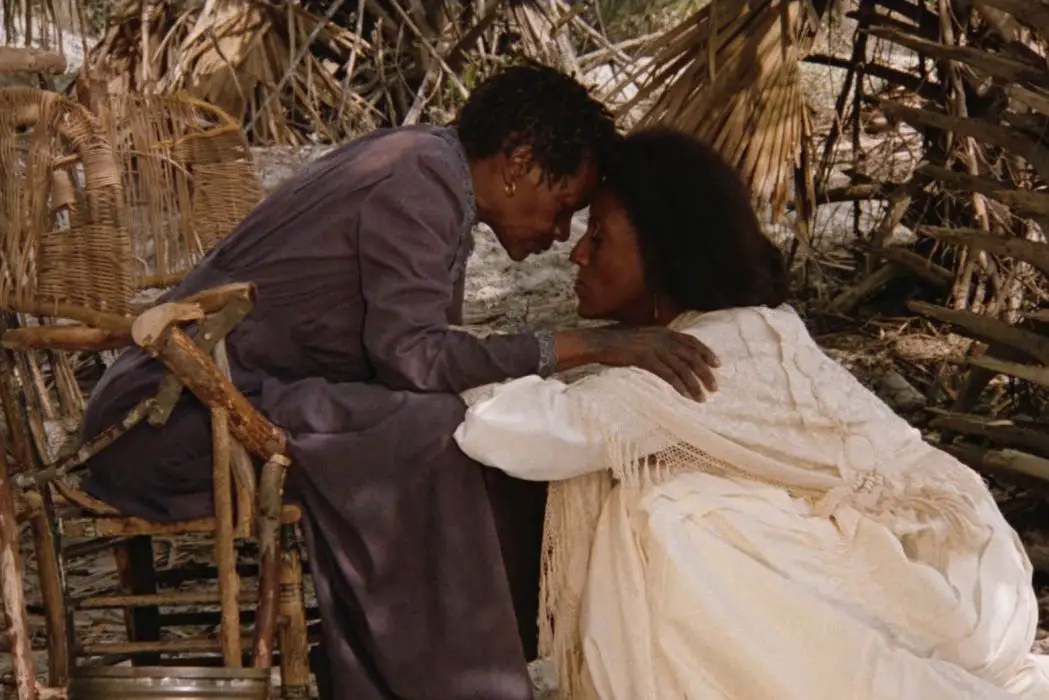
The ostensible protagonist of Ganja & Hess is Dr. Hess Green (Duane Jones), a wealthy archaeologist and art historian who both specializes in and collects African art. But the focal point is writer-director Bill Gunn, who appears in the film as Green’s depressed assistant George Meda. Unlike Green, who cultivates a manicured detachment and seldom seems to rise above the level of his own aesthetic distance, Gunn’s Meda is an open wound of a human being. While Green is cold, Meda is timorously alive and receptive to the complexities of the world, to the tensions of existence, to the haunting forces and figurations that encircle the living and press on us. Ganja & Hess is a film for him, and by him, a gaping maw of a creative work that opaquely weaves its way in circles around us and burrows its way into our souls.

Gunn’s is a strange, bedeviling film, a living embodiment of the phrase “gesture destroys concept,” spoken by Meda early on. It constantly slips and slides around meaning, accreting in fragments and figments, glances and evocations. While we glean that Hess becomes a vampire of a sort, it hardly seems to make an impression on the man who always-already seemed to surround himself with mementos of the dead. Not only is vampirism itself never mentioned in dialogue, but the feeling barely rises above the level of a curiosity for Hess, who mostly continues living his life as he always did, for whom vampirism simply is an extension of his material positionality. The whole film exists in a drugged-out, murky haze, filled with characters who seem vaguely aware that something ails them but either can’t quite make it out or simply don’t exert enough effort to care. I wrote that this is Meda’s film, but it’s really more like watching Meda try desperately to gnaw his way out of Hess’s

Continue reading