
Edited June 2016
After the completion of my American New Wave series, I found myself hungry for more, and with the rather stark delineation of mainstream ’70s American and ’80s American cinema, continuing chronologically seemed a fair idea indeed for it’s ease of access without necessarily pluming the same self-consciously raw, arty cinema I generally stuck with to define American film during the 1970s. This is an opportunity for me to plum an type of film I have almost entirely avoided thus far for the purposes of this blog: classic genre filmmaking, or pop fare as we call it when we’re feeling particularly feisty. The series will continue, albeit with a generally more slap-dash rule set fitting the parameters of the generally lighter, airier cinema of the ’80s like a glove. Essentially, I’ll go by year, but within each year, I can cover one film in depth, or a few in smaller review format, or any mix in between. Whatever suits my boat, for, after-all, the ’80s was all about personal satisfaction, wasn’t it?
As for publication schedule, It’ll be more compact, a sort of Holiday treat to myself where I get to focus on “fun” movies in place of all the doom and gloom I force upon myself cinematically (I’m such a masochist aren’t I?). In other words, I want to keep things coming fast and loose, to give myself a filmic sugar rush, and to have a little fun with it. My estimation will be the series will continue into the very early ’90s (being that the first few years of the ’90s were basically the ’80s culturally and cinematically anyway, before the New American Independent bubble really blew up big time mid decade). And I’d like to have it all done by the New Year, or slightly afterward. So that’s one month of the poppiest pop I can find. Survival, without cavities, is not an option. And do excuse the titles; sometimes I like to have fun with myself, even against myself. The titles are Holiday Present Part B.
So much has been written about Star Wars it’s almost impossible to add anything new to the corpus, and I won’t try to, except to say that everyone who criticizes it and everyone who adores it are really speaking past one another. Their arguments enjoy fundamental similitude. It’s no secret that a great many people loathe the Star Wars prequels – I’m none too heavy a fan myself – and the reasons are obvious and multitudinous: indulgent filmmaking, superficial visuals, self-serious, haphazard dialogue, druggy, ham-bone acting. As a rule, I won’t argue with these flaws, but I will say this: many of them, particularly in the writing and acting department, are true with as full a force in the original three films as in the prequels. Insofar as people wish to pump up the Star Wars films as implacable, fertile, drip-fed drama in the traditional way people discuss drama, they’re out of luck come their proof. Insofar as the Star Wars prequels misunderstand or avoid the human condition, so too do the original films.
Continue reading →

 It is not a new or interesting point that slasher, and by proxy horror, filmmaking was in a rut in the mid 1980s. The slasher genre had reinvigorated American horror briefly (extremely briefly, like maybe for a year or two) in the late ’70s and early ’80s by incorporating Italian giallo bloodletting into the mix, but the well went dry before anyone could say “blood geyser coming out of a bed and onto the ceiling”. Luckily, long-lost grubby horror maestro Wes Craven (what a last name for a horror film director) – who had shepherded cinema’s most distraught, devilish Bergman remake ever (Last House on the Left) and the latter grotesque haunt The Hills Have Eyes – was looking to have a little fun with the genre, and the stars had finally aligned after years of wallowing in semi-obscurity.
 Francis Ford Coppola’s 1982 release, One From the Heart, was given a good long three year gestating period for Coppola to recover from the bowels of hell he’d thrown himself right up against while making his edge-of-sanity opus Apocalypse Now. That 1979 release itself had gone gaspingly over budget and seemingly came close to mangling, killing, or rendering insane every one who worked on it at one point or another, and Coppola himself lost four years of his life producing his stunningly indulgent rambling mess of a war film less interested in exploring war than in burrowing into our soul with some of the finest tone poem imagery the American New Wave ever saw. The film is regarded as a masterpiece, but having their pride and joy screw with their hearts and wallets so did not make our corporate masters happy.
 Edited for Clarity
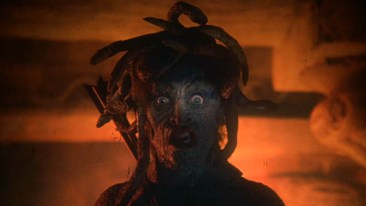 Clash of the Titans
 The Long Take