Monthly Archives: February 2026

Black History Month Film Favorites: Daughters of the Dust

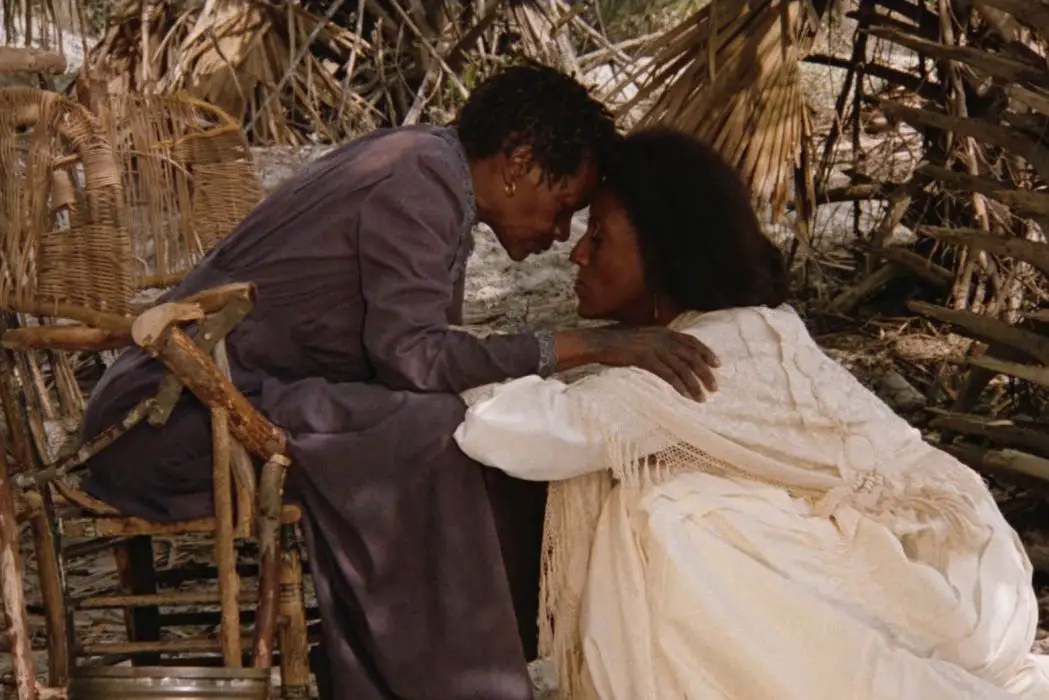
History in Daughters is oral and haptic, textural and material. It floats and sinks, breaths and chokes. In the cyclical “muddy waters of history,” a character can proclaim wanting to unceasingly “move forward” while also reminiscing on their unquenched taste for a decidedly nostalgic, historical gumbo. This paradigmatically liminal phrase – “muddy waters of history” – frames cinema not as a reflective mirror reclaiming the past but a swampy transmission touching that past, a semisolid state where history is stilled before us and yet very much in motion. In Julie Dash’s 1991 masterpiece, art is a catalyst for the tornado of history that is always encroaching on the prism of the future. It is a space where we haunt the past and it trespasses on us. As Martinican poet-philosopher Edouard Glissant wrote, this time, you can step into the water twice.

Mary (Barbara-O) is perhaps the one character most overtly stepping back, the one who, along with devout Catholic Viola (Cheryl Lynn Bruce), who initially seems to approach the act of disowning her history with a missionary zeal, begins the film on a boat returning to Ibo Landing, her family’s century-long home. Her people are Gullah, a wayward tribe of African Americans who inhabit the off-shore site where a lost colony of slaves, at the dawn of the 18th century, once infamously chose to head back to Africa, or into another plane of existence, rather than remain entombed in a present that denied them a future.  This infamous mass suicide, where several dozen slaves purportedly walked into the ocean in the direction of Africa, lingers as a source of inspiration and fear, a dream and a nightmare, for the Peazant family, who still daily traverse this land a century later, in 1902. While Mary returns by boat at the film’s beginning, everyone is really constantly arriving and departing, stopping and leaping. In Ibo Landing, past, present, and future weave into one another. What one character calls “the last of the old” and the “first of the new” are indispensably tethered.

Continue reading
Midnight Screenings: Predator 2

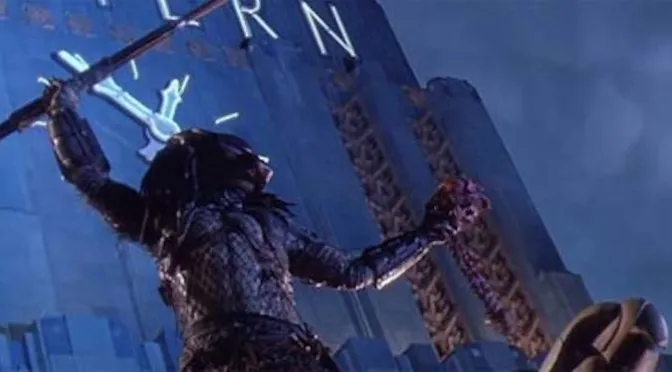
If only director Stephen Hopkins’s Predator 2 was quite as awful and empty as its reputation suggests. Turning from post-Vietnam parable to a vision of the U.S. as a police state, Predator 2 is at once too inadequate and ham-fisted to take home and too canny and cunning in its critiques of American society to write-off. If the first Predator was, at base, an imperialist fantasia of an action movie cracked in half, turned into a vicious thriller about an interracial group of American men united in working as puppets for American corporate and governmental hubris, Predator 2 figures all races, groups, clans, and organizations as one more front in a violent war of unceasing viciousness that reaches from the streets to the penthouses to the institutions of power. If Predator concluded with a set-piece that systematically reduced Arnold Schwarzenegger, paradigmatic icon figure of ‘80s American masculinity, into a sort of visual negative space reduced and stripped barren, Predator 2 lets the titular Predator loose in a high-tech, dystopian Los Angeles to reveal how empty the whole edifice of Western progress might be. The film is basically empty, but it also suggests, here and there, in moments and fragments, that we are too.

Continue reading

Midnight Screenings: Maniac Cop II

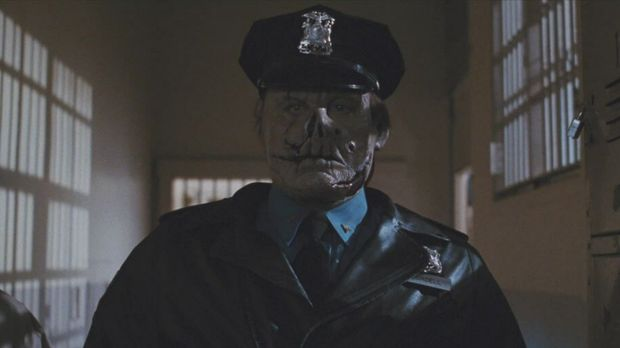
I’m only winking a little bit when I claim that Larry Cohen was one of the great New York artists, a bedraggled poet of a forlorn city. Evocatively directed by his compatriot William Lustig with an eye for spontaneous eruptions of brutality and an ear for the underlying violence beneath them, Maniac Cop II is curdled and vicious enough to leave a stench. It isn’t messing around. It’s also distinctly Cohen-esque, the work of a unique voice not because Cohen wanted to be an auteur or really cared about his personal vision but because he couldn’t but do it. This is evident in the near-fetishistic infatuation that a would-be criminal has with zombie police officer Matt Cordell (a Vorhees-esque Robert Z’Dar), which never plays out as straightforward attraction. Or the undercurrent of real melancholy that the lighting ropes around Cordell, who is presently on the war path for those who wronged him in his waking life, suffusing him in a melancholy menace despite the character seldom speaking and never expressing a vocal line. The suggestive relationship between cop and criminal keep the text remarkably ambivalent, transforming Cordell into an icon of entombed masculinity and silent devastation, a mutant man incapable of human expression anymore. That’s evident in more than just the titular character too. Robert Earl Jones, who shows up only briefly, nonetheless wears on him a century of racial violence, a much longer echo of a brutal world than Cordell does.

And Lustig, more than just a hired goon, is a true partner in crime. Some of the gruesome beauty he brings to the film is simply a matter of time passing. It looks better, of course, than 80% of any given year’s cinematography Oscar nominees, because it came out before Netflix turned everything into a homogeneous aesthetic paste. Whatever else Maniac Cop II is, you can tell it wasn’t made with the assumption that the people watching it are off doing their laundry or chopping vegetables. This is cinema, someone with a genuine eye exploring visual textures because he happens to be curious about them, no more and no less. Maniac Cop II evokes an entire sensibility with its style in a way that I can’t imagine another slasher from the dreaded early 1990s doing. This is expressive sleaze in the best sense, channeling – and frequently being confused about – the violence of an era it outlines in what we might, paradoxically, call ambiguous boldface.

Continue reading

Midnight Screenings: The Woman in the Window (1944)

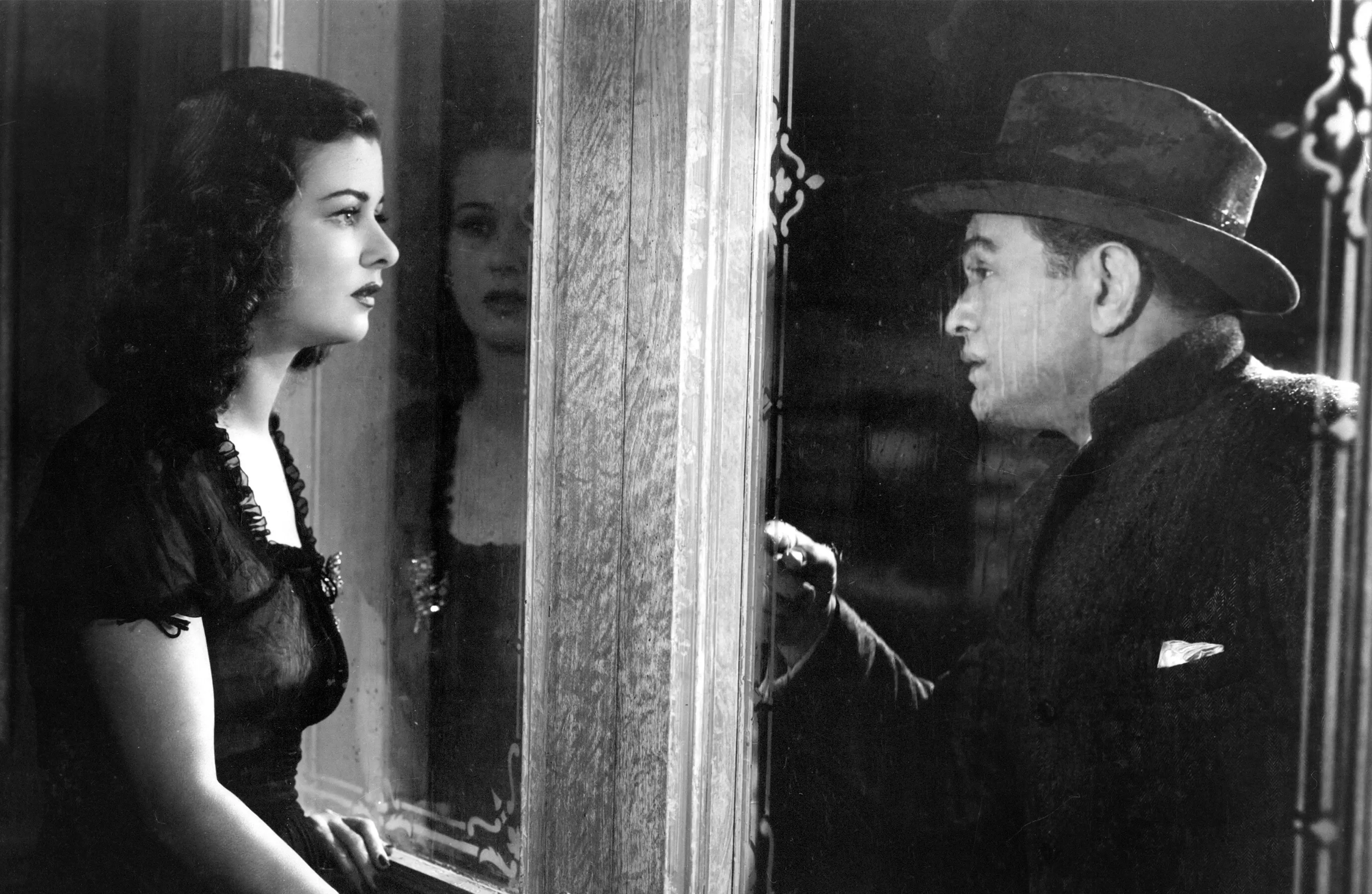
What does it mean to watch a murder? What does it mean to meditate on the cause of a murder? What does it mean to plan one? What does it mean to watch one being planned? To what extent are these four things different, and to what extent are they the same? “We’re just not very skillful at that sort of thing,” the film reminds us, and demonstrates, and the statement might apply to all of the above. Even when we think we’ve got a bead on what will happen to Edward G. Robinson’s Professor Richard Wanley, or what bit of evidence will or will not convict him, we keep wondering what it even means to judge someone, or to find someone guilty, or whether we can or should rely on any evidence given how easily each agentive act is contaminated by context, each exhibit for the prosecution claimed in part by chance. The ease with which the two protagonists find themselves more prepared than they expected to cover up a death and facilitate a murder, and the methodical way they begin to calculate their own moral slippage, is quietly penetrating. When the lights go up and the machinations of fate are apparently reversed in the film’s final minute, the grim realization is not that this was all an unfathomable dream but that the membrane separating determinism from contingency, demarcating sudden relief from a nightmare of existential guilt, is only molecule-thin. 

Continue reading

Midnight Screenings: Secret Beyond the Door

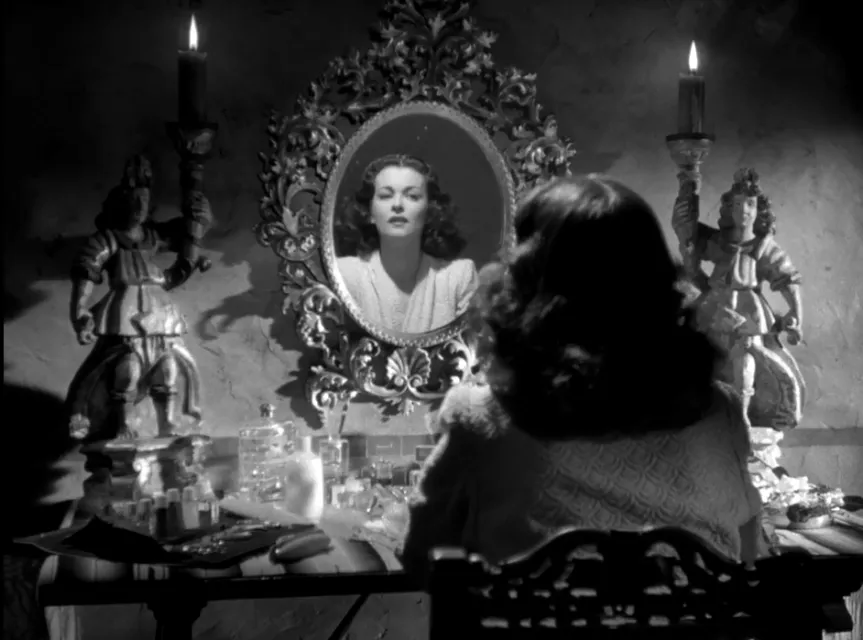
For a director most associated with expressive harshness, Fritz Lang was an abnormally varied, prismatic artist. Even his American sojourn, long considered a fall rather than a fault-line, an adventure of its own, reveals multiple distinct periods emerging out of one another. His despondent ‘30s texts, evocations of a Depression-beset nation submerged in restless ennui, are preludes to his flourishing film noir American missives in the ‘40s. Noir itself was a trend that Lang had, of course, precipitated in his German expressionist classics, but he would go on to break them down as well, essaying several coldly analytical later texts in the 1950s that abstract noir to nearly Kafkaesque levels of conceptualization, reflecting the return of European thought to a mid-century America wracked with anxiety about its Byzantine bureaucracies, corporate homogeneities, and ambivalent position in the global fight for a freedom that America had long claimed but also inhibited.

These final films were among his most despairing, anticipating the post-modern criticism of the ‘60s and suggesting that the soul-ravaging violence Lang worked through as a young man in Germany was an all-too-perfect waystation for his discovery of a more distinctly American violence. While Lang adapted to the particular anxieties of multiple time periods, from Depression-era miasma and social neglect to ’40s-era social consensus politics, he became a dark poet of life within the apocalypse at its most fatalistic.

Continue reading