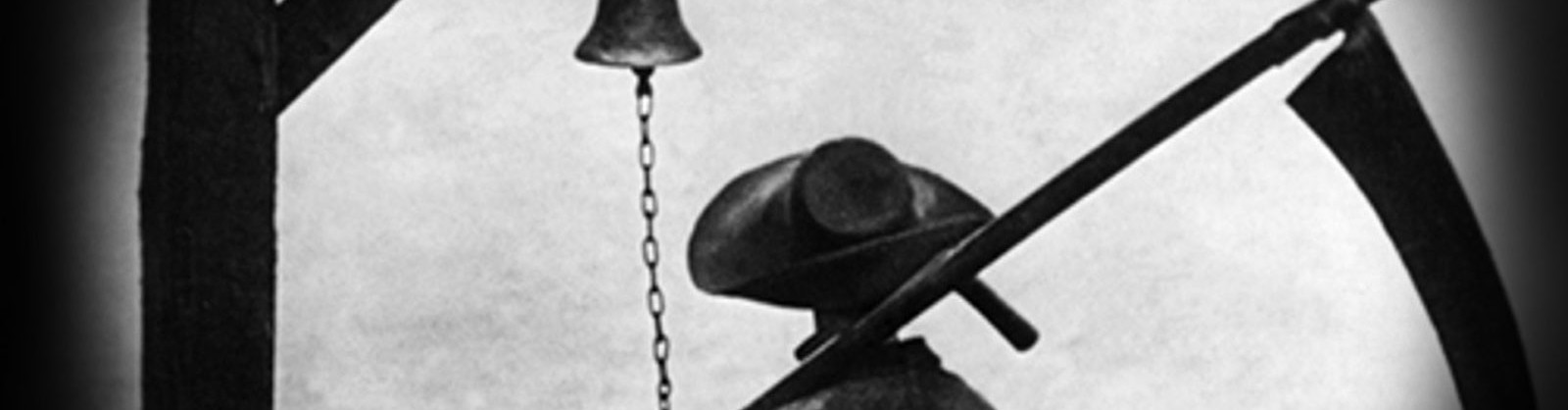

The feral fecundity of the early ‘80s slasher boom, before the genre had codified into a morass of corporate nothingness, was ironically a time when the swamp of slasher cinema excreted genuine difference. In the very early ‘80s, slasher cinema could be a metastatic thing, maliciously destabilizing the cinematic body, or simply following whatever ramshackle impulse the people making it happened to divine while making it.
Usually, this meant slightly more competent cinematic products, crafted by thoughtful journeymen who hadn’t yet been conscripted by the reduction of the mold for a quick cash-grab. In the case of Just Before Dawn, it’s closer to the excavating of a cinematic fossil, the discovery of some unfathomable, primordial thing. I’ve been making the comparison between Terrence Malick’s Badlands and Tobe Hooper’s Texas Chainsaw Massacre for a decade now, but, apparently, writer-director Jeff Lieberman got to it long before I was born. This is a horror sublime, a transcendental text about the limits and aporias of human transcendence through reconnection with the region one construes as “nature.”
Certainly, Just Before Dawn wasn’t radically other because it exposed the limits of the construction of nature as a pristine pastoral for soul-replenishing or a passive expanse for material extraction. Ecological horror emerged in the 1970s, befitting the social concerns of a decade of industrial catastrophe, but Just Before Dawn presents a horror that is, in some sense, beyond representative monstrosity, that doesn’t really need to come alive against the forces of progress.
This isn’t Frogs, or even Jaws (a better film, admittedly). Here, the force of the screen itself seems to bear on us, to envelop the characters, something in the film itself, as though it doesn’t need a corporeal agent to do its bidding. There are embodied killers, The Mountain Twins (played by John Hunsacker), but they’re rarely visualized, more temporary emanations of an otherness itself that mostly refuses to be embodied. This is pastoral horror at its most sublime, a grim, beautiful coalescence where the alluringly placid and the terrifyingly opaque are at their most entangled.
Channeling the antediluvian forces of fear in the wilderness, the cinematography by Dean and Joel King and the otherworldly score by Brad Fiedel harness the irreducibly complex energies of nature and suture them to the inchoate forces of the low-budget slasher, in that which is coming into being, is not yet codified. Yet Just Before Dawn is also intriguingly particular about the rhythms of sight itself, for instance, in a bent-over lover’s embrace where one participant mistakes the oncoming killer for an arriving friend. Or a later shot of a woman looking through a dirty, foggy window, seeing her friend being murdered, witnessing something personally shocking but ocularly muddy. Just Before Dawn is not only about things beyond perception, something imperceptibly beyond comprehension, but also attentive to the minutiae of more mundane forms of sight. The concerns are not only the enigmas of totality but the limits of one’s sight as a tool for bare survival. When these flickering perceptions suddenly collapse before our eyes, when the failure of vision becomes a personal threat rather than a potential for psychic transformation, Just Before Dawn seems to be investigating its own auratic texture, reminding us that its atmosphere of Adamic rebirth via communication with the natural world is in the eye of the beholder, that what appears as manna from heaven may also be a trick of the light.
Score: 8/10
 The Long Take