Monthly Archives: December 2025

Midnight Screamings: Sleepwalkers

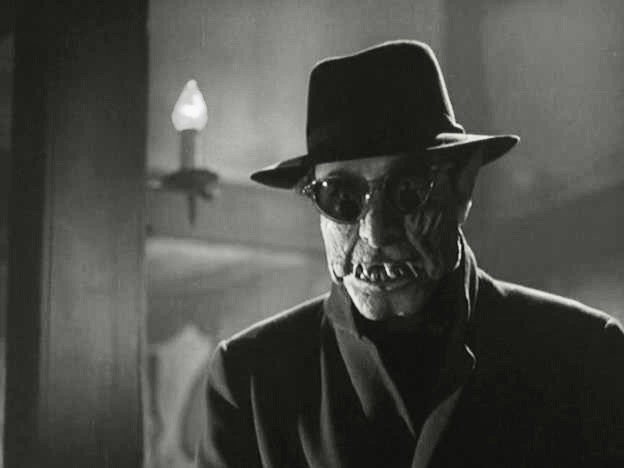
That 1992’s Sleepwalkers was the first film Stephen King wrote directly for the screen is both a promise and an enigma. The idea suggests an unadulterated slab of Stephen King, the pure, uncut thing, untempered by the guiding hand of a translator. Watching the film, though, I can’t say I have any idea of what King thinks cinema is, or what its relationship to the written word is supposed to be. Sleepwalkers is quite a bedeviling monstrosity itself, actually. On one hand, it feels like a shredded expanse, the forced tightening of a larger, deeper, book-length text, the kind of thing that people refer to as the result of badly adapting an “unfilmable novel.” On the other hand, it feels equally like the product of King in the full grips of his drug-infused mania, badly grasping at half-finished ideas before they fade into murky nothingness.

In a literal sense, this film is neither of these. He was sober when he wrote it, and it was not, apparently, based on a larger text. But it feels like both. There are both too many and no ideas within it. It feels both overworked and entirely unfinished. It suggests the offspring of a man in the apparent full command of his own artistic invention who nonetheless doesn’t understand the core of what he has produced. It is a film whose genesis is as opaque as its final state. This is, charitably speaking, not a fully fleshed-out storyline. For all the flesh that gets ripped, shredded, broken, serrated, and corn-cobbed (read on), there’s very little meat on the film’s bones. It has the patina of a man who isn’t quite remembering why he has released this into the world, or where he wants this to go. The film accretes in, and is best remembered in, a fog.

Continue reading

Midnight Screenings: Godmonster of Indian Flats

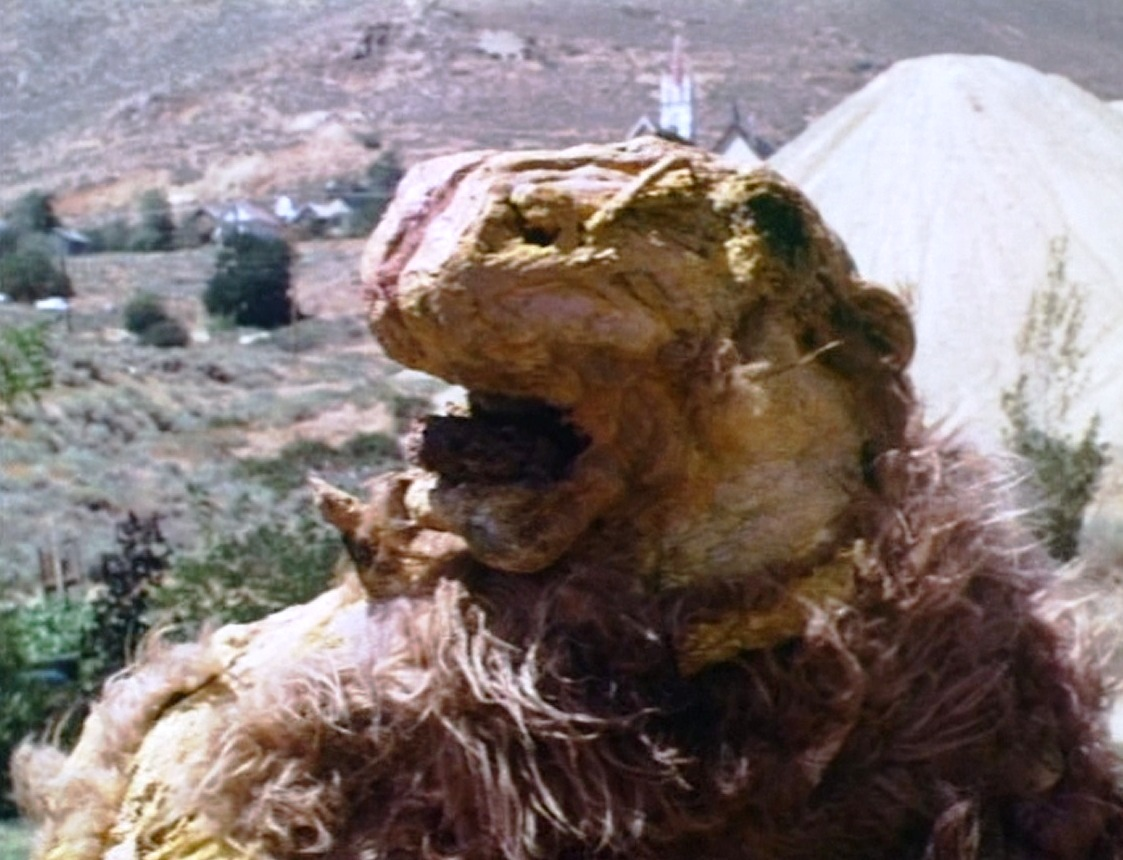
Godmonster of Indian Flats is like its titular creature in more ways than one. It shares its unruly, mercurial nature, its frustrated friction. It comes out of nowhere, from the abyss of an American id, or from some dim region of consciousness. And, above all, it has our souls on its conscience, the weight of the world impressing upon it. This is an alien being, a wonderful cinematic monstrosity that looks and sounds like nothing else, that feels like nothing else, and that was bequeathed to us, lost children in need of salvation, at the twilight of one period of American growth to teach us the error of our ways and offer, in the ugly, beautiful, grotesque, revolting fact of cinema, a shock that might help us see through the darkness, to see our darkness. In spite of it all, the film says, art, with all its misshapen curiosity and lumpy monstrosity, remains.  

But saving us, the film posits, may mean destroying us. Godmonster of Indian Flats projects no beautiful harmony with the earth, no romantic image of art as a channel for grace. It is angry with us, a forgotten creature born unto this earth to witness our failings and prey that we might do better. It is an impossible creature of a film, a truly mad object, the prodigal creation of a nation and the scion of a mad scientist of an artist trying his hand at cinema. Writer-director Frederic Hobbs, was by day a wild bricoleur stitching solar energy and nomadic errantry and mid-century ideas about ecology and technology into something called Art Eco, one of those micro-artistic mid-century forms that resonated with a constellation of ‘60s modes, from the ever-curious, ever-deflationary termite art of Manny Farber to the more purely explosive tornadoes of internal energy produced by Jackson Pollock to the anti-technocratic romanticism of Frank Herbert’s Dune to the collective eulogy for a myopic world that was Buckminster Fuller’s Spaceship Earth. All of these frameworks, mechanisms of social critique and machine-work for a more humane world, invite us to rethink our relation to the rhythms of the cosmos, to expend less energy, or expend the right energy, to appreciate the irreducibly uncertain nature of reality and the horizontality of our diffuse formations and strange interconnections with one another.

Hobbs’s paintings celebrated this sensibility. His film, however, seems much less sure of our worthiness for salvation. We begin with a spirited journey to the margins of the nation, a group of youths on the path to adventure, “lighting out” to the territories, as they used to say. Cut to them pushing in on the camera, like a zombified parade of the damned, soon driving to nowhere, on the edge of an abyss. Perambulating into an uncertain future, this is the American road trip not as a long night of the soul but a night of the living dead. Promising a bounty of possibility, this Nevada-set film only offers a parched desert permafrost, a harbinger of a national thaw.

Continue reading

Midnight Screamings: Eaten Alive

If a film could contract tetanus, it would be Tobe Hooper’s Eaten Alive. The people who consider this a lesser retread of The Texas Chainsaw Massacre or, worse, an unsympathetic revelation of the limits of that earlier film’s imagination, are losing their minds. They are not, as they say, down with Hooper’s peculiar way of rendering the American sickness. This is a nasty piece of work, a cinema of morbid fixations, of the fragile emaciation of the American body as it thought it had been fashioned, and as it was apparently unfashioning itself in the mid-‘70s.

If anything, Eaten Alive is more uncomfortably disconcerting than Texas Chainsaw, more unwilling to privilege accepted divisions between center and outsider, urban and rural, digital and analog. While Chainsaw takes us to the margins of America, Eaten Alive seems to fold center and margin in on one another. While the intrepid heroes of Texas Chainsaw venture into the margins of modern America, out of their comfort zone, Eaten Alive collapses distinctions almost entirely. We move from an apparently urban brothel to the film’s forsaken bayou cottage without any sense of the passage of space or time. The film retroactively seems to be infused with the need to demarcate spaces, as well as the failure to do so, uncannily underlining the limits of American dominance.

Continue reading

Midnight Screamings: Just Before Dawn

The feral fecundity of the early ‘80s slasher boom, before the genre had codified into a morass of corporate nothingness, was ironically a time when the swamp of slasher cinema excreted genuine difference. In the very early ‘80s, slasher cinema could be a metastatic thing, maliciously destabilizing the cinematic body, or simply following whatever ramshackle impulse the people making it happened to divine while making it.

Usually, this meant slightly more competent cinematic products, crafted by thoughtful journeymen who hadn’t yet been conscripted by the reduction of the mold for a quick cash-grab. In the case of Just Before Dawn, it’s closer to the excavating of a cinematic fossil, the discovery of some unfathomable, primordial thing. I’ve been making the comparison between Terrence Malick’s Badlands and Tobe Hooper’s Texas Chainsaw Massacre for a decade now, but, apparently, writer-director Jeff Lieberman got to it long before I was born. This is a horror sublime, a transcendental text about the limits and aporias of human transcendence through reconnection with the region one construes as “nature.”

Continue reading

Midnight Screamings: Edge of Sanity

For Anthony Perkins, Henry Jekyll could have been a role to kill for. Going all-in as a malnourished, overworked bastard child of Victorian modernity, he evokes the politically ambiguous high of misplaced hedonism as an individualistic revolt from the demented domesticity of modern life. He is a fugitive Dionysian, alive to the otherness beneath the mundane, attentive to the constrictions of the society that bred him. Perkins was promised a beautiful career in the late ‘50s and early ‘60s, an offer undone by being a mainstream outsider. His rise reflected a youth-obsessed America where inner resistance took the form of unleashing libidinal anima, a compulsive frustration bristling at the complacency of the world and the unearned hubris of a nominally maintained composure. Now at the end of his life, having spent decades lost in the fugue of modernity, Perkins plays Dr. Jekyll as the man who didn’t, a soldier of scientific progress who went right into the middle of the road and who, in a sudden flash of dark discovery, realizes what accepting one’s otherness might have looked like. In one of his final roles before his HIV diagnosis, he allows his body to summon the dangers of a science unable to acknowledge its inattention to humanity.

Essayed in Edge of Sanity, he’s a diagonal man, a cracked mirror of a fellow who seems to sidle easily through the canted angles of the camera and the warped streets that are refractions of an askew personality. His character is an outsized parody of heterosexual culture lost in a frenzied, foggy haze between its inner energies and the norms policing its modes of expression. Jekyll’s laboratory is an antiseptic, an encasing emptiness that, lit with soap opera luminescence, makes the height of modern knowledge look all the cheaper and more artificial, no honest way for a soul-bearing human to make a living. Mr. Hyde’s life, conversely, is scintillating and sensual, a toxic deluge of rampant feelings and sinister, Dionysian urges run amok over societal pretension and uncritical domesticity. He’s Adamic, an incantatory vision of a new man as a sidewinding flaneur who smuggles in individual lust as a contraband craving for knowledge, an impulse for truth beneath the calcifications of middlebrow culture.

Continue reading

Midnight Screamings: Murder by Decree

Murder by Decree begins with a somewhat staid, formalistic opera scene, something that could feel at home in any prestige-caked period piece. Just as the viewer is being lulled into a historical stupor, the film intercuts a POV shot of an apparent killer on the path to fresh meat. It’s not just a juxtaposition but an incision. The film sneaks up behind us to cut our throat. Just as we feel straightjacketed by bourgeois society, Murder by Decree unleashes its repressed id.

We are reminded that the name on the tin is Bob Clark, here repurposing one of his most famous, fiendish cinematic innovations, the Steadicam killer-POV from Black Christmas. Clark, on the path to the milquetoast ‘80s triviality of his later works, has recast his passage from scabrous social critic to mundane social chronicler into a single-scene conundrum. It’s as if his earlier style – lacerating, lonesome – is here present not as the bones of the film but the invasive species. The conformist, commonplace mausoleum of a film style Clark would soon adopt has been ransacked by the live energy of his younger self, a dangerous outsider wandering the Canadian wilderness and scouring for signs of decay. The dark flight of the killer signals a disruptive force, the intrusion of a homeless, cast-aside horror film into the propertied world of a mainstream costume drama. Clark, precipiced between his earlier cinema and his later cinema, turns the very tipping point between them not only into a return of his own repressed cinematic past, but, when we eventually come to question which figure – the lone killer or the structure of decorum – is able to cause more harm, a moving meditation on the limits of the horror genre itself. If we’re so afraid of a killer stalking modernity’s streets, the film ponders, will we recognize the violence of the men who built them?

Continue reading