Monthly Archives: November 2025

Fragile Frontiers: Eyes of Fire

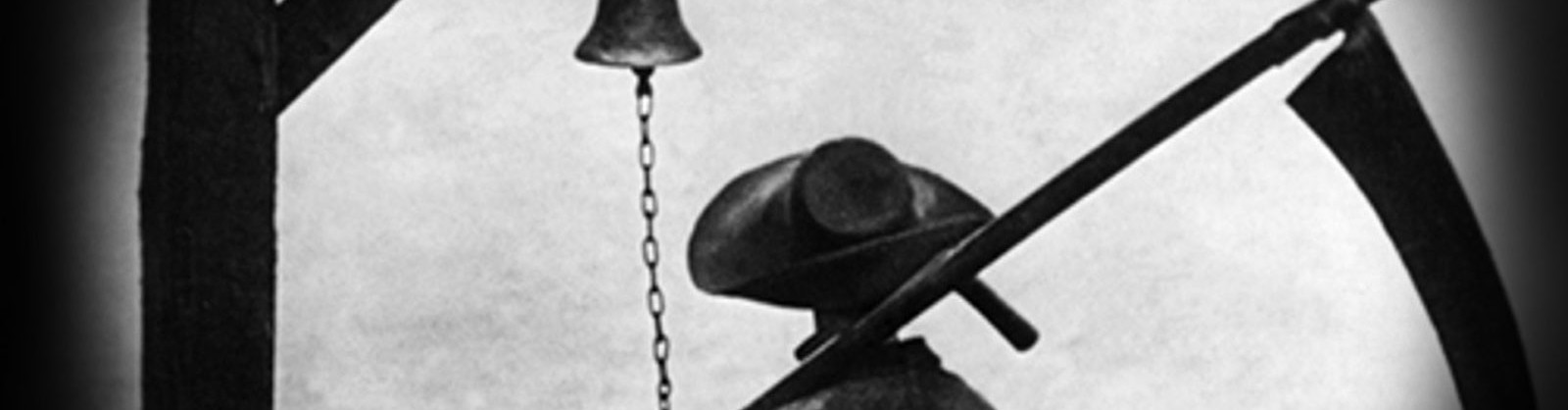
Writer-director Avery Crounse, who fittingly became lost between rustic New Hollywood authenticity and synthetic ‘80s artificiality, is not only a conjurer of darkness but a scion of America’s very liminality, an acolyte of the spaces between existing categories. His first major feature Eyes of Fire feels like it could as easily have come out in 1923 as 1983, like it could depict 1750 as easily as 2250. It’s a lost film, a cinematic netherworld where time stands still and folds in on itself, a text that seems to be going from somewhere to somewhere else but never to exist anywhere, or to arrive at anything. Visualizing America’s wilderness years, and produced within its own cinematic wilderness, Eyes of Fire is a road-weary, ramshackle merry-go-round of contraband people in search of opportunity and the underground operatives – the seemingly deceased but still very present histories – that turn this period of America not only into savage terrain but demonic ground.

Demonic, that is, to the characters who are apparently our protagonists, but not to those dormant but not domesticated pasts rumbling beneath them that have less interest in going gracefully into the good night. In Eyes of Fire, Crounse limns the crepuscular underbelly of a pre-revolutionary American landscape clearly on the verge of becoming something else, but not quite sure what yet, a non-nation that remains hesitant about what sets of ideas would shape and provide contours to its empirically unstable ground. These national values, the film suggests, would be binding fictions, ideas of togetherness that would attempt to overwrite an aching land with visions of harmony. This framework of national unity comes undone in Eyes of Fire, slowly unweaving and then, with frightening quickness, collapsing from relatively stately solidity to fractal, fissioning landscape.

Continue reading
Fragile Frontiers: The Fool Killer

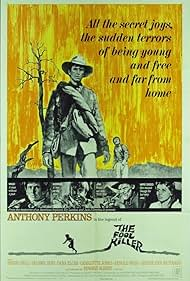
The titular not-quite protagonist of Servando Gonzalez’s The Fool Killer, played with curious intransigence by Anthony Perkins, embodies the American mantra of authenticity, a vision of self-reliance that is also self-delusion. His character wants to “eat when I’m hungry, talk to folks when I want to and not when I don’t, and see the world,” a mid-20th-century rebel without a cause in the garb of a mid-19th-century fugitive folk tale. He’s also a man “without history,” an aspiration to be pure momentary itinerancy, a paradoxical thing that is concept but also flesh and blood, a collection of bounded matter but also a free-floating spirit, something entirely unmoored from any kind of tangible relation with the world even as it floats all through it. He’s a dark Thoreauvian creature who resonates with that American prophet’s beautiful, redemptively spiritualized vision of matter and its unrestrained double, a self that is unaware of its debt to the world, that is all spirit and has no connection to the world’s matter at all. This is the self-isolation and feverish hunger for personal authenticity that would only turn the characteristic American craving for independence into a means of making men and women into appendages of the very mechanisms they nominally opposed.

This lode-bearing cinematic creature is also a mythological force, coalescing out of the very ether that marked 19th-century American dreams, galvanized here by the film camera. He doesn’t appear in the flesh for a long portion of the film, yet he seems to exercise real power over the text, asking the camera where it should position itself in relation to him, whether or not it can visualize him, and whether being visualized, taking on bodily form, separates him from himself, makes him become mere matter. Like art itself, he is menacingly passive, apart from the world but both reflecting and shaping that world, providing a vision of troubled American myths for us to reflect on. He is introduced with the camera taking his perspective, before a series of cuts inward onto his eyes, dominating the frame, suggest an invasive specter, a fragile phantom known as personal freedom that only occasionally corporealizes but exerts an inexorable pull on the nation’s conscience. He is a cinematic revenant, an illusory but impossibly-sticky harbinger of an America envisioned as a gathering darkness.

Continue reading