
Not a document of but a discourse with reality, Ingmar Bergman’s Persona mirrors the fragility and disharmony of dual-protagonist Alma/Elisabet’s relationship in the film’s very struggle to represent itself, to marry images together into a smooth, harmonious, and stable whole. Like the characters in the quasi-narrative, the film’s images always retain their agency to disrupt, distort, and disturb the desire for holistic analysis, to produce a dominant meaning or theme argued to completion. Rather than an argument composed of images marshaled collectively toward one conclusive purpose, Persona instead explores how single images – and theoretically stable, singular characters – prismatically contain new meanings over time in polyvalent ways that cannot easily be lashed together into an overall thesis. While Persona treads on familiar ground in its reminders that film is, after all, a constructed and artificial art, the film transcends merely announcing this artifice; it does not merely produce “negative” meaning through renouncing the meaning of images. Rather, Bergman’s film finds purpose not merely in accepting that meaning is artificial but in using the film’s artificiality, its editing and framing dynamics, to suggest that images are capable of producing new, multiple, or alternate meanings precisely because they do not have any “innate” meaning. For Bergman, the fact that meaning is tentative, that the surface façade of an image can be fractured or stripped away, is not merely a nihilistic channel to self-destruction but a chance to open a door to reconsidering and recreating images in new contexts, reimagining the valence and purpose of images by introducing them into a temporal flow that reconfigures their purpose. Persona seems constantly on the verge of self-destruction and shuddering apart, but it is only for this reason that it infuses cinema with genuinely new life.
The film’s endlessly exploratory fluidity boasts critical implications for any psychological view of the main characters. In essence, the main characters are broadly treated in the film as collections of external perceptions/sensations/images that audiences (and the two characters themselves) may wish to understand by lashing together around a supposed internal psychology. Yet, the images of the women, like the more non-representational images in the film’s opening montage, ultimately defy “totalized” internal meaning. Many conventional films attempt to create the illusion of innate, fixed, internal meaning within the images and characters that are depicted externally; these films plaster over the temporal process of actually drawing, from images, meanings which don’t innately exist but rather come into existence when the viewer interacts with the images. Persona, however,not only calls attention to this meaning-making process explicitly (to disrupt an image’s fixed meaning) but uses its foregrounding of disruption and breakage to inflect its images with new meaning over time (to transcend fixed meaning). In a thoroughly modernistic sense, the film’s shredding of foundational, permanent meaning is not simply a catalyst for the endless nihilism of meaninglessness but a conduit for meaning excitably charged with impermanence and slippery intangibility.
In this light, Persona’s opening image is perhaps most telling: two abstract portals of light slowly reveal themselves, failing even to conform to a sense of symmetry as they occupy different regions of the screen and encompass disparate shapes (one a square, one an amorphous, oblong cone). The film thus begins with a non-representational gesture, a duo of images devoid of indexical relationship to the world, two shapes that do not even conform to each other and grow in brightness as the image unfolds. They exist in a state of constant becoming, only revealing themselves as representative of tangible shapes near the end of their fleeting existence. While films usually introduce themselves in a world-establishing gesture – a sequence to set the stage or establish ground rules or meanings for a mostly unchanging world – Persona’s opening images both devour any assumption of the “real” world and refuse to settle down. They are images to contemplate over time, not to compartmentalize and clarify.
Tellingly, then, the two shapes do eventually reveal a recognizable countenance once they brighten the screen enough to reveal the mechanical contraption around them. Any illumination of the contraption is only bedeviling through. While the lights are now grounded in some mechanical space, there is no establishing shot to contextualize this new metal creature for us. That this is the inside of a projection booth is nearly impossible for most viewers to grasp at only this point, a gesture which invites scouring the image for new context and meaning as opposed to merely proclaiming that this is a film projector and fixing its imaginative status. Furthermore, once the two lights illuminate the space around them – illuminate materiality – the film disrupts the illumination of knowledge by brightening to the point of blinding the screen, leading to fracture with a cut. The clarification of this space (like the clarification of knowledge, perhaps), in essence, doesn’t merely codify existing meaning; it disrupts and etches out space for new meaning, new shots, and new images. (Thus, while we technically “learn” that the lights belong to a metallic contraption, we also lose the aesthetic wonder of considering two bright lights in a dark abstract space; creation and destruction exist not in mutual opposition but in mutual fulfillment). The realization that meaning is always in the making, that knowledge is always illuminating, necessarily suggests that old meaning, the stagnancy of an object or an interpretation of that object, is always being violently disfigured, fractured, by new awareness of the incompleteness of old meanings. The film annuls the time to pigeonhole this mechanical shape, to establish its place in the world, when the image eventually implodes, leaving us with another image that bridges the abstract with the material: a silhouette of a spool circling around in the frame. Although this image can be contextually reimagined as part of a film projector after the glimpse of film celluloid in the next shot, the image exists in abstraction for the moment, forcing reconsideration of nominally tangible objects anew and alternately imagining abstract sights as potentially material, tangible beings, as things which can be re-contextualized. If this sequence begins what Susan Sontag long ago called a genuinely uninterpretable film, it also invites us to interpret, and to partake of the joy of critical receptivity to an endlessly expanding object.
Twice within a minute, the opening of the film has temporally bridged the abstract with the material, forcibly suggesting that each objects’ true essence is existentially torn between the two perceptions and is prey to the passing of time, prey to reinterpretation, too elusive to be seen merely as parts of a film projector or as abstracts. Again, the film’s opening gesture is a dialectic between creation/becoming (the images fading in and transforming from abstract to concrete) and destruction (the disruption of the images’ abstract beauty by making them tangible). This film further pronounces this dialectic with the violent intrusion of film stock that both signals the creation of the images – their constructed filmic nature – and the destruction of old images that pass by the camera temporally (the film strip literally hurtling across the frame). The paradox of the celluloid stream is just as easily viewed as a decontextualized abstract image kinetically charged with both forward motion across the screen (progress) and violating destruction (it penetrates the screen, throttling forward before its meaning can be codified).
This early in the film, any attempt to foreground a codified narrative proves elusive, with a sudden deluge of numbers mounting a charge to stabilize the film with a rationalist countdown. Yet they only tenuously conform to expectations, the countdown arbitrarily beginning at 11 and descending to 7, all inverted upside-down so that the 9 mutates into a conventional 6 (the malformation of the 9 birthing, or creating, a new number, essentially). More importantly, the countdown is soon disrupted by the sight of an erect penis. The sudden presence of violating flesh interrupts the sterility of the numbers and sabotages any preconception of a countdown to a theoretical narrative “beginning” that the film refuses to arrive at. As Robin Wood writes, “our developed relationship to the film is shattered abruptly, and we are left gropingly to construct a new one.” The penis mockingly devours the potentially rationalistic logic of the numbers. That the penis is a symbol for flesh is plausible, but it is also more, a reflection that the film will unmoor itself from pre-assumed structures of imagery. Much as each number on its own would be significantly less provocative if not disorganized in this particular flow, the penis is meaningful not simply on its own but because it has been charged with new potential as a rebel against the sterile numbers due to its positioning in the film. Bergman, in essence, imbues images with the power to defy themselves, to mean something beyond, but also to mean nothing but, their own presence.
This act of creation is where Bergman transgresses the drive to simply explore the self-effacing self-reflexivity of film, to slash the artificial construct of film with the awareness that it is artificial. His film doesn’t simply evaporate its energy by revealing its own construction; rather, it imbues itself with new energy. Sontag argues that if you “crack the mask (of fiction, the surface), then the truth about life as a whole is the shattering of the whole façade – behind which lies an absolute cruelty.” Yet this is perhaps only true if one reads the film narratively, as the story of two women swallowed by realization, rather than formally as an ever-kindling fire of imagery that doesn’t so much commit to an “absolute cruelty” of purposelessness as embody the tension between the cruelty of destruction and the whirlwind of simultaneous re-ignition. In defiling itself, cracking itself, as it does with the countdown and the projector, the film revitalizes itself with the understanding that the meaning of each object can be newly rekindled immediately. Persona sets in motion an awareness that an exploration of meaning demands the will to discombobulate one’s prefigured interpretation of the world; behind “shattering the whole façade” lies something more dialectical than simply the “absolute cruelty” Sontag expresses. That Bergman can defy images by placing them in new contexts is a statement to what can be learned or experienced through fracturing conventional masks, facades, and assumptions about meaning. Indeed, that the narrative reading of the film is itself “shattered” is a statement not only to the failure of narratives to tie the world together but a charge to discover other visions of experience beyond linear narrative.
For instance, the penis is soon followed by another nominal marker of low culture, a flip animation that might seem defiling in a high art film. Yet the animation, like the picture of the penis, re-vitalizes itself via its inclusion in the film, imbuing it with newly self-reflexive life by allowing it to intrude on a nominally high art project. The animation repositions itself as an antagonist to the film while also being part of said film. Bergman repurposes the Fleischer-style animation as an intrusive, unexpected gesture, a site of existential contingency where categories like low and high art fade away, where images, as Sontag wrote, “cannot be imaginatively encompassed or digested.” Persona conjures, through sheer force of artistic will, a state of perpetual new-ness, unlocking images from past contexts to allow for an audience’s re-understanding. Rather than working from a site outside of the world, the film works with the material imagery of the world – with cinema, for instance, and with past filmic objects – to reinvigorate them.
With the low frame count of the animation exposing cinema as a temporal state of becoming (as each frame passes by slowly in full view), Bergman imbues the image with new purpose by allowing it to comment on the nature of becoming, of a kind of creation that is not given or assumed. That the image of the flipbook temporally freezes while the sound of the film celluloid rattles on also throws the flipbook into a state of visual-sonic disharmony that further exceeds its initial context. Persona here repurposes the animation to express the tenuous unity of space and time, of sound and video, encouraging the audience to actively reconsider that which they are watching as sound and image that can be conjoined or separated. The film’s disruption of the original image/sound harmony not only destroys but creates meaning in the context of the film; it generates the itch in the audience’s mind to think about the constituent parts of sound and image that compose cinema itself. The film is, in essence, not simply failing to match sound to image – failing to “represent” reality – but interpreting reality, calling the taken-for-grantedness of space and time into question for the sake of replacing it with a new, more cognizant awareness of sound, image, movement, and time as reconfigurable tools.
The presence of a silent live-action film at two minutes into the film similarly announces the film’s ability to galvanize and reanimate the material image, particularly in light of its reappearance when it invades the diegesis of Persona much later. When the short film (about satan and death comically chasing a hopelessly wayward open nerve of a man) re-announces itself after Persona breaks mid-way through, the Satan and death figures at that mid-point reposition themselves as commentators on Persona’s diegesis. They mutate into figures of malevolence exposing the psychic shudder haunting Elisabet and Alma; in essence, the silent film becomes a ghostly commentator from beyond the grave. Repetition in Persona is not simply a way to underline a point already introduced but to repute the idea of ossified meaning. It re-exposes images to new contexts in hopes that the uncertainty of the image’s meaning will allow the audience to ponder not only the way that editing contextualizes meaning relatively rather than absolutely but the way that each image is inlaid with multiple registers of meaning.
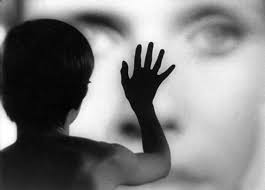
Perhaps the fullest revitalization of the theme of creation from destruction in the montage is the presence of a dead boy, within a montage of other assumedly deceased figures, who, in the span of a cinematic magic trick, is animated to life. The boy’s sudden life violates the film’s parade of decay, particularly when he moves toward the film screen, caressing or fingering the screen in an attempt to feel out, to discover, that can also be read as a display of invasion (he invades the film with life, after all, with the capacity to investigate the film, assert agency over it, and not be pinned-down as a stagnant, dead image). The next shot, a reversal of the prior shot with the boy now in the background feeling a screen, reveals faces swirling around on the screen that defy calcification with their fluxional kinesis, excitably charged to the point where nothing specific can be pinned down or clarified. The shot progression would imply some sense in which the boy has affected the faces to move (since we see him touch the screen, then cut to the faces moving). Yet the entire sequence only seems to denounce cause-effect or throw it into existential crisis. Much as the faces themselves refuse to stagnate to be grasped in full, the shot pattern defies the impulse to establish a causal relationship between the boy acting and the images shifting (which instigated the other is impossible to discern). This is, broadly, a refrain to the film’s progression thus far, with the causal relationship between images less important than the fact that two images are related at all, that they are engaged with one another in an impossible-to-order dance of engagement. By severing its relationship to narrative causality, the film etches out space to ponder alternate relationships between images and ideas not bound to linear chains of events.
Then does the film nearly kill itself via a title credit sequence that is a seizure of staccato images appearing in rapid succession, the names of cast and crew interspersed (roughly one name between each image). Broadly, the title credits alternates between mostly “presentational” images of the characters (both the two protagonists, who are actually the faces from the prior screen, and the boy who we will not meet again until the film’s finale). Each of them stare at the camera and the audience, as if announcing themselves as film characters (or actors) in between flashes of their real-life names (Bibi Andersson, Liv Ullman, etc.). Yet there is no indexical link between each name and each image (names do not follow the corresponding actor’s face), and many of the images repeat (the boy’s face appears after multiple people’s names). Such brazen defiance of the conventions of actor-character coherence deeply jeopardizes the reality of the scene, nor does it merely replace an unmediated reality with a simple statement of artifice. Rather than linking actors with characters, the film actively ponders the question of linking names and faces to create identities that visually exist in constant flux throughout the credits.
The title credits are an unsettled premonition of the whole film, within which two women possibly or partially exchange identities and at least one person is unable to distinguish them via their faces. Since the film will struggle with the question of representing images and identities by frequently, jaggedly meshing the faces of the two central women together in an attempt to solidify a harmonic whole that always evaporates, the credit sequence is no mere display of cinematic might. Before the characters even enter the diegesis, the film has simultaneously cast a premonition of their attempts to textualize the other person’s face and denounced the assumption that the film can purely be defined by their attempts to do so (because the film engages in textualizing before the two women even exist in the film). While Alma and Elisabet will eventually shatter and seep into one another, they are not fragmented mirrors creating warped reflections of each other so much as shards in a wider, perpetually breaking and constantly refashioning world.
Because Alma and Elisabet are, tellingly, introduced as elusive, external images on a screen and not fixed characters (or even characters at all), Bergman’s film refuses to be pigeonholed by attempts to solidify an interpretation of their faces and what may lie dormant within them. By prefacing the characters with the images of their faces (and “drawing” into place the hospital room where Alma appears for the first time in the flesh), the film prefaces their imagistic qualities and sensory realities, treating them as collections of feelings and sensations rather than internally coherent identities. When we meet them as “characters,” they are still bundles of images. In an early moment, Alma’s face, center-right in close-up, is followed by a center-left picture of Elisabet in a shot/reverse-shot configuration that clearly doesn’t conform to any sense of diegetic presence (the background in Elisabet’s shot is of a different color, and she hasn’t been established in the same location as Alma). The shot/reverse-shot is immediately repeated with Alma’s face center-right and, this time, a shot of Alma again center-left while an unseen woman instructs her to watch over Elisabet. For both women, this is their first “diegetic” appearance in the film as characters (outside of the appearance of their faces on the screen earlier and in the opening credits). Yet rather than defining them as characters, the film destabilizes the idea of character altogether. Alma’s face, in essence, has no fixed meaning in this series of shots; if this is taken as a typical shot/reverse-shot, the second center-right shot of Alma would be replacing both Elisabet (center-right originally) and fulfilling the place of the second conversational partner (the unseen woman). The film exposes this self-conscious, reflexive artifice to interrogate how a film can use images in conversation with one another to revamp their meaning. Alma’s face is divorced from one person with an attached psychology and instead parceled out around the screen to serve different purposes depending on the context; rather than simply stitching a face to a character, the film uses the image of that face to interrogate the very connection between external signifier and internal, individual consciousness.
Bergman consistently interrogates and manipulates the shot/reverse-shot technique, at one point later depicting Alma (indoors) peering through a veil followed by a shot of Elisabet seemingly outdoors. The film corrals the women into a shot/reverse-shot despite their nominal diegetic separation, the pressure of maintaining their togetherness actually fracturing the film vertically until the image actually burns up, forcing the film to reset itself. Here, Sontag writes “The film itself seems to be violated – to emerge out of and descend back into the chaos of cinema and film as object,” implying that the weight of the narrative itself, of doing the work of narrativizing, is itself a kind of existential crisis. “If the maintenance of personality requires safeguarding the integrity of masks, and the truth about a person always means his unmasking,” the same happens with the film’s maintenance of the “mask” of narrative continuity.
Yet, simultaneously, it must be stated that the fracture is itself a creative gesture that generates meaning as much as it destroys it. The fracture, even at the most basic level, signifies the fraught peril of Alma and Elisabet’s doomed relationship, and this speaks to the characters rather than against them. The perverted shot/reverse-shot is an attempt to dismantle and refashion that classical cinematic technique toward new ends as a commentary on fracture rather than connection. Persona reimagines, repurposes, the very technique that essentially broke the film in two. In other words, the film’s literal self-immolation in front of us is an act of resuscitation, as apt a metaphor for Persona’s relationship to its medium, and to our way of inhabiting and being in the world, as you’re likely to find.
Score: 10/10
 The Long Take